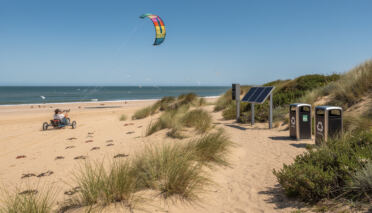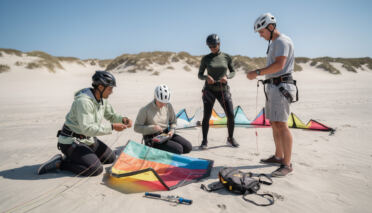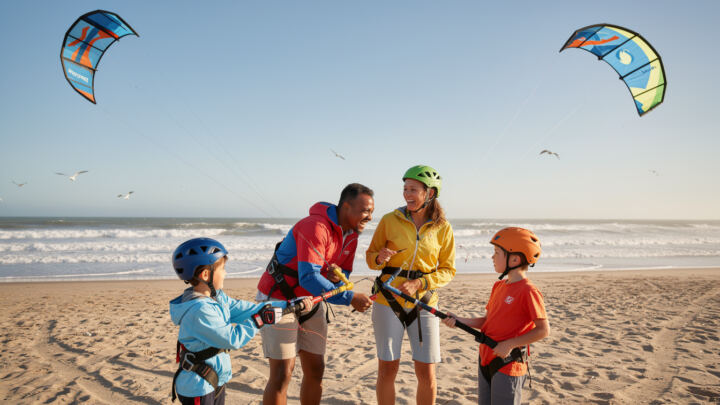
On a windy weekend, most families default to the same options: a movie, a mall, maybe a quick park walk before everyone drifts back to their phones. Traction kiting flips that script. It takes the simple magic of watching fabric climb into the sky and adds just enough power and technique to turn it into an experience you actually do together. Not “you watch the kids run around,” but real shared moments—launching, steering, laughing at the sudden gusts, learning to read the wind, and feeling that instant rush when the kite starts pulling with purpose. It’s outdoor fun that doesn’t need a scoreboard, and it scales beautifully from “first time holding handles” to “let’s try a gentle downwind walk” without losing anyone along the way.
What makes it click as a family activity is the mix: it’s physical without feeling like a workout, mentally engaging without being homework, and social without forcing awkward conversation. Kids get an adventure that feels big; adults get movement, fresh air, and a reason to be fully present. And because the wind is always changing, every session has a built-in lesson in patience, problem-solving, and teamwork. The best part? You don’t need a beach resort or extreme-sports confidence. With the right spot, sensible safety habits, and gear that matches your crew, traction kiting becomes that rare thing: a hobby the whole family can grow into together.
- 🌬️ Traction kiting turns wind into shared adventure, not just a solo sport.
- 👨👩👧👦 Built-in bonding: launching, spotting, and celebrating small wins together.
- 🏃 Gentle-to-serious exercise, depending on kite size and what you do with it.
- 🧠 Real skill development: coordination, focus, patience, and reading conditions.
- 🌿 A legit reason to get outside and reconnect with nature (and take a screen break).
- 🦺 safety is simple when you choose the right kite, space, and rules.
Why Traction Kiting Works So Well as a Family Activity (Not Just a “Kite Day”)
Regular kite flying already has a special vibe: you look up, you breathe deeper, and you kind of forget you were stressed five minutes ago. Traction kiting keeps that same joy but adds a “we’re doing something together” layer that families often struggle to find. With a traction kite, you’re not only watching something fly—you’re managing power, steering with intention, and making little decisions as a team. It’s a family activity where everyone has a role, even if someone isn’t holding the lines.
Think of a typical session with a fictional family—let’s call them the Parkers. Maya (10) wants the cool part: the handles. Her brother Leo (7) wants to run around and “help.” Their parent Sam wants a safe plan that doesn’t feel like a military operation. Traction kiting gives them structure: Sam checks wind direction and picks a clear patch of field; Maya practices gentle steering in the edge of the wind window; Leo becomes the “wind detective” who watches flags and trees. Nobody is sidelined, and that’s where the bonding sneaks in.
The physical side is surprisingly balanced. Launching and controlling a kite involves walking, bracing, light running, and constant micro-adjustments—real exercise, but it feels like play. It also encourages the kind of movement kids naturally like: short bursts, quick changes, and “try again” loops. If you’ve been trying to hit that daily activity goal without turning into the Family Fitness Coach, this is a smooth workaround. And yes, it gets everyone out into nature, where distance focus and open space can feel like a reset after screen-heavy weeks.
Teamwork That Doesn’t Feel Forced
Families talk about teamwork, but it’s hard to manufacture. Traction kiting bakes it in. One person flies, another spots obstacles and people, someone else manages the kite bag and lines. Even calling out gusts becomes a game: “Bigger wind coming!” It’s cooperative without being corny, and it’s one of those activities where encouragement matters more than talent.
There’s also a mental-health angle people underestimate. Being outside, breathing in fresh air, and focusing on a moving target can ease stress and help you drop into a more mindful state. You’re busy reading the wind, feeling line tension, and making small corrections. That kind of attention is calming because it’s practical—no one is telling you to meditate; you’re just fully there.
And because traction kiting is skill-based, it naturally creates mini-milestones: first controlled figure-eight, first clean launch, first time staying steady in shifting wind. Those wins boost confidence for kids and adults alike, and they tend to create the “remember when…” stories families love. The real magic is that the wind is the teacher, and it never gives the same lesson twice.
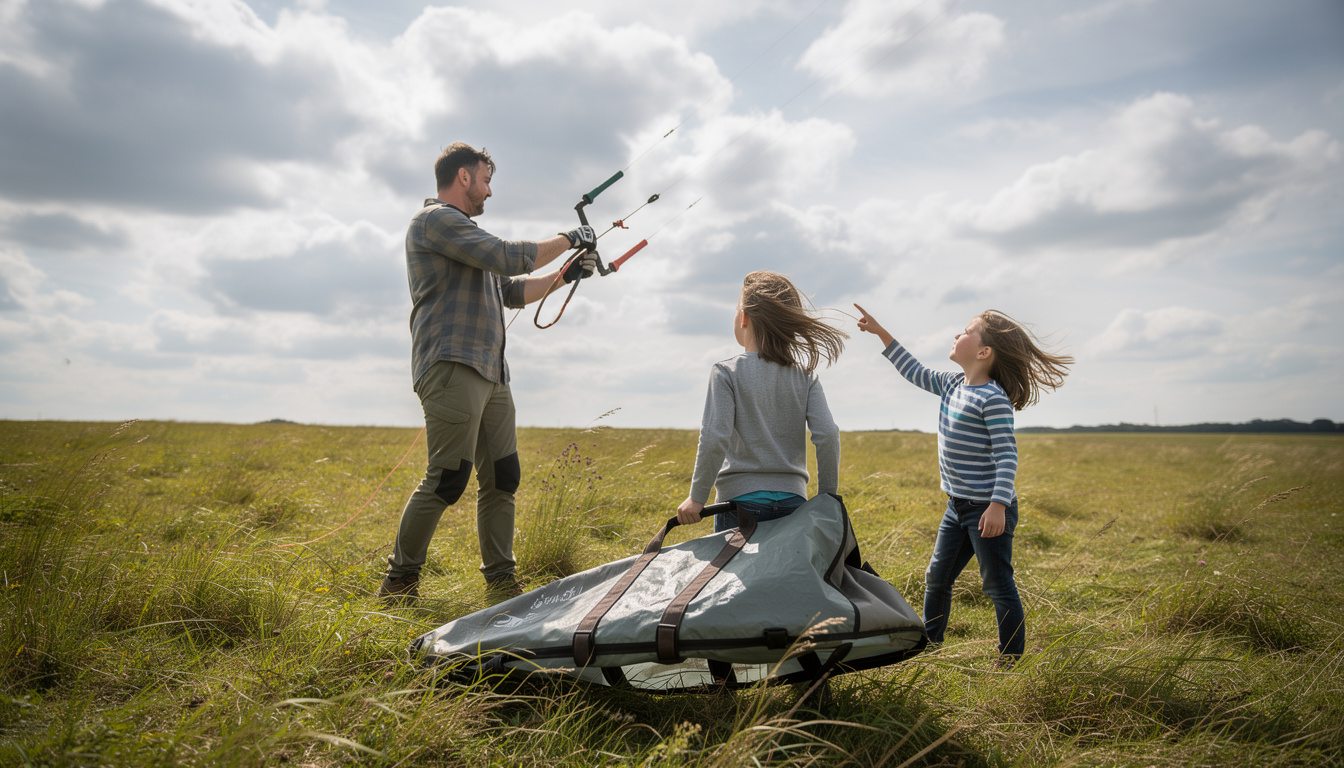
Traction Kiting Basics for Families: Understanding the Kite, the Wind, and the Fun
Let’s clear up a common mix-up: traction kites aren’t the classic single-line diamond you remember from childhood. They’re designed to generate pull, which is exactly why they’re used in things like kiteboarding, buggying, landboarding, and snowkiting. For a family, that sounds intense—until you realize you can choose small, trainer-style kites that keep the power manageable while still delivering that “whoa” moment. The key is matching gear to your crew, not trying to cosplay as pros on day one.
Most family-friendly setups start with a dual-line (or quad-line) kite with handles or a control bar. Two lines let you steer; four lines give even finer control and easier depower in some designs. The learning curve is real, but it’s also what makes the session engaging. Instead of “hold string and hope,” you’re learning a system: steering inputs, power zones, and how to park the kite where it’s calm.
Wind Window 101 (The Part That Makes Everything Make Sense)
The wind window is basically the invisible dome in front of you where the kite can fly. The center is the power zone; the edges are gentler. Families do best when they treat the edges like a training area—less pull, more time to think. When you explain this to kids like it’s a map in a game, they get it fast: “Center = turbo, edges = easy mode.”
Here’s a practical example: Sam (parent) stands with feet planted and flies the kite slowly near the edge. Maya practices moving it up and down without crossing the center. Leo watches the kite and calls out when it drifts inward. That’s skill development plus teamwork without anyone lecturing.
Choosing Family-Friendly Gear Without Overthinking It
For younger kids, many families still start with a simple single-line kite to build confidence and joy—because it’s cheap, easy, and instantly rewarding. Then, when attention span and coordination are ready, stepping up to a small trainer traction kite makes sense. If you’ve got a teen in the mix, a slightly larger trainer can keep them engaged while adults supervise. The goal is to keep control high and surprises low.
| Option | Best for | What it teaches | Family vibe |
|---|---|---|---|
| 🪁 Single-line kite | Kids ~3+ with help | 🌤️ Patience, basic wind feel, confidence | 🎈 Easy, low-stress outdoor fun |
| 🎮 Dual-line trainer traction kite | Kids ~8+, teens, adults | 🧠 Steering, coordination, focus, skill development | 🤝 Great for bonding and shared learning |
| 🧤 Quad-line traction kite | Teens/adults, patient learners | 🎯 Precision control, smoother power management | 🏁 “Let’s master this” energy |
Notice how none of this requires a huge budget or a special destination. A wide field, steady wind, and appropriate kite size can turn a random Saturday into a legit adventure. Next up is the make-or-break piece: doing it safely so the fun stays fun.
Want to see what different styles look like in real life before buying anything? Watching a few short demos helps the whole family understand what “pull” actually means.
Safety First Without Killing the Vibe: Practical Rules for Family Traction Kiting
Traction kiting feels playful, but it’s powered by wind—so safety can’t be an afterthought. The good news is that family-friendly safety is mostly about smart choices: where you fly, what size kite you use, and how you communicate. When you set simple rules early, kids don’t see it as boring; they see it as “this is how we do it like pros,” which is honestly a parenting cheat code.
Start with location. You want a wide, open space with clean wind and no hard hazards: no roads, power lines, crowded dog parks, or hidden fences. Beaches can be amazing if they’re not packed, but big parks and open fields often work better for beginners because you can spread out. A simple rule: if you can’t imagine the kite dragging you five steps without hitting anything, pick a different spot.
Gear Safety: Small Choices That Prevent Big Problems
For family sessions, smaller trainer kites are your friend. Less pull means more control and less panic. Gloves can save hands from line burn, and a basic understanding of your kite’s safety system matters a lot. With dual-line trainers, you can usually reduce power by steering to the edge and stepping toward the kite; with more advanced systems, quick-release and leash setups come into play. If you’re not sure, keep it simple and stay in the low-power zone.
Also: lines can be deceptively dangerous. They’re thin, strong, and can cut. That’s why a “no running through lines” rule is non-negotiable, especially with younger kids who see strings as a playground obstacle. Make it a game: lines are “laser beams.” If you touch one, you lose a point. Kids will police each other for you.
Communication and Roles (This Is Where Teamwork Lives)
One underrated safety tool is giving everyone a job. The flyer focuses on the kite. The spotter watches for people, dogs, and gusts. Someone else manages the bag and keeps the launch area clear. That division of attention is pure teamwork, and it reduces mistakes caused by distraction.
- 🦺 Family rule: only one person flies at a time; everyone else stays behind the flyer.
- 📣 Use simple callouts: “Launching!” “Landing!” “Gust!” so nobody guesses what’s happening.
- 🌬️ If wind picks up suddenly, move the kite to the edge of the window and land early—quitting while it’s fun is a win.
- 🚫 Keep a big buffer from trees, poles, and especially power lines. If you can hit it, you’re too close.
- 🧤 Gloves and closed-toe shoes are a solid default for beginners.
Here’s a real-world style scenario: you’re flying, a gust hits, and your teen laughs while your younger kid gets wide-eyed. That’s the moment to model calm control—park the kite at the edge, land it smoothly, and say, “Nice gust. We’re good.” You just taught emotional regulation in the sneakiest way possible.
When safety becomes routine, confidence grows fast. And once everyone trusts the process, you can lean into the best parts: longer sessions, better control, and those mini-challenges that make traction kiting feel like a shared hobby instead of a one-off outing.
If you want a quick visual on safe launching/landing and spacing, a short video can make the rules click instantly for kids and adults.
Skill Development and Healthy Exercise: What Kids (and Adults) Learn Without Realizing
One reason traction kiting sticks as a family activity is that it gives you benefits people usually chase with separate hobbies. You get exercise, coordination, patience training, and time outdoors—without needing a gym membership, a class schedule, or a “motivational phase.” It’s sneaky like that. And because the kite gives instant feedback, learning feels like play, not instruction.
Physically, it’s more than standing still. You’re walking backward to maintain tension, stepping forward to depower, bracing through your legs and core, and using your arms and shoulders in a controlled way. For kids who hate repetitive workouts, it doesn’t feel like cardio even though their heart rate climbs. For adults, it’s that sweet spot: active enough to count, not so intense that you’re wrecked the next day (assuming you’re flying appropriately sized kites).
Coordination, Focus, and Patience (The Big Three)
Steering a traction kite builds hand-eye coordination fast. You’re constantly matching what you see in the sky with what you feel in the lines. Kids develop fine motor control when they learn “small inputs” instead of yanking. Adults often have the opposite lesson: relaxing their grip and letting the kite do the work.
Patience shows up because the wind never behaves perfectly. You can’t brute-force it. If the kite dips, you adjust. If the wind lulls, you work it gently. That’s basically a live lesson in problem-solving under pressure—exactly the kind of skill development that carries into school, sports, and everyday resilience.
Creativity and Curiosity Through Nature
Kiting also boosts creativity in a way that doesn’t require art supplies. Families start noticing design choices—wing shapes, colors, tails, frames, ripstop fabrics. Kids ask why one kite pulls more than another, or why the kite behaves differently near trees. Those questions open the door to casual science: wind speed, lift, drag, weather patterns. You’re learning because you’re curious, not because there’s a test.
And let’s talk about the screen break. In the mid-2020s, “take a break from screens” became a universal parent slogan, but it’s hard to enforce when the alternative is “go be bored outside.” Traction kiting makes the outdoors the interesting option. Staring at a kite against a bright sky also encourages distance focus, which many people find soothing after long stretches of close-up screen time.
Best of all, traction kiting gives families a shared language: “edge of the window,” “smooth launch,” “park it,” “nice save.” Those little phrases become inside jokes and confidence markers. When a hobby creates its own vocabulary, it usually means it’s becoming part of your family culture—and that’s a powerful kind of bonding.
Making It a Real Family Tradition: Spots, Seasons, Mini-Challenges, and Shared Adventure
The difference between “we tried it once” and “this is our thing” is usually how easy it feels to repeat. Traction kiting can become a tradition because it’s flexible: you can do quick sessions, longer afternoons, or combine it with picnics and walks. You can also scale the challenge as skills grow, keeping teens interested while younger kids still have a blast.
One fun approach is creating a “wind-day ritual.” The Parkers keep a simple checklist by the door: kite bag, gloves, water, snacks, light jacket. When the trees outside are moving and the forecast looks steady, they go. No complicated planning. That repeatability is what turns outdoor fun into a habit.
Where to Go: Building a Short List of Reliable Places
Families do best when they have two or three go-to spots: a big local field for quick sessions, a beach or lakeside area for weekend outings, and maybe a wide winter space if you live somewhere with snow and safe access. Traction kiting can be done on land, snow, or even as a stepping stone to water sports later, but you don’t need to rush. The point is to keep the experience positive and age-appropriate.
Historically, people have flown kites for over two thousand years—records point back to China’s Han Dynasty era—so there’s something cool about telling kids they’re part of a long human tradition of experimenting with wind. Today it’s less about military signaling and more about joy, community, and personal challenge. Kite festivals and local clubs can also be a gateway if you want tips and safe spaces to learn.
Mini-Challenges That Keep Everyone Engaged
Instead of “let’s just fly,” give the session a goal. That keeps attention high and arguments low. Keep it friendly and adjustable so nobody feels behind.
- 🎯 Hold a steady park at the edge of the wind window for 10 seconds.
- 🧭 Take turns being the “wind caller” and guess gusts by watching trees/flags.
- 🌀 Fly a slow figure-eight without crossing into the high-power center.
- 🤝 Practice a clean launch and controlled landing with a spotter assisting.
- 📸 End with a “best moment” photo and a quick recap of one thing learned.
Over time, you’ll notice the family dynamic shifting. Kids start coaching each other. Adults stop multitasking and actually watch the sky. Conversations get easier because you’re sharing a real-time experience. That’s the quiet win: traction kiting becomes a low-pressure way to practice teamwork and create a shared sense of adventure, with safety as the baseline that makes it all sustainable.
What age is best to start traction kiting as a family activity?
Many families start with a simple single-line kite around age 3+ (with close supervision), then move to a small dual-line trainer traction kite around 8+ when coordination and attention are stronger. Teens and adults can start anytime, but keep the kite size conservative so learning stays fun and safe.
Do we need a beach to do traction kiting?
No. A wide, open field can be ideal for beginners because it offers space and fewer hazards. Beaches can work too when they’re not crowded. The main requirement is clean wind, plenty of room, and a safe buffer from roads, trees, poles, and power lines.
How do we keep traction kiting safe with kids around?
Use a small trainer kite, assign roles (flyer, spotter, gear helper), keep everyone behind the flyer, and use clear callouts like “Launching!” and “Landing!” Gloves and closed-toe shoes help, and landing early when wind increases is a smart habit—not a failure.
Is traction kiting good exercise or mostly just standing there?
It’s legitimate exercise. Launching, steering, walking to manage power, and bracing against pull engage legs, core, and upper body. It often feels like play, which is why it works so well for kids and adults who don’t love formal workouts.
What’s the fastest way to build skill development without frustration?
Stay at the edge of the wind window, practice short drills (parking, slow turns, gentle figure-eights), and keep sessions short enough to end on a win. Rotate turns so everyone stays involved, and treat mistakes as wind feedback rather than failure.