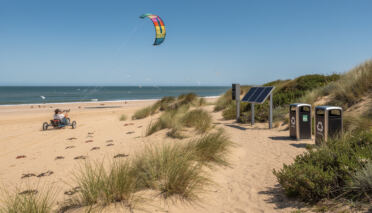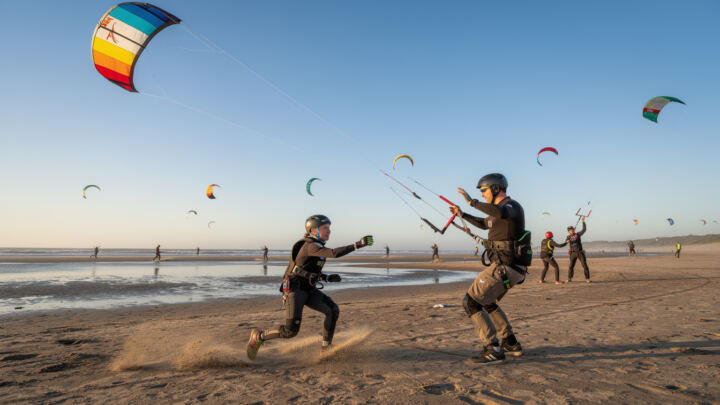
From the outside, traction kiting looks almost chill: a kite in the sky, a rider gliding, a nice breeze doing the heavy lifting. Up close, it’s a constant little negotiation between wind control, kite handling, space, and your own excitement. Most first-time “whoa!” moments don’t come from trying anything flashy. They come from boring stuff—launching kite in the wrong place, trusting an app more than the sky, skipping a two-minute gear check, or panicking and oversteering when the pull spikes.
The good news is that the sport is way more beginner-friendly than it used to be, thanks to more stable foil designs and better depower systems. But none of that cancels physics. Wind still shifts around trees and dunes, weather conditions still change faster than your confidence, and the end of a session can still get messy if you don’t have a landing plan. Let’s follow Alex (new, athletic, and slightly too confident) through the biggest beginner challenges in traction kiting—and how to fix them with routines that actually work when your hands are cold and your heart rate is up.
- 🪁 Fast progress comes from “boring basics”: clean setups, calm decision-making, and steady wind awareness.
- 🌬️ The most common challenges are predictable: misreading gusts, flying in turbulence, and confusing “average wind” with “real wind.”
- 🧷 Most scary moments start with tiny oversights: skipped quick-release test, twisted lines, wrong leash attachment.
- 🧭 Better kite handling often means smaller inputs, parking the kite, and protecting your balance before you chase power.
- 🛬 A surprising number of incidents happen at the end: rushed landing, narrow space, trying to “save it” too late.
Wind awareness challenges in traction kiting beginners face (and how to get real wind control)
The first big trap for beginners is thinking wind is just a number. Alex checks a forecast app, sees “15 knots,” and treats it like a promise. Then on the beach the kite surges, lulls, and surges again, and Alex starts doing that awkward sideways jog that feels funny until it isn’t. The problem isn’t that the app is “wrong.” The problem is that the app describes a wider region, while your kite lives in a tiny pocket of air shaped by dunes, trees, buildings, and temperature layers.
Wind control starts before the kite is even inflated or unrolled. You’re asking: is the breeze steady, gusty, laminar, or turbulent? A clean, open shoreline with wind coming straight in can feel smooth. The same wind speed rolling over a treeline onto a field can feel like someone flicking a power switch on and off. Beginners often interpret that punchy feeling as “I’m not strong enough,” when it’s really “this spot is delivering chaotic airflow.”
Reading the sky and the ground: the “local reality” check
Alex’s upgrade is simple: stop treating the forecast as the final word. Use two sources—one forecast model and one real-time observation. In 2026, it’s easy to find live station data near popular spots, and a small pocket anemometer is cheap compared to replacing torn lines or a ripped canopy. The point isn’t becoming a meteorologist. It’s building consistency.
On-site, Alex learns to watch wind indicators like a local: flags snapping, sand drifting low and fast, whitecaps forming, tree tops swaying in pulses. Even the feel on your cheeks matters. If it’s “breathing” hard—strong/weak/strong—expect the kite to behave the same way, just amplified.
Weather conditions that trick beginners: fronts, thermals, and the “it was fine for an hour” story
A lot of sessions go sideways after the sentence, “It was fine earlier.” Small fronts can arrive like a mood change: pressure shifts, direction clocks, gust spread widens. Thermals can build quickly on sunny afternoons and fade fast when the sun drops behind cloud or hills. Alex experiences the classic coastal gotcha: wind builds a bit but also turns slightly offshore. Riding still feels doable, so Alex stays out… until it’s time to land, when the kite starts drifting back and lines go slack.
That’s the key lesson: if landing is getting harder, it’s not random bad luck. It’s information. Beginners who level up fastest don’t just “handle it.” They change plans early: downsize, move to a cleaner launch, or call the session before fatigue and shifting weather conditions stack the odds against them.
A practical “space scan” that prevents bad surprises
Before launching kite, Alex does a 30-second scan: “If I get dragged 20 meters, what do I hit?” Rocks, fences, roads, power lines, parked cars—any of those means the location is wrong for a beginner session. This is how you start overcoming obstacles before they become literal obstacles. The insight here is blunt: space is safety, and the wind doesn’t care about convenience.
Once you’re reading air and choosing smarter sessions, the next challenge is controlling what you actually can: your equipment and setup habits.
Equipment and setup challenges for beginners: the small mistakes that create big traction kiting problems
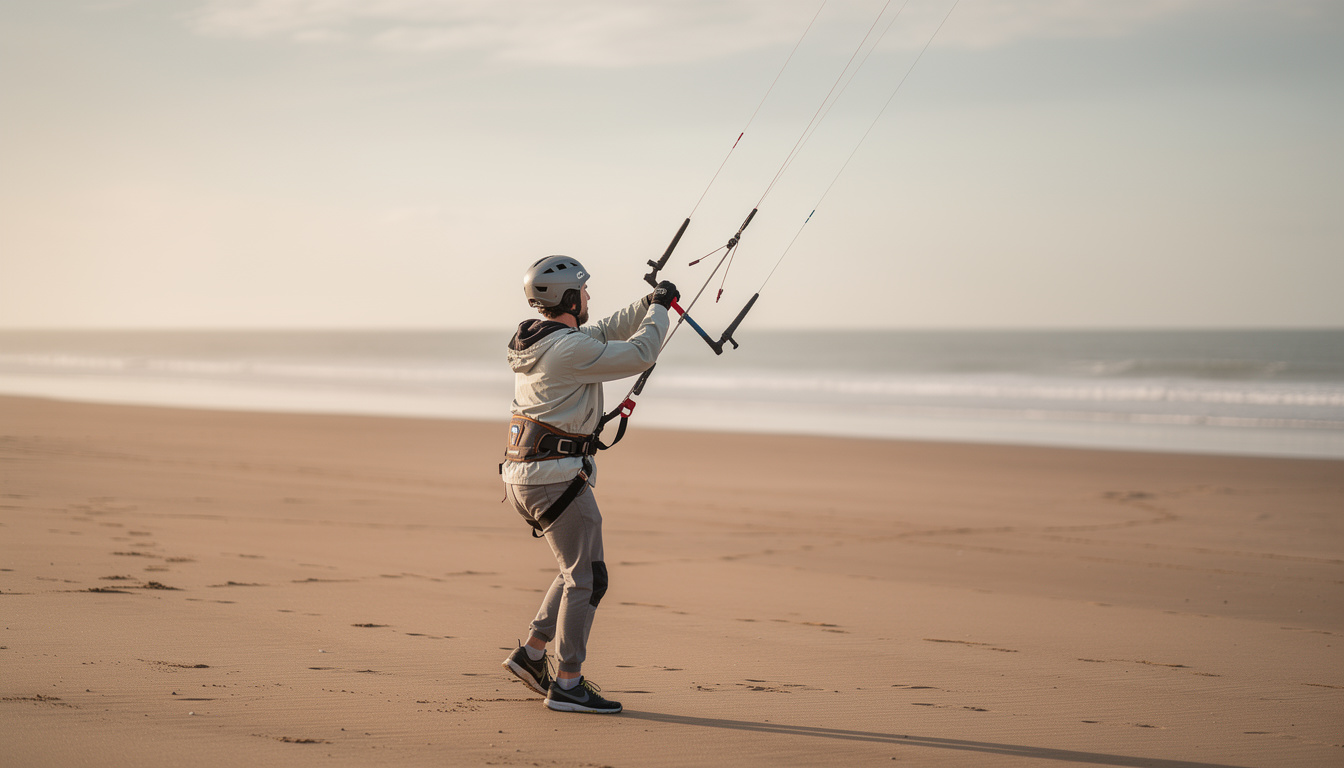
If wind is the invisible variable, gear is the variable you can truly control. And yet, one of the most common beginner challenges is skipping checks because “it worked last time.” Alex unrolls lines fast, clips in, and feels proud of the speed—until the kite launches and immediately pulls to one side like it has an opinion. One steering line was wrapped once around the bar end. Not dramatic on the ground, chaotic in the air.
The annoying truth about traction kiting is that tiny asymmetries amplify. A small bridle snag can create a constant bias. A worn pigtail can snap right when a gust hits. A half-twist can turn depower into a surprise power spike. If you want predictable kite handling, you need predictable inputs—and that starts with clean rigging.
The “touch every critical point once” routine
Alex adopts a rule that sounds silly until it saves a session: physically touch each safety-critical item in the same order. It prevents the classic distracted setup. Phone buzz? Dog runs through lines? Friend asks a question? Reset and start the sequence again, not from memory.
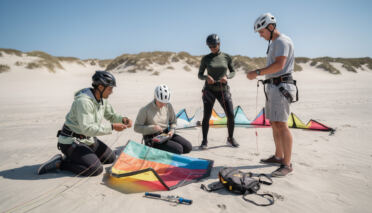
For inflatables, Alex checks leading edge pressure, valves, seams, and obvious wear. For foil kites, Alex checks intake cells and bridle cascades for tangles. Then lines: no knots, no wraps, no fuzzy wear points. Finally the bar: trim system runs smoothly, leash is attached correctly, and the quick release opens and closes without grit.
Pre-flight scan table (quick, boring, and worth it)
| Checkpoint | What to look for | Why it matters |
|---|---|---|
| 🧷 Quick release | Opens/closes smoothly, no sand jam, correct reset | Fast exit when power spikes ⚠️ |
| 🪢 Lines | No knots/wraps, even tension, left/right routed correctly | Stable steering and predictable depower 🎯 |
| 🧵 Bridles | No snags, no crossed cascades, pulleys moving freely (if present) | Prevents stalls, surges, and weird loops 🌀 |
| 🔗 Leash attachment | Clipped to the right ring/point for your system | Avoids runaway-kite scenarios 🚨 |
| 🧰 Harness/spreader | Buckle secure, hook sound, no cracks, fit snug | Stops accidental unhooking and loss of control 🧍 |
The “two-minute reset” after interruptions
Most messy incidents begin with “I was distracted for a second.” Alex now treats interruptions as a trigger to re-check line routing and safety. It feels overcautious for exactly one week—until the first time it prevents a wrong connection that would’ve caused a loop at launch. That’s how you start overcoming obstacles: not with bravery, but with systems.
With wind and gear under control, the next pain point is where theory turns into force: launching and landing.
Watching a clean setup routine helps, but seeing the timing of a safe launch is even better—so here’s a good visual reference to study before your next session.
Launching kite and landing challenges: why most beginner traction kiting sessions go sideways at the start (or the end)
Launching kite is the moment power stops being hypothetical. Beginners often treat it like a formality: tug, signal, send it up. Alex does this the first few times—standing too close to obstacles, lines not fully tensioned, kite positioned too deep in the wind window. The result is predictable: the kite rockets overhead with a power hit, Alex’s feet scramble, and balance disappears right when it’s needed most.
A clean launch is basically three things: correct angle, controlled tension, and a body position that can resist without panic. Launch too “deep” and you get a punch. Launch with slack lines and the kite may luff, then re-power suddenly. Launch while facing the wrong way and you can’t brace efficiently, so you stumble into even worse positioning.
Assisted launches: the underrated beginner hack
In the beginner phase, assisted launching isn’t about ego. It’s about extra eyes on the system. A decent helper spots crossed lines, bridle weirdness, or a kite that’s not truly at the edge of the window. Alex also learns to agree on signals first: “hold,” “launch,” and “abort.” If you don’t do that, you end up with the classic comedy: you’re yelling “wait” while the helper thinks you said “send.”
The biggest mindset shift is learning to abort early. If the kite flaps strangely, the helper looks unsure, or the wind suddenly pulses—Alex drops the kite safely and resets. Not timid. Mature. Every confident rider you admire has built that reflex.
Common launch mistakes (and the fix that actually sticks)
- 🧭 Skipping the last-second wind direction check: toss a bit of sand/grass or use a ribbon before signaling.
- 🪢 Crossed lines: visually trace left/right from bar to kite tips; don’t “assume.”
- 🏃 Standing downwind of trouble: choose a big clear corridor so a drag doesn’t become impact.
- ✋ No abort plan: decide what “off” feels like, and commit to stopping early.
Landing: the quiet danger zone at the end of a good day
Landing errors are sneaky because they happen when you’re tired, satisfied, and ready to be done. Alex tries a self-landing in gusty wind near a narrow path because it’s “convenient.” The kite dips, catches a gust, and Alex does an involuntary shuffle toward a fence. That’s not rare. It’s a classic beginner moment.
Good landings are planned while you still have energy. Pick a wide zone, bring the kite down at the edge of the wind window, and keep tension controlled. With a helper, communication beats strength. Alone, you need a proven method for your specific kite type—foils and inflatables behave differently—and the humility to walk to a safer spot or wait for a lull.
A simple rule Alex adopts: if you can’t describe exactly how you’ll land before you launch, you’re not ready to launch. That one habit prevents a shocking amount of drama.
Next comes the “in-flight” challenge: what to do when stress hits and your hands want to do the wrong thing.
If you want to see what calm, repeatable landings look like, watch how experienced riders keep the kite at the edge and never rush the last 10 seconds.
Kite handling challenges: oversteering, panic inputs, and rebuilding balance when traction kiting gets spicy
Once the kite is up, beginners often discover their real enemy isn’t wind speed—it’s their own reflexes. Alex’s default stress reaction is to pull harder on the bar. Totally human. Also totally counterproductive. Pulling in tends to increase power, speed up the kite, and make the whole system feel even more aggressive. That’s how a small wobble becomes a loop, and a loop becomes a release.
The fastest route to better kite handling is learning to do less, earlier. Smaller inputs, smoother timing, and a habit of parking the kite when you need to think. If you oversteer, you create oscillation: the kite swings, you counter-swing, it accelerates, you panic, and suddenly you’re on a power rollercoaster you didn’t buy a ticket for.
The power zone problem: diving by accident
Alex keeps accidentally flying through the power zone because the kite is being “played with” like a toy, not managed like a wing. In traction kiting, you often want the kite higher or closer to the edge while you stabilize your stance. Diving is a tool you use intentionally for pull—not the default setting every time you get nervous.
A drill that works ridiculously well is the parked-kite hold: park at about 10 o’clock or 2 o’clock and hold steady for 20 seconds. Then do a slow figure-eight without letting it accelerate. If it speeds up, your inputs are too sharp. If it stalls, you’re starving it of airflow or pushing too far to the edge.
Balance and body position: your hands can’t be calm if your stance is messy
Alex’s early stance is upright with feet close, shoulders tight. That posture can’t absorb pull, so all the load goes into the arms, and the arms start making desperate moves. Once Alex switches to an athletic posture—knees soft, hips engaged, shoulders relaxed—everything gets easier. The body becomes the suspension system. The bar becomes a fine-tuning device, not a lifeline.
This also changes how Alex experiences gusts. Instead of being “yanked,” Alex can resist, step, and re-center. That’s real wind control in practice: not controlling the weather, but controlling your response.
The mental load challenge: when fatigue makes beginners sloppy
Another sneaky challenge is decision fatigue. Beginners burn a lot of brainpower just staying organized: watching space, checking lines, thinking about steering. When tired, you start cutting corners: “one more run,” “I’ll just land here,” “it’s probably fine.” Alex learns to end sessions with “one clean run and a calm landing,” not with an exhausted, messy attempt.
The insight that sticks: control is timing, not strength. And timing gets better when your routine reduces stress.
Safety habits that help beginners overcome obstacles in traction kiting (space, systems, and smarter decisions)
A lot of safety advice is so generic it becomes wallpaper. The useful safety habits are the ones you can apply on a windy day with sand in your teeth. Traction kiting becomes safer when you manage three things: space, systems, and social coordination. Miss one, and the others have to work too hard.
Space is your buffer. Alex once chose a convenient spot near a parking area to hang with friends, and it almost turned into a problem when the wind shifted and the downwind corridor disappeared. Convenience is a terrible safety metric. If you want to keep progressing, pick a place where errors don’t instantly become injuries.
Systems: make your boring routine non-negotiable
Alex’s routine becomes the anchor: check wind, check gear, check area, rehearse release, then launch. The quick release practice is the big one. In 2026, modern bars are generally reliable, but sand, salt, and neglect still make good designs sticky. If you’ve never activated your release under even light load, the first time you try shouldn’t be when you’re being dragged toward something hard.
Alex does a “release touch” every session: hand to release, confirm orientation, confirm it’s clear. Two seconds. Massive payoff. And when practicing on land, Alex repeats the motion until it’s boring—because boring is what you want during a real emergency.
People: the buddy system, and filtering loud advice
Beginners get pulled into risk by social pressure. Someone says, “It’s fine, just send it,” and suddenly you’re launching in gusts with a kite that’s too big. Alex learns to filter advice: if someone can’t explain the why, or dismisses obvious weather conditions and hazards, their confidence isn’t useful. Skilled riders are usually calm, specific, and happy to see you downsize.
Using a helper is also a skill. Agree on signals. Make sure the helper knows how to hold and release properly. If they seem uncertain, stop. Awkward pauses are cheaper than mistakes at launch.
A phone-friendly checklist that’s short enough to use
- 🌬️ Wind check: direction stable? gust range acceptable? exit route clear?
- 🧰 Gear check: lines clean, bridles clear, quick release tested, leash correct.
- 📍 Space check: downwind corridor free for a long slide.
- 🤝 Launch plan: helper briefed, hand signals set, abort plan agreed.
- 🛬 Landing plan: where you’ll land, how you’ll do it, and what you’ll do if wind shifts.
Mini case study: the “save it” reflex vs the “reset” reflex
Alex has a moment where the kite looks slightly misaligned on launch—nothing dramatic. Old Alex would try to save it mid-air. New Alex aborts, drops the kite safely, and re-checks. They find a small bridle snag that would’ve become a hard turn under load. That’s the whole game: overcoming obstacles before they escalate.
The final insight of this section is simple: fewer surprises equals more fun. And the more fun you have, the more you actually practice—leading right back to better control.
What are the most common mistakes beginners make in traction kiting?
The big ones are skipping an equipment check (especially quick release and leash), misreading on-site wind and weather conditions (gusts/turbulence), rushing launching kite, and not having a clear landing plan. A lot of beginner challenges come from trying to ‘save’ a sketchy setup instead of aborting early and resetting.
How do I tell if weather conditions are risky even if the wind speed looks okay?
Look beyond the average: watch for rapid direction changes, widening gust spread, dark cloud lines, temperature drops, and turbulence from obstacles. If the kite feels inconsistent during ground handling—or landing starts getting harder—that’s a strong signal conditions are degrading.
Why do I lose kite handling when I panic, and what’s the fastest fix?
Panic usually causes oversteering and pulling the bar in, which increases power and speeds up the kite. The fastest fix is to reduce inputs: ease the bar out slightly, steer toward the edge of the window, and rebuild balance with soft knees and stable hips. Parked-kite drills train calmer reflexes.
What’s one safety habit that prevents the most problems for beginners?
Practice your quick release and confirm correct leash attachment every single session. Then do a quick left/right line routing check before launch. These simple steps prevent runaway-kite scenarios and unpredictable power events that can escalate fast.
What are the most common landing errors, and how can I avoid them?
Common landing errors include landing in a narrow/obstacle-filled area, bringing the kite too deep into the power zone, and attempting self-landing in gusty wind without a proven method. Avoid them by choosing a wide landing zone, keeping the kite at the edge, communicating clearly with a helper, and being willing to wait for a lull or walk to a safer spot.