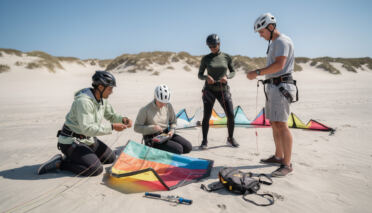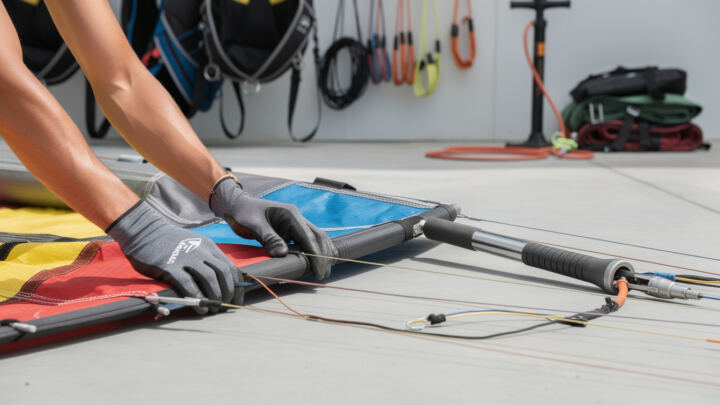
A traction kite looks tough until you treat it like it’s indestructible. The truth is, most “mystery failures” on the beach come from boring stuff: a damp canopy shoved into a bag, a tiny nick in a bridle that grows into a snap, salt crystals turning fabric into sandpaper, or a rushed pack-down that traps grit exactly where you don’t want it. If you’re into traction kiting for buggy, landboard, snow, or water sessions, the smartest move you can make is building habits around equipment maintenance that feel almost automatic—because when the wind is good, nobody wants to waste time untangling spaghetti lines or dealing with blown seams.
This is also where gear care stops being “extra” and starts being part of your riding style. A clean kite launches smoother, trims more predictably, and holds its shape longer. Smart storage tips reduce mildew risk, protect coatings from UV, and keep bridles from developing memory kinks. And yes, safety checks are performance optimization in disguise: a kite that’s structurally sound gives you the confidence to push harder without that nagging “what if something lets go?” feeling.
En bref
- 🧼 Make kite cleaning routine: rinse after salt, remove sand, dry fully to prevent mildew.
- 🔍 Do quick line inspection before every session: frays, knots, uneven stretch, and grit in larks-heads.
- 📦 Pack with intention: clean bridle placement, tidy line winding, and avoid crushing spars/leading edges.
- 🌞 Reduce wear and tear: keep gear out of UV when you’re not riding and avoid hot car storage.
- 🧵 Learn basic repair techniques: patching pinholes early beats replacing panels later.
- ⚙️ Treat maintenance as performance optimization: better relaunch/handling, fewer surprises, longer lifespan.
Traction kiting equipment maintenance: build a pre-ride habit that actually sticks
If you want your kite to feel “new” for more than a handful of sessions, you need a repeatable routine. Not a huge one—just a tight sequence you can do while chatting with friends or watching the wind line. The trick is to treat equipment maintenance like warming up: small effort, big payoff. I’ve seen riders (let’s call one of them Jamie) show up with a premium foil kite that still flew like a dream… because Jamie did the same five-minute check every time, even when everyone else was already sending it.
Start with the canopy and seams. Walk the kite from tip to tip and look for scuffs where the fabric kisses the ground, especially around the trailing edge and any reinforced zones. Modern ripstop is durable, but UV exposure and repeated abrasion slowly weaken it. If you catch a tiny abrasion early, you’re preventing the “one gust and it tears” moment later. Ask yourself: would you rather do a small patch tonight, or lose a weekend waiting for a repair shop slot?
Next comes line inspection, which is where a lot of safety issues hide. Run your fingers along the flying lines and bridles—literally pinch and slide. You’re feeling for fuzziness, flat spots, tiny cuts, or gritty sections. Grit is sneaky: sand in a knot can abrade fibers from the inside, especially around larks-head connections. If you’re riding in coastal spots, salt and sand team up like a bad buddy comedy: salt stiffens fibers and sand finishes the job with friction.
Don’t forget the control system: handles, bar, safety leash, chicken loop equivalents (depending on setup), and any quick-release mechanism. Pull and reset it a few times. This counts as one of your core safety checks, and it matters even more on land where a dragging incident can happen fast. If something feels sticky, rinse it and dry it properly—then test again. A quick-release you never practice is basically a decorative accessory.
Here’s a simple pre-ride checklist Jamie uses, taped inside the gear bag:
- 🪁 Canopy scan: pinholes, abrasions, seam lifting, weird creases
- 🧵 Bridle check: equal tension, no knots, no “thin” sections
- 🔍 Line inspection: frays, tangles, uneven length feel
- 🧷 Connection points: larks-heads clean, no sand trapped inside
- 🧯 Safety checks: release function tested, leash condition confirmed
Do that, and you’ll notice something: your launches get calmer, your trims feel more consistent, and you stop blaming the wind for problems that were actually gear-related. That’s the quiet power of routines—performance optimization without the drama.
Kite cleaning and drying: beating salt, sand, and mildew without babying your kite
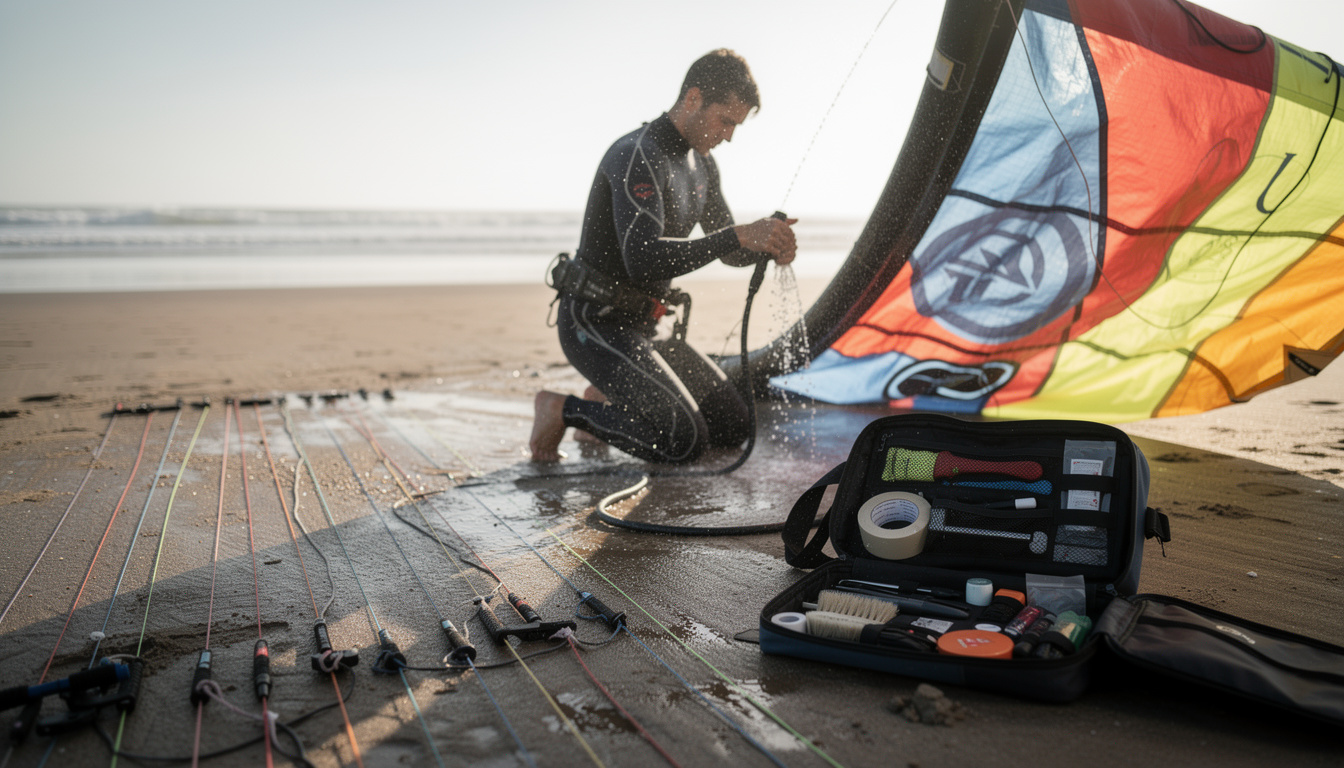
Kite cleaning isn’t about making your gear look pretty for Instagram. It’s about controlling the slow damage that comes from salt crystals, fine sand, mud, and moisture. If you ride coastal spots, saltwater leaves deposits that harden as the kite dries. Those crystals rub against fibers when the canopy flaps or when you pack it tight, basically acting like micro-sandpaper. Over time, that accelerates wear and tear, especially along folds and high-tension areas.
The simplest rule: rinse after saltwater exposure. Fresh water is your friend, but you don’t need to blast the kite like you’re pressure-washing a driveway. A gentle rinse is usually enough. If the kite is muddy or has sunscreen smears (it happens), use a mild soap diluted in water and a soft sponge. Avoid harsh detergents; they can mess with coatings and stitching longevity. Rinse again until there’s no residue.
Drying is where people get lazy—and where mildew moves in. If you pack a damp kite and leave it in a bag for a couple of days, you’re basically booking a reservation for that musty smell and potential fabric degradation. Dry it fully before storing. If you’re finishing late and can’t dry it outdoors, open it in a garage, hang it over a clean line, or drape it across chairs so air can circulate. The goal is “dry through,” not just “feels dry on top.”
Jamie has a rule after rainy sessions: canopy comes out of the bag the minute they get home, even if dinner is waiting. Fifteen minutes of airflow now beats hours of scrubbing later. And if you’ve ever had to remove mildew spots, you know it’s not just ugly—it can be stubborn and sometimes permanent.
There’s also a practical benefit: a clean, dry kite packs smaller, unfolds easier, and launches without weird sticky patches. That’s not vanity; that’s performance optimization in real life. When your fabric isn’t stiff with salt and your bridles aren’t gritty, everything feels smoother.
If you’re wondering how often to do a “deep clean,” think in cycles: quick rinse after every salty session, light wipe when visibly dirty, and a more careful wash when you notice the kite feeling stiff, smelling off, or dragging sand out of every fold. Keep it simple, keep it regular, and you’ll extend the life of the materials without obsessing. Next up: packing methods that prevent the classic next-session mess.
To see a solid rinse-and-dry workflow in action, it helps to watch a few experienced kiters do it step-by-step (and notice how unglamorous—but efficient—it is).
Smart packing methods for traction kiting: fewer tangles, less damage, faster next launch
Packing is where good intentions go to die. You’re tired, the wind is twitchy, sand is everywhere, and somebody’s kite is about to roll into yours. Still, proper packing is one of the highest-leverage parts of gear care. Do it right and you’ll avoid line spaghetti, crushed structure, and weird creases that turn into weak points. Do it sloppy and your next session starts with frustration—if you’re lucky.
First, secure the kite. Stake it, weigh it down sensibly, or position it so it won’t relaunch while you’re detaching. Then disconnect your flying lines from the bridle(s) and deal with tangles immediately. “I’ll fix it later” is how you end up with a knot that tightens over weeks in storage. While you’re there, give the bridle a quick scan for uneven tension and tiny snags. This is basically a micro line inspection that takes 20 seconds.
Now choose a packing style that suits your kite and bag. These are common, field-tested options:
- 🌀 Standard packing: fold or roll the canopy neatly, wind lines from kite toward handles/bar to keep them organized.
- 🧙 Parapacking: “stuff” the canopy while sliding the bag along, great for soft kites and quick exits—just keep sand out.
- 🔄 Figure-eight winding: reduces twists and helps lines lay flat when you unwind next time.
- 📏 Looping technique: creates consistent loops that deploy cleanly—handy in cold weather with gloves.
One underrated detail: keep fragile parts off the ground during take-down. On some setups, spars or leading-edge structure can get stepped on by passersby or nicked by shells/rocks. Even if your kite doesn’t have rigid spars, avoid dragging the leading edge through sand. Sand migrates into seams and connection points, then grinds away during flight. That’s pure wear and tear you can prevent with a little mindfulness.
Also, place bridles on top of the canopy in a controlled way. Don’t just toss them. Lay them in gentle runs with minimal crossing. It takes an extra minute and saves you ten later. Jamie does a quick “bridle pat-down” before closing the bag: no tight bends, no trapped sand, no lines pinched in zippers.
Here’s a small packing reality check: if you regularly pack in a hurry, invest in a bag that makes the good habit easier. Bigger opening, smooth zipper, enough length so you’re not forcing folds. You’re not being precious—you’re making the workflow frictionless, which is how habits survive.
Packing done right sets you up for the next piece of the puzzle: storage that protects your kite when you’re not even thinking about it.
Storage tips for traction kites: protect fabric, lines, and hardware between sessions
Storage is where time does its slow work. A kite can look perfectly fine after a session, then quietly degrade over weeks because it sat in heat, sunlight, or damp air. Good storage tips aren’t complicated; they’re just specific. The goal is to prevent UV damage, moisture problems, and pressure points that deform materials.
Pick a place that’s cool, dry, and out of direct sunlight. UV is relentless on technical fabrics, even when the kite is “just sitting.” If you live in a small apartment and your gear ends up near a bright window, throw a blanket over the bag or use a closet. Heat is another one: don’t leave your kite in a hot car trunk after a session. Repeated heat cycles can shorten the life of coatings and can make lines creep or shrink unevenly.
Moisture is the big villain. Always store the kite fully dry. If you had to pack damp, open it up as soon as you can. Hanging the canopy or leaving it spread out in a garage with airflow is usually enough. This is the difference between gear that smells neutral for years and gear that turns into “that bag” nobody wants to open.
Storing lines well is part of equipment maintenance, not an afterthought. Lines stored under tension or with tight kinks develop memory that shows up as twists and uneven load distribution. Wind them cleanly, keep them straight, and avoid trapping sand in knots. If you use larks-head connections, make sure they’re clean before storing—sand inside those knots is a slow abrasion machine.
It can be worth investing in purpose-built bags or storage solutions (hard cases for travel, padded bags, moisture-resistant options) if you travel often or ride year-round. You don’t need a luxury setup, but you do want something that protects against accidental compression and damp floors. Storing the bag off the ground helps, especially in basements where humidity can creep up.
To make storage decisions easier, here’s a quick table Jamie uses when swapping seasons (snow to beach, or vice versa):
| Area 🧭 | Best practice ✅ | Why it matters 🔎 | Common mistake ⚠️ |
|---|---|---|---|
| Sun/UV ☀️ | Store in a dark closet or covered bag | Reduces fabric weakening and color fade | Leaving the bag by a sunny window |
| Moisture 💧 | Dry completely; air out if packed damp | Prevents mildew and odor, protects stitching | Packing wet and forgetting it for days |
| Heat 🔥 | Avoid hot car storage; keep temps stable | Protects coatings, glue points, and lines | “Just overnight” in a hot trunk |
| Lines 🧵 | Figure-eight wind; avoid tight kinks | Less twist, more consistent load paths | Stuffing lines loosely with sand |
| Compression 🧳 | Don’t crush under heavy gear | Avoids permanent creases and deformed parts | Stacking weights on the kite bag |
Once storage is handled, you’re ready for the “grown-up” part of ownership: knowing when to patch, when to replace, and how to keep small issues from becoming trip-ending failures.
Watching experienced riders pack and store gear is useful because you catch the tiny details: where they place bridles, how they avoid zipper pinches, and how they handle wet days without panic.
Repair techniques and long-term performance optimization: fix small problems before they explode
Let’s talk about the moment everyone hates: you unroll the kite and spot a pinhole, a scuffed panel, or a bridle section that looks suspiciously thin. The good news is that basic repair techniques are totally learnable, and most small fixes are way easier when you do them early. The bad news is that ignoring them turns minor damage into big bills—or worse, a failure mid-session.
For canopy pinholes or small tears, adhesive repair tape designed for ripstop is your first line of defense. Clean and dry the area, round the corners of the patch (corners peel first), and apply with firm pressure. If the tear is on a high-load seam or keeps reappearing, that’s when a stitched repair or professional panel work makes sense. A patch is not a moral failure; it’s normal maintenance for gear that gets used.
Bridles and flying lines are trickier because they’re load-bearing. If you find fraying, significant fuzz, or a section that feels thinner than the rest, don’t “send it and see.” Replace the line or bridle segment. Many riders keep a small spare line kit or at least know the exact spec to order. This is where line inspection pays off: you spot degradation before it becomes a snap. And a snapped bridle under power is not just annoying—it can create unpredictable behavior that turns into a safety issue fast.
Hardware and connection points deserve respect too. Metal rings can develop burrs that slowly cut fibers. Plastic parts can crack from UV and stress. Run a fingertip around rings and edges—if it feels sharp, it is. Smooth burrs if appropriate, or replace the component. This is one of those boring safety checks that quietly keeps sessions drama-free.
Now for performance optimization, because maintenance isn’t only defensive. Small tweaks can keep your kite feeling crisp:
- ⚖️ Keep line lengths even: uneven stretch makes the kite pull weird and reduces control range.
- 🧭 Re-check mixer/trim settings (foil kites): tiny deviations can change angle of attack and stability.
- 🧽 Remove grit from pulleys (if your bridle uses them): sand increases friction and slows response.
- 🪡 Patch early: smooth airflow matters, and flapping edges grow into bigger tears.
Jamie’s real-world example: after a month of beach sessions, the kite started backstalling more than usual. Instead of blaming conditions, Jamie checked the bridle and found a partially seized pulley packed with sand. A rinse, a careful clean, and the kite went back to its normal trim. That’s the kind of “repair” that costs minutes, not money.
The mindset shift is simple: maintenance isn’t a separate hobby; it’s part of riding. If you treat your kite like a system—fabric, lines, hardware, storage environment—you’ll get more reliable power delivery, smoother handling, and fewer session-ending surprises. And once you’ve got repairs under control, all that’s left is staying consistent with the basics.
How can I prevent my traction kite from getting damaged over time?
Focus on consistent equipment maintenance: rinse after saltwater, remove sand, dry fully, and do line inspection before each session. Keeping the kite out of UV when you’re not riding also cuts wear and tear a lot.
What should I do if my kite gets wet and I have to pack it?
Pack it temporarily, then open it up as soon as you can. Air it out in a garage or hang it so airflow reaches both sides. Don’t store it long-term until it’s fully dry, or mildew can form.
How often should I do safety checks on lines and releases?
Do quick safety checks every session: look for frays, knots, and gritty larks-heads, and test the quick-release/reset. Do a deeper check after heavy crashes, strong-wind days, or any time the kite feels ‘off’.
What’s the best way to store traction kiting gear between weekends?
Use storage tips that protect from UV, heat, and moisture: keep the kite dry, store it in a cool dark place, avoid hot cars, and wind lines neatly (figure-eight helps). Storing the bag off the ground is a bonus in humid spaces.
Which repair techniques are safe to do at home, and when should I go pro?
At home you can handle kite cleaning, small ripstop tape patches, and replacing worn lines/bridle segments if you match specs correctly. Go pro for major seam repairs, large panel tears, or anything near critical load areas where failure could affect safety.