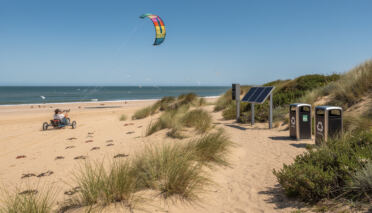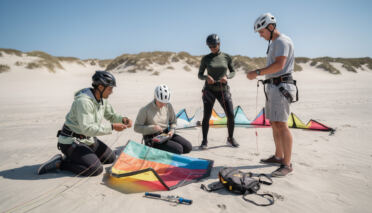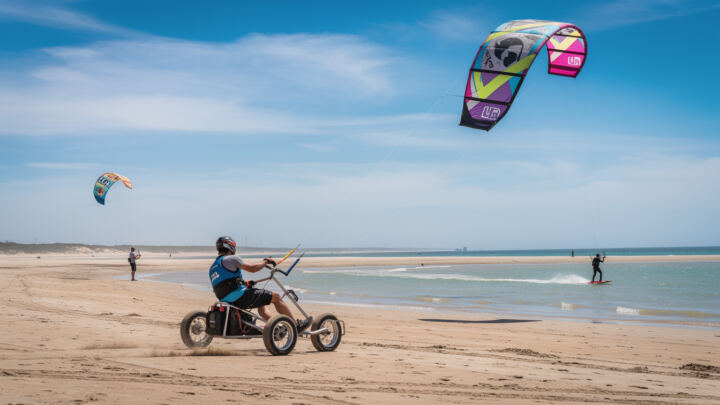
Walk along any windy shoreline and you’ll see it: a sky full of color, and a few kites that clearly mean business. Those are traction kites—the ones built not just to look pretty, but to pull. They’re the “engines” of modern wind sports, powering everything from mellow land kiting sessions on grass to full-send kitesurfing and high-speed buggy runs on hard-packed sand. And while people love to lump them together as power kites, the reality is way more interesting: different shapes, different control systems, different safety setups, and totally different vibes depending on what you want to do.
What’s wild is how quickly the gear has evolved. In 2026, even entry-level setups borrow ideas from pro-level kite design: cleaner aerodynamics, smarter bridle layouts, better materials, and safety systems that feel less like “optional accessories” and more like standard equipment. If you’re choosing between foil kites, LEI kites, fixed-bridle trainers, or newer single-skin concepts, you’re not just picking a kite type—you’re choosing how you’ll ride, what wind range you’ll enjoy, and how much kite control you’ll have when the gusts start acting spicy.
En bref
- 🪁 Traction kites (aka power kites) are built to generate pull for riding, not just casual flying.
- 🌬️ Two big families dominate: foil kites (air-filled cells) and leading edge inflatables for water performance.
- 🏄 Best matches matter: kitesurfing typically favors LEIs, while land kiting and snow often love foils.
- 🧠 Better kite control usually comes from the right line system (2/4/5 lines), good trim, and practiced handling.
- 🛟 Safety isn’t “extra”: quick release, leash systems, space management, and wind awareness are core skills.
Traction kites basics: how kite design turns wind into pull
At a glance, traction kites look like bigger versions of sporty stunt kites, but the goal is totally different. A stunt kite is about tricks and precision; a traction wing is about usable power—steady enough to tow you, responsive enough to steer, and predictable enough that you’re not constantly getting surprised.
The physics is simple in concept and sneaky in practice. A traction wing creates lift like a wing, but it also creates drag, and that mix becomes forward pull once you’re connected via lines and (often) a harness. Change the angle of attack, move the kite across the wind window, and you change how much force you feel. That’s why people obsess over kite design: even small changes in profile, aspect ratio, and bridle geometry can make a kite feel calm… or feral.
Line systems and kite control: why 2, 4, and 5 lines feel so different
One underrated way to understand kite types is to start with the control system, because it dictates how you manage power. A 2-line setup is usually the simplest: you steer left/right, but depower is limited, so you’re relying on choosing the right size and wind. It’s fun for small trainer power kites, but it has real limits once you want consistent towing.
4-line setups are where kite control gets serious. You can steer and also “brake” or adjust the kite’s angle, especially with handles on quad-line foils. In buggying or snowkiting, that can mean the difference between smooth speed and sketchy surges. 5-line systems show up a lot in water-oriented gear, typically to help with relaunch and safety behavior depending on the model and discipline.
Here’s the thing: more lines don’t automatically mean “better.” They mean more options, and options only help if you practice them until they’re instinct.
Materials that matter in 2026: durability without turning your kite into a brick
Modern traction wings usually rely on ripstop nylon (and sometimes ripstop polyester blends) because you want light fabric that resists tearing when it’s stressed. That stress is constant: flapping at the edge of the window, sand abrasion during setup, and the occasional “oops” landing on a rough surface.
Foil canopies use internal ribs to create cells; inflatables use bladders and reinforcements on the leading edge. Either way, you’ll notice that premium builds focus on seam quality, reinforcement patches, and bridle line consistency. It’s not glamorous, but when you’re doing land kiting on a gusty day, those details decide whether you’re cruising or repairing.
Insight: traction kites don’t just “catch wind”—they translate wind into controllable force, and that translation lives in the details of control layout and fabric engineering.
Foil traction kites: closed-cell, open-cell, and why land kiting loves them
Foil traction kites are basically soft wings with no rigid frame. Instead, they use cells—pockets formed by internal ribs—to inflate and hold an airfoil shape. When air fills those cells, the kite stiffens up enough to fly with authority. That “soft structure” is exactly why so many riders love foils: fewer hard parts to break, easy packing, and a feel that can be incredibly smooth when tuned right.
To make this real, imagine a weekend crew at a wide beach: Maya is learning buggying, and she wants something stable that won’t punish small mistakes. A mid-size foil with a predictable pull lets her build muscle memory: park the kite, edge the buggy, manage gusts. That’s classic foil territory.
Open-cell vs closed-cell foils: same family, different personalities
Open-cell foils are common for land and snow. Air flows in through openings and the kite inflates in motion, but it’s not designed to stay airtight if it hits water. That’s fine for fields, frozen lakes, or dunes. Setup is straightforward: lay it out, check bridles, tension lines, and let the breeze do the rest.
Closed-cell foils take things further by using valves and construction that helps the kite keep its shape longer and handle water better. They can be used in kiteboarding and certain water scenarios, depending on the exact model and rider skill. The benefit is efficiency and a wide wind range; the tradeoff is cost and complexity.
Fixed-bridle foils: the gateway power kite for beginners
Fixed-bridle foils are the “grab it and go” version of power kites. You’ll see them sold as trainer kites: affordable, quick to set up, and stable enough for learning the wind window. They’re also popular in parks for pure fun—no board, no buggy, just the joy of feeling the pull and steering clean arcs through the sky.
But here’s where people get it wrong: they think a trainer is “just a toy.” A well-sized trainer in solid wind can yank hard. Even early sessions should include safety habits: clear space, gloves if needed, and a plan for letting go or flagging out.
Insight: foil traction kites reward clean technique—if you fly them smoothly, they feel like a turbine; if you get sloppy, they’ll tell you fast.
Want to see foil handling and tuning concepts in action? Watching experienced pilots talk through setup and window management helps a ton.
Leading edge inflatable (LEI) traction kites: the workhorse of kitesurfing
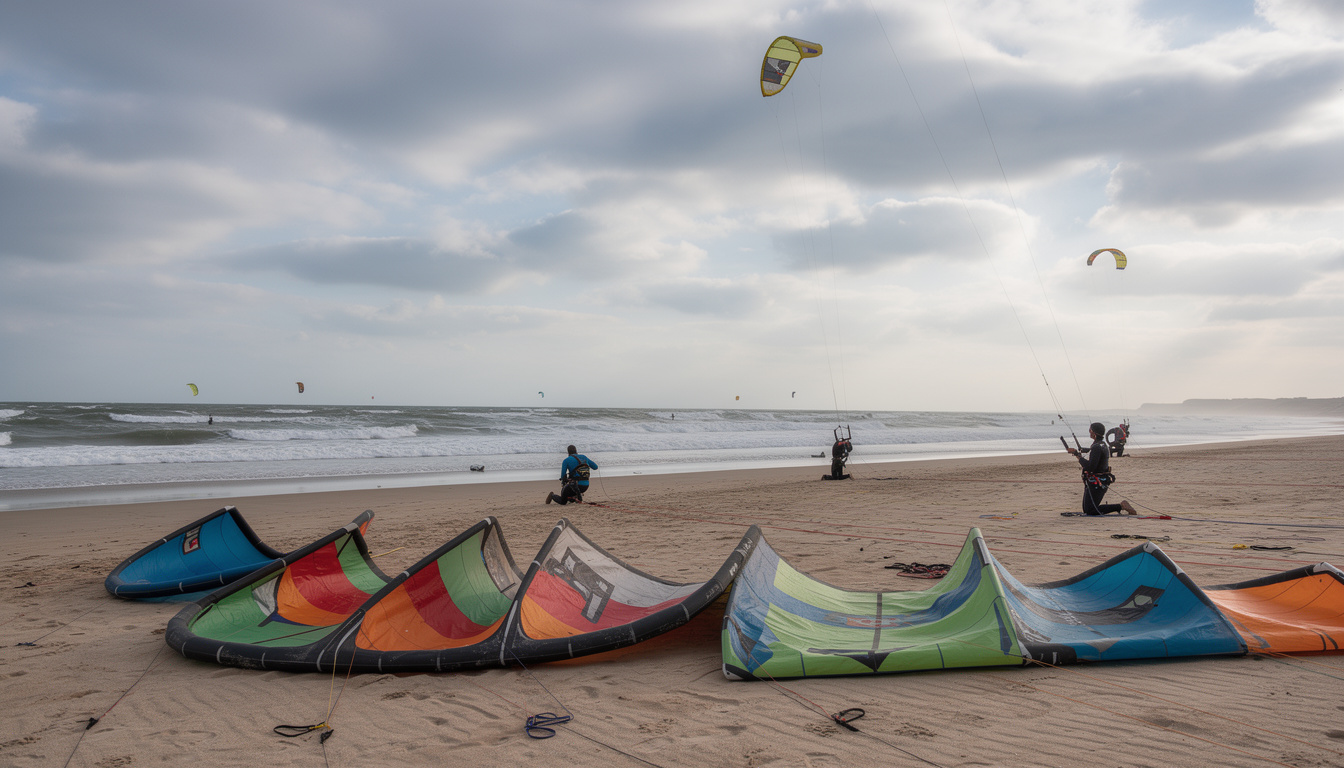
When people picture kitesurfing, they’re usually picturing an LEI. The inflatable leading edge and struts give the kite a defined shape even when it’s not fully powered, which makes it feel stable, predictable, and—crucially—more manageable in water relaunch situations. That inflatable structure is why LEIs became the default in mainstream kiteboarding culture: they’re built for the messiness of waves, chop, and crashes.
In practical terms, an LEI can take a dunking, drift downwind, then pop back into position with the right line tension and technique. That’s not magic; it’s a design choice. The kite holds its profile thanks to air pressure, and the bridle plus depower system lets riders adjust power without changing kite size mid-session.
Where LEIs shine: surf, freeride, and messy wind
Say Leo rides a gusty coastal spot where the wind shifts as it passes buildings near the beach access. On a foil, those shifts can feel like sudden surges if you’re not dialed. On an LEI, the combination of structure and depower can make the session less stressful. It’s not that LEIs ignore physics—it’s that their kite design is optimized for real-world water chaos.
LEIs are also popular for progression: riders learn jumps, transitions, and board recovery with gear that’s designed to behave in water. Add modern safety systems—quick releases, leash setups that flag the kite, and better bar ergonomics—and you get a platform that supports skill-building instead of fighting you.
Setup reality check: pumps, valves, and why preflight matters
LEIs require more setup time than many foils. You inflate the leading edge, check struts (depending on the model), inspect lines, and confirm the safety system is clean and untangled. It’s not busywork. A twisted bridle or misrouted line can turn a calm launch into an instant problem.
A simple habit that experienced riders swear by: do a quick “bar to kite” scan—visually follow each line path before launching. It takes 20 seconds and can save your session.
Insight: if your main goal is kitesurfing and water relaunch reliability, LEIs are popular for a reason: they’re built for the realities of falling, drifting, and trying again.
For water-focused handling and relaunch technique, it’s worth watching a dedicated LEI session breakdown.
Traction kite applications: matching kite types to terrain and goals
Once you realize traction wings are tools, not trophies, choosing becomes way easier. The best setup depends on where you ride, how steady your wind is, and what you want out of the session—cruising, speed, freestyle, or just learning the basics. The same kite that feels perfect on a frozen lake can feel annoying (or unsafe) in a crowded beach launch.
This is where kite applications get practical. Think of it like picking tires: you wouldn’t bring slicks into mud, and you wouldn’t bring deep tread to a racetrack.
Quick comparison table: traction kites by use case
| 🪁 Kite type | ⭐ What it’s like | 🏄 Best for | ⚠️ Watch out for |
|---|---|---|---|
| Open-cell foil | Smooth pull, packs small | 🌾 Land kiting, 🏔️ snowkiting, buggying | Not for water; needs clean bridle management |
| Closed-cell foil | Efficient, wide wind range | 🌬️ touring, some kiteboarding setups | More complex; higher cost |
| LEI inflatable | Stable structure, great relaunch | 🌊 kitesurfing, freeride, waves | Longer setup; bladder care matters |
| Fixed-bridle trainer | Simple, affordable pull | 🎓 learning wind window basics | Limited depower; size choice is critical |
Choosing the right traction kite: a practical checklist (not just “buy bigger”)
If you’re shopping or renting, you’ll get better outcomes by thinking in constraints. Wind, terrain, skill, and safety space all matter. A setup that’s “perfect” on YouTube might be totally wrong for your local spot.
- 🌬️ Wind range: match kite size to typical wind, not the windiest day you can imagine.
- 🧭 Space: beaches, fields, and frozen lakes give different safety margins for launches and mistakes.
- 🏄 Discipline: kitesurfing and buggy racing ask for different handling and durability priorities.
- 🧠 Skill level: start stable, then scale up once your kite control is consistent.
- 🛟 Safety system: know your leash and quick-release behavior before you need it.
Brands come and go in popularity, but names like Ozone, Cabrinha, and Slingshot tend to stay in the conversation because they iterate steadily: better depower, cleaner bars, stronger reinforcement, and thoughtful relaunch behavior.
Insight: the “best” traction kite is the one that fits your wind, terrain, and goals so well that you spend more time riding and less time wrestling.
Launching, handling, and safety: everyday habits that keep power fun
Traction wings aren’t dangerous because they’re evil; they’re dangerous because they’re powerful, and people underestimate how fast conditions change. A gust line rolls in, your kite moves from edge to power zone, and suddenly you’re dealing with a whole new level of pull. That’s why good habits matter as much as good gear.
Whether you’re flying a trainer in a park or rigging for kiteboarding, you want a repeatable routine that catches problems early. Think of it like a pilot checklist, just less dramatic and more sandy.
Solo and assisted launching: simple steps that prevent dumb mistakes
Most kite launches share the same DNA. You lay lines cleanly, keep them symmetrical, and bring the kite up smoothly so it loads gradually. With dual-line or quad-line systems, symmetry isn’t a “nice-to-have”—it’s what keeps the kite from instantly turning and diving.
- 🧵 Lay out your lines straight and check for crossings.
- 📏 Confirm both sides are equal length at the bar/handles.
- 🪁 Position the kite so it can catch wind without flipping or snagging.
- 🤲 Bring tension up slowly; steer it to the edge of the window first.
- 🧯 Know where your quick release is before you launch.
Assisted launching is often safer in light wind or crowded areas, because your helper can stabilize the kite while you create clean line tension. The key is communication: agree on a release signal and stick to it.
Leash systems, harness choices, and how to “depower” without panic
In 2026, it’s hard to justify riding without a reliable safety leash in most traction disciplines. A proper system lets you flag the kite so it loses power quickly. That matters most when something goes sideways: unexpected gust, tangled bridle, or a rider tripping at the wrong moment.
Harnesses also change the whole experience. Instead of death-gripping handles, you can distribute load across your core and hips. Less fatigue means better decisions, and better decisions are basically the hidden superpower of safe wind sports.
Micro-adjustments: tails, bridles, and why stability tweaks are normal
Sometimes the kite is fine and the conditions are the problem. Turbulent wind behind dunes or buildings can make any wing feel twitchy. Small stability aids—like adding a tail on certain designs, or adjusting trim on a depower system—can calm the flight. Visual accessories like spinners are fun too, but stability tools are about function first.
Insight: the smoothest riders aren’t “braver”—they’re consistent with setup, obsessive about space, and calm enough to use safety systems early instead of late.
What are the best traction kites for beginners who want to learn kite control?
Start with a stable fixed-bridle trainer or an easy open-cell foil in a conservative size. Prioritize predictable handling, clear safety space, and repetition of wind-window drills before chasing bigger power.
Which kite types are most common for kitesurfing versus land kiting?
LEI (leading edge inflatable) kites are the common go-to for kitesurfing because of structure and water relaunch. Land kiting often favors foil traction kites, especially open-cell models, due to easy packing and smooth pull on fields, beaches, and snow.
How do I choose the right size for power kites without getting overpowered?
Match size to your typical local wind, not rare storms. If you’re unsure, go smaller—control and confidence build faster. A lesson or guided session helps you connect wind speed, rider weight, and kite area in a practical way.
What safety gear should I treat as non-negotiable for traction kites?
A working quick release, a proper leash/flag-out setup appropriate for your system, and a clear launch area are the big ones. For many riders, gloves and a harness reduce fatigue and improve decision-making when conditions get punchy.
How should I maintain traction kites to keep performance consistent?
Rinse and dry gear after salt or sand exposure, inspect bridles and pigtails for wear, check seams and canopy for small tears, and store everything dry and loosely packed. Regular small checks prevent big failures during a session.