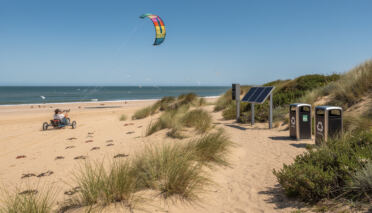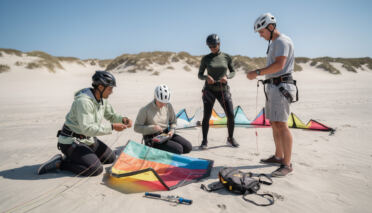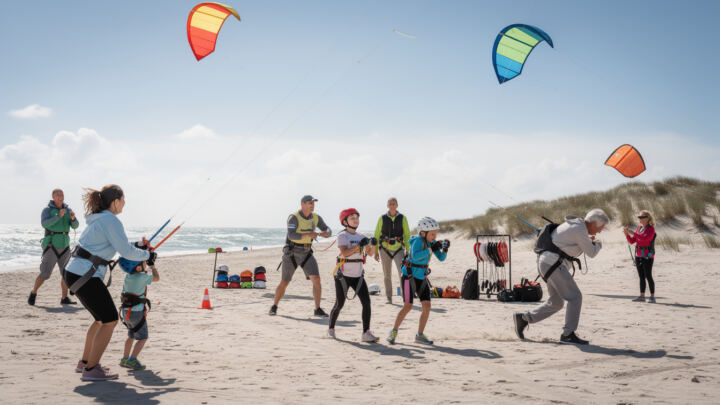
Traction kiting looks laughably simple from far away: a kite, a couple of lines, and someone smiling like they’ve just discovered free horsepower. Up close, it’s a whole conversation between wind, timing, space, and your reflexes—sometimes all talking at once. And that’s exactly why it works for all ages: it’s not a brute-force sport, it’s a “learn the rules of the sky” sport. The catch is that the sky doesn’t care if you’re 12 or 62. The wind window still has a power zone, a gust still hits when it wants, and lines under tension are still no joke. The best sessions happen when you’re methodical, not fearless.
Getting started has genuinely improved in recent years. By 2026, most brands label lines more clearly, schools have tightened teaching standards, and weather apps can show gust spreads and radar with scary precision. But none of that makes traction kiting “safe by default.” You still need solid kite control, realistic planning, and a little humility on day one. Think of this as the stuff people wish they’d heard before their first sketchy launch—practical beginner tips, real kite safety habits, and a clear-eyed look at gear, wind conditions, and learning techniques that carry over into kiteboarding, buggying, landboarding, or snowkiting.
- 🧭 Pick steady wind conditions first; “just a bit gusty” is a trap.
- 🪁 Choose beginner-friendly kite sizes; smaller isn’t boring, it’s controllable.
- 🧤 Wear the boring stuff: gloves + eye protection + helmet if you’ll be pulled.
- 🧱 Your spot matters: build a huge “keep-out bubble” and avoid obstacles and crowds.
- 🧠 Learn the wind window and power zone before you try anything spicy.
- 🛟 Use safety leashes (“kite killers”) and practice bailing out on purpose.
- 📚 Short, structured sessions beat random attempts—especially for outdoor sports like buggy or board.
Traction Kiting for All Ages: Safety-First Habits That Actually Work
The biggest mindset shift is simple: traction kites aren’t “toys that fly,” they’re wings that pull. That pull can feel like a playful tug in light wind, and then turn into a full-body towing system when you’re overpowered. This is why the sport can be welcoming for all ages—you don’t need to be reckless, you need to be consistent. The people who stick with traction kiting for decades aren’t the ones who “send it” on day one. They’re the ones who build habits that make mistakes small and recoverable.
Picture a beginner named Jamie. Jamie shows up at a wide beach, sees whitecaps, and thinks, “Nice, the wind is really working today.” Ten minutes later Jamie does the classic accidental “superman”: feet lifted, arms forward, getting dragged because the kite surged through the power zone. Jamie wasn’t trying to be reckless. Jamie simply didn’t have the mental model yet: wind strength + kite size + launch angle = risk. Once that clicks, you start choosing calm days, conservative gear, and calmer launches.
Kite safety gear: the “boring” items that save your skin
People love debating boards and brands, but the unglamorous gear is what stops a minor oops from becoming a real injury. Eye protection sounds optional until a handle whips or a line snaps back. Gloves sound fussy until you instinctively grab a tensioned line and learn how fast it can burn. A helmet sounds dramatic until your head meets packed sand or frozen crust.
For beginners (and honestly, for anyone who values their fingers), a simple baseline works:
- 🕶️ Protective eyewear for glare and snap-back risk
- 🧤 Gloves (sailing or durable fingerless) for line handling
- 🪖 Helmet if you’ll be skudding, buggying, landboarding, or snowkiting
- 👟 Closed-toe shoes with grip (no flip-flops, ever)
- 🧴 Water + sunscreen, because dehydration makes you careless
One more that sounds like a random life tip but isn’t: tie up long hair. Lines, bridles, and handles love grabbing hair at the worst moment. It’s not about style; it’s about line management.
Hard “no” zones: where traction kiting stops being fun
Some rules are boring until you see why they exist. Don’t fly near power lines. Don’t fly near roads. Don’t fly near airports or under obvious flight paths. Don’t fly in storm conditions—lightning plus long lines is a terrifying combination, not a “cool story.” And don’t fly close to other people, even if your kite feels small. Lines under load can cut, and a fast-moving foil can hit like a sandbag.
What counts as “close”? A practical answer: if your lines are 20–25 meters, your keep-out bubble is at least that radius in every direction downwind, plus extra for the “whoops, it surged” moments. Good pilots don’t just protect themselves; they protect everyone downwind. That’s the heart of kite safety.
Once your safety habits are locked in, the next thing that decides how your session goes is the day itself—because picking the right wind is basically a superpower.
Best Wind Conditions for Beginner Traction Kiting: Reading Weather Without Guessing
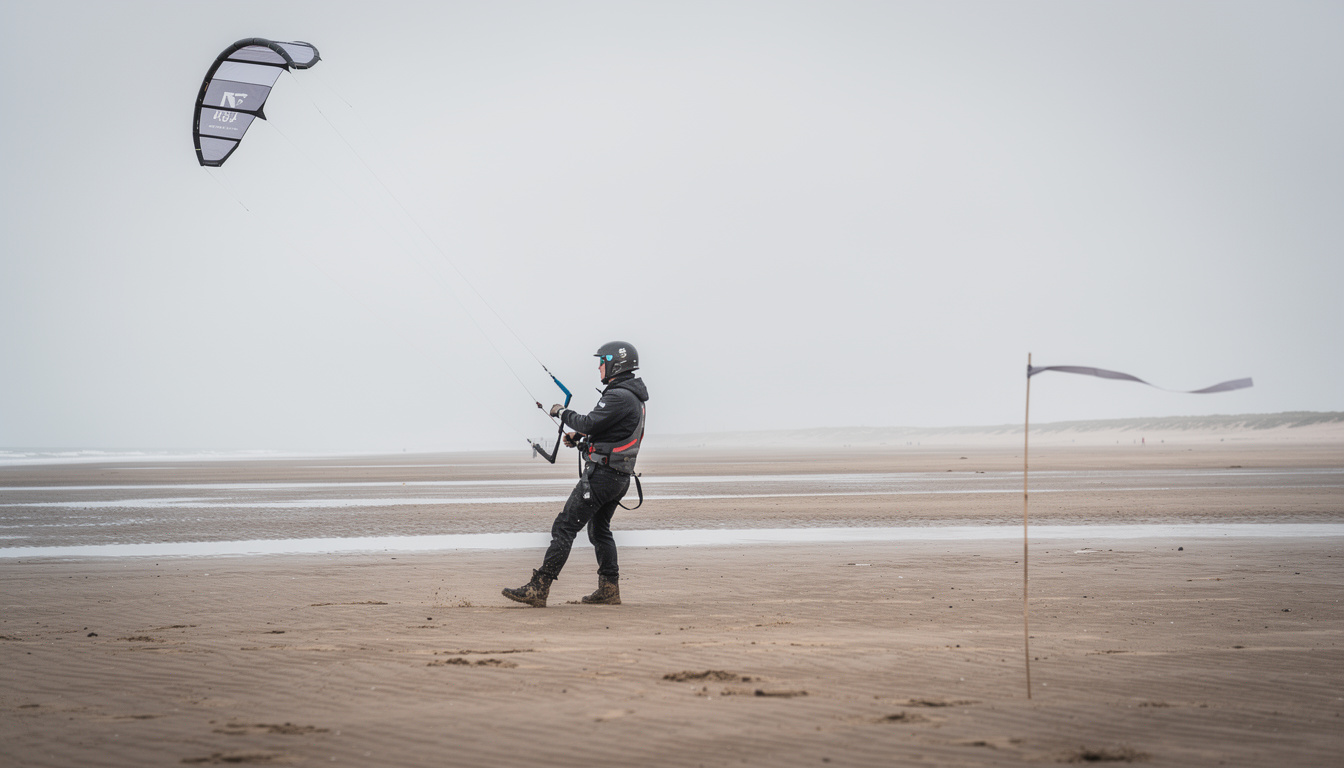
If traction kiting had a cheat code, it would be: pick the right day. Not the windiest day, not the warmest day—the day with steady airflow, room to breathe, and no drama on the forecast. In 2026, most weather apps will happily show you layered wind models, gust charts, and radar loops. The skill isn’t finding data; it’s translating it into a simple decision: go, wait, or relocate.
A practical starting point for many beginners on common four-line foils is the kind of breeze that moves leaves and small branches but doesn’t feel like the air is shoving you around. That’s roughly Beaufort Force 3 in the old scale (still useful because it matches human feel). It’s enough to keep the kite responsive while giving you time to think. The goal early on is to learn kite control, not to test your pain tolerance.
Why gusty wind is worse than strong wind (especially for all ages)
Strong wind announces itself. You step outside and immediately think, “Okay, that’s serious.” Gusty wind is sneaky. The kite may feel manageable for 20 seconds, then a gust hits and suddenly it feels like your kite just gained a size or two. That’s where beginners get pulled off balance, over-correct, and accidentally steer straight into the power zone while panicking.
A simple way to spot a bad learning day: look at the gap between average wind and gusts. If the gust spread is big, treat it like a warning light. Another quick reality check is physical: are flags snapping hard and then going limp? Are trees upwind swaying in irregular bursts? That “pulsing” often means turbulence and unpredictability.
Site choice for outdoor sports: plan for a safe wind window, not a cool photo
Traction kiting is one of those outdoor sports where the location can make you look “better” or “worse” than you really are. Beginners often pick crowded scenic spots—then wonder why everything feels stressful. A smarter approach is to pick a wide, boring place: empty beach at low tide, open field with no fences, or a large dry lakebed where permitted.
Obstacles upwind (dunes, buildings, tree lines) create wind shadow and rotor. The kite can stall, surge, or collapse, and you’ll spend your energy fighting the sky instead of learning. Many riders use a rough buffer rule of several times the obstacle height downwind before the airflow smooths out. More room is never a mistake.
| Signal 🌬️ | What it often means 🧠 | Beginner move ✅ |
|---|---|---|
| Leaves moving, small branches swaying 🍃 | Likely steady learning breeze | Great for first sessions with conservative kite sizes |
| Wind pulses: strong then weak 🔄 | Gusty/variable, often turbulent behind obstacles | Skip or relocate; don’t “hope it settles” |
| Whitecaps on water 🌊 | Enough wind to overpower many beginners | Downsize a lot, or wait unless supervised |
| Fast-moving dark cloud line ⛈️ | Rapid changes; potential squalls and lightning risk | Do not fly |
Once you can choose good wind conditions, gear suddenly becomes simpler. And that’s perfect, because the next step is building a setup that reduces chaos instead of adding to it.
Want a visual on wind window basics and real beach examples? This search usually returns clear demos:
Kite Equipment for Traction Kiting: Sane Choices That Make Learning Easier
Beginner sessions go sideways for boring reasons: tangled lines, mismatched sizes, confusing left/right rigging, and a launch that’s half improvised. You don’t need an expedition’s worth of gadgets. You need a repeatable routine and kite equipment that lowers the odds of a surprise.
Kite sizes for beginners: smaller is a skill multiplier
New riders often assume a bigger kite equals easier flying. In traction kiting, bigger usually equals more pull and faster consequences. A smaller kite still teaches everything that matters—edge control, smooth steering, brake feel—without turning every mistake into a sprint. It also won’t become useless later; it becomes your high-wind kite as you progress.
Also, two kites with the same square-meter number can feel totally different. Aspect ratio, bridle layout, and canopy profile change how “lifty” or “grunty” a kite feels. So treat any size chart as a starting point, then be conservative while you’re building reflexes.
Your first-session checklist: reduce chaos on purpose
This is the stuff that quietly prevents the classic beginner problems: runaway kite, messy launch, sun fatigue, and annoying little injuries that end the day early.
- 📌 Ground stake to secure brake lines after landing (where allowed)
- 🧱 Soft weights (sandbags or filled water bottles) for the trailing edge
- 🧭 Wind direction indicator (a ribbon on a stick works fine)
- 📏 Optional: anemometer while you’re learning what wind speed feels like
- 🩹 Small first aid kit for scrapes and line nicks
- 🥤 Water + snack to keep decision-making sharp
A small but real tip: avoid using rocks on kite fabric. Rocks scuff, snag bridles, and eventually “mystery-tear” your canopy. Smooth weights are kinder and more predictable.
Lines, colors, and the left-right trap (yes, it still happens)
Modern bars and handles are better labeled than they used to be, but people still rig left/right incorrectly—especially if they come from two-line stunt kites or they’re rushing. A common convention is red = left (nautical tradition), with blue/green on the right. The convention matters less than consistency: pick a system and stick to it every time.
Line strength matters too. Underspec lines can snap under load, and snap-back is one of the nastier hazards in the sport. Overspec lines add drag and make the kite feel sluggish. When in doubt, follow the manufacturer’s recommended ranges for that specific kite model.
Once your setup feels repeatable, the sport becomes way less mysterious. Next comes the thing that makes everything click: understanding how the kite “behaves” inside the wind window, and why beginners get yanked.
If you want a solid walkthrough of line setup and four-line handling, this search tends to surface practical step-by-step videos:
Kite Control Basics: Wind Window, Power Zone, and How to Stop Getting Yanked
Kite control isn’t about strength. It’s about placement, anticipation, and having enough calm bandwidth to correct small errors before they snowball. The wind window model is what makes traction kiting predictable. Without it, it feels random. With it, you can start “reading” what the kite is about to do.
The wind window in plain English (no physics lecture)
Stand with your back to the wind. Imagine a giant half-dome in front of you, with the radius equal to your line length. That dome is your wind window. The kite generates different pull depending on where it sits in that window.
Near the edges—far left or far right, and often higher up—the kite pulls less. Low and centered, closer to directly downwind, the pull ramps up fast. That area is the power zone, and it’s exactly where beginners accidentally fly when they panic-steer.
Hot launches: why they happen and how to avoid them
A hot launch is when the kite lifts from a downwind position and rockets through the power zone. In gentle breeze it’s manageable. In stronger air it’s the classic “why am I suddenly running?” moment. Avoiding hot launches is mostly about two choices: picking safe wind conditions, and launching from a lower-power angle near the edge of the window.
When you feel pull building, you’ve got options that don’t involve heroics: steer toward the window edge, use smooth brake input on a four-line setup, or if you’re genuinely losing control, use your safety system. Bailing early is a skill, not a failure.
Body position: the unsexy detail that fixes half your session
Most first-day mistakes come from people tensing up and pulling their hands to their chest. Now they can’t steer properly because they’ve run out of range of motion. Keep hands in front of you, elbows slightly bent, feet apart, and lean back against the pull.
If you start moving unwillingly, sliding on your feet (skudding) can be safer than sprinting. Sprinting encourages you to look down, lose kite awareness, and trip—then the kite “wins” instantly. Ask yourself a quick check: can you move each hand independently without twisting your shoulders? If not, reset before the kite speeds up.
Parking at zenith: useful, not magical
Overhead (zenith) often feels like a rest position because pull can be lower there, but it’s not a pause button. Gusts can lift you, then drop you. Parking overhead with an oversized kite is how people get surprised. The safe version is: correct size, steady wind, and active attention even while the kite looks calm.
Once you can hold the kite at the edges, drift it across the window smoothly, and keep your stance stable, you’re ready for the practical flow of a session: setup, launch, landing, and bailing out without drama.
First Sessions and Learning Techniques: A Simple Plan for All Ages (and Future Kiteboarding)
Unstructured practice is how beginners collect confusing stories. Structured practice is how you stack small wins. A strong first session isn’t about speed, distance, or looking cool for strangers. It’s about repeatability: you can rig cleanly, launch without panic, park the kite safely, land without slamming it, and end the session on your terms.
That approach works for all ages because it’s not based on aggression. It’s based on consistent learning techniques—short drills, clear goals, and a stop button you trust. And if you’re eyeing kiteboarding later, these skills transfer almost one-to-one: wind awareness, window management, and emergency depower are the foundation everywhere.
Setup routine: prevent tangles before they exist
Start by placing a clear marker where your stake will go (don’t create a tripping hazard early). Walk downwind a bit more than your line length. Lay the kite with the trailing edge closer to you and the inlets facing downwind, then weight it so it doesn’t inflate prematurely.
Now do the slow, grown-up part: sort the bridle. New bridles often look like spaghetti, but they’re usually just stuck from storage. Separate attachment points and confirm nothing is crossed. This habit prevents the classic “why does it always turn left?” mystery that wastes entire afternoons.
Attaching lines and safety leashes: make the safe choice automatic
Attach power and brake lines consistently, then connect your safety leashes (often called “kite killers”). The point is blunt: if you let go, the kite should depower and fall rather than keep flying as a weaponized plastic bag.
In light wind, practice a controlled “let go” drill on purpose. Kite in a low-power position, relax your grip, release, and watch what it does. Learning that behavior intentionally is miles better than discovering it mid-gust with your heart rate at 180.
The first 10 minutes: small movements, big awareness
Launch with the kite positioned so it avoids blasting through the power zone. Fly it around 50–70 degrees above the horizon on either side, and keep your inputs small. New pilots often “saw” the handles wildly; it feels like you’re doing something, but it just adds speed and confusion.
Expect a few line twists and awkward spins. That’s not failure; it’s normal. Unwind by flying a controlled rotation the other way, or by parking the kite safely and turning your body to untwist—slowly. Staying calm is the real skill.
Landing and bailing out: the skills that keep the sport fun
Four-line kites give you a cheat code: you can back them down for a gentle landing. Bring the kite to a stable position, apply brakes evenly so it stops and reverses down, and make micro-corrections so it doesn’t drift and slam.
If things feel wrong—wind rising, control slipping, rigging doubts—bail early. Letting go while on the safety system is not embarrassing; it’s competence. Pack up, wait for steadier air, or switch to a smaller kite. Knowing when to stop is part of mastery, not a detour.
From here, the obvious next question is whether to go solo or learn with a coach—because the right coaching can compress weeks of trial-and-error into a few focused hours.
What makes traction kiting suitable for all ages?
It rewards technique over strength. If you can follow a methodical routine—steady wind selection, conservative kite sizes, and consistent kite safety habits—you can progress at your own pace. Many older beginners do great because they’re patient and disciplined, which is basically the whole game.
Do I need lessons if I’m only doing land traction and not kiteboarding?
A short lesson still pays off because it locks in kite control, wind window awareness, and emergency procedures early. Those skills prevent the most common beginner mistakes (hot launches, bad landings, unsafe spacing) and also prepare you if you later switch to buggy, board, snow, or kiteboarding.
What are the biggest beginner hazards people underestimate?
Hot launches through the power zone, flying too close to people/obstacles, and line injuries (burns, cuts, snap-back). Gusty wind is a major trap because the kite suddenly feels much larger. Wearing gloves, using safety leashes, and choosing steady wind conditions reduces risk fast.
What kite equipment is non-negotiable for a first session?
At minimum: a reliable safety system (leash/kite killer), gloves, eye protection, proper footwear, and a setup routine with soft weights for the kite. Add a helmet if you expect to be pulled or if you’ll soon use a buggy/board. This kit keeps small mistakes from becoming painful.
How do I know when it’s time to downsize or stop the session?
If you’re consistently getting pulled off balance, struggling to keep the kite near the edge of the wind window, or the gusts are spiking well above the average, you’re overpowered for learning. Downsize immediately or end the session while you still have control—good riders quit early more often than you’d think.