Traction kiting looks harmless from a distance: a kite, a breeze, someone smiling while they glide around like it’s effortless. Then you try it and realize the wind has moods, the lines have opinions, and your hands suddenly forget what “gentle input” means. The good news is that getting good fast isn’t about going harder—it’s about going smarter. The riders who level up quickly aren’t necessarily braver; they’re the ones who build repeatable sessions, choose decent wind conditions, and treat boring basics like they’re cheat codes. That’s especially true now, when modern kites are more refined and video coaching is everywhere, but the fundamentals still decide whether you progress or just get yanked around.
To keep this real, we’ll follow a fictional rider named Maya. She starts with a wobbly first flight in a park, learns why a “nice open field” can still be a terrible spot, and gradually develops kite control that transfers directly into landboarding or kiteboarding. Along the way you’ll see practical kiting techniques, safety tips that feel like skills (not rules), and a simple way to structure practice so you don’t stall out. If your goal is rapid ride progression—more control, more style, fewer sketchy moments—this is the roadmap.
In brief
- 🪁 Start with the right kite size, a clean setup, and a launch area with a big downwind “oops zone” for traction kiting.
- 🌬️ Learn local wind conditions: gusts, lulls, turbulence, and how terrain reshapes the wind window.
- 🧠 Build kite control with scalable drills: parking, edge tracing, smooth power strokes, and recovery reps.
- 🛟 Treat safety tips as training: pre-flight checks, release drills, and smart abort decisions.
- 🏄 Use traction practice for ride progression into landboarding or kiteboarding: timing, edging awareness, and power management.
- 💪 Add stamina building so your technique doesn’t collapse when your forearms are cooked.
- 🧰 Keep sessions consistent with equipment maintenance: line checks, bridle inspection, and quick repairs.
First-Session Setup Tips for Advancing Quickly in Traction Kiting
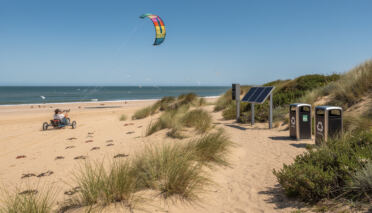
Maya’s first session went wrong in a super normal way: she obsessed over the kite and ignored the spot. In traction kiting, your “runway” is half the sport. A wide open area with clean airflow beats a pretty park with trees, fences, and people wandering through your lines. If you can’t point downwind and say, “That whole area is empty for a long way,” you’re basically volunteering for a drag.
For fast progression, start with a smaller kite in moderate wind. It’s not macho, but it’s effective. Beginners learn faster when they can repeat launches and landings without bracing for impact every time the kite crosses the power zone. Maya’s rule was simple: if her shoulders creep up toward her ears, the session is too powered for learning finesse.
Kite setup that doesn’t sabotage you
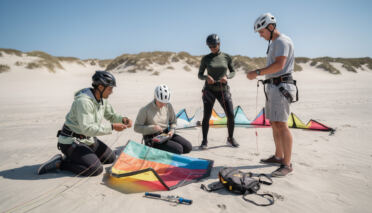
Set your kite leading edge into the wind and secure it with something that won’t shred fabric—sandbags or purpose-made weights are great; sharp rocks are not. Then unwind your lines with patience. Fast progression comes from clean repetition, and nothing ruins repetition like crossed lines or a bridle snag you “hope will fix itself.”
Maya uses a quick “line story” check: handles to leaders to flying lines to bridle points, left and right consistent all the way. Four-line kites add brakes, which is awesome for control, but they’re also less forgiving about twists. Before she even thinks about a launch, she lightly tension-tests line pairs to confirm they load evenly.
Launch and landing as a core skill (not a formality)
People rush the exciting part—getting pulled—and treat launch and landing like an annoying formality. That’s backwards. If you want to advance quickly, you need to make every session start and end clean. Maya practices “boring” launches on purpose: slow inflation, a controlled rise to the edge of the window, then a calm park at 10 or 2 o’clock.
For landings, she aims for consistent, low-drama touchdowns. She brings the kite down to the edge, uses brake input to kill power, and takes a beat to breathe before walking to secure it. That pause is a progression hack: it keeps the session from turning into a frantic loop of small mistakes.
A pre-flight routine that actually sticks
This is where safety tips become performance. Maya keeps the same checklist every time, because excitement is when you forget the obvious. She’s not trying to be cautious; she’s trying to be consistent, and consistency is what makes skills show up on demand.
- ✅ 🧭 Confirm your downwind space is clear and you have an exit route.
- ✅ 🪢 Check for crossed lines, worn knots, and free-moving bridles.
- ✅ 🧤 Wear gloves—line friction burns can kill your practice week.
- ✅ 🛟 Test your leash and quick release before loading the kite.
- ✅ 🌬️ Feel the wind at ground level and look at treetops/flags for gust cues.
- ✅ 👀 Scan for people or dogs drifting into your zone.
The funny part? Some of the best “classic” training wisdom from the 90s still nails the sequence: space, setup, launch, control. Modern slow-motion tutorials add detail, but the order of operations hasn’t changed. Next up is the real boss fight: reading wind conditions like a local.
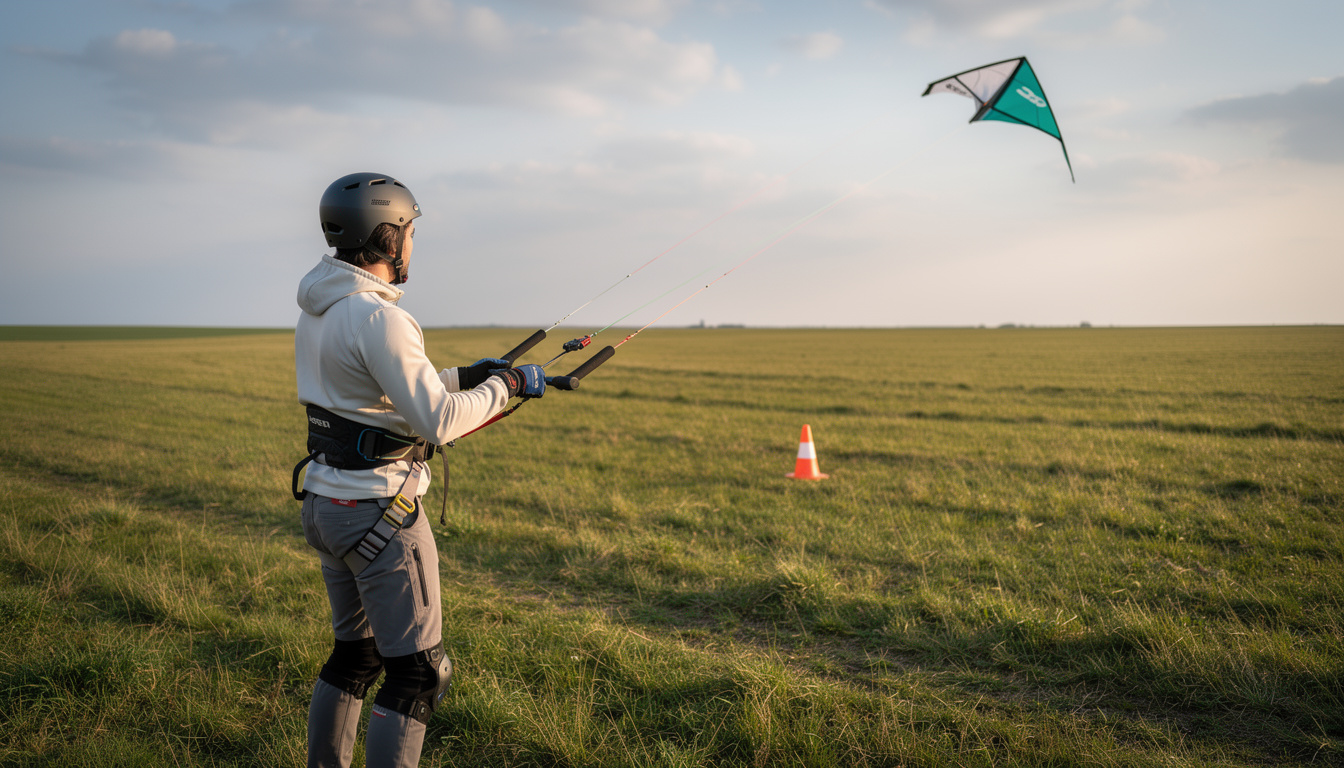
Wind Conditions Mastery: The Fastest Path to Better Traction Kiting Control
Maya used to think wind was just a number in an app. Then she flew near a line of trees and got introduced to turbulence: the kite felt sleepy at the edge, then surged like it hit a turbo button as it climbed into cleaner airflow. That moment is where a lot of riders either quit—or level up fast. The secret is to stop treating wind conditions as background info and start treating them as the main terrain you’re riding.
Understanding the wind window without the textbook vibe
Picture a big dome downwind of you. The edges are the “safer lane” with less pull; the center is where power builds fast. Beginners should live near the edge until their hands stop overcorrecting. This is why “fly it at the edge” gets repeated so much—because it works as a power limiter while you build coordination.
Maya does slow figure-eights near the edge and listens to the lines. If they start humming hard, she’s drifting toward the engine room. If the lines go slack, she’s stalling or flying too far out. That sound-and-feel feedback is faster than guessing.
Gusts and lulls: the part that makes sessions feel “sketchy”
A gust isn’t only more wind—it can shift direction and reshape where the kite generates pull. The quickest upgrade Maya made was learning to spot gust lines moving across the field. Grass ripples, distant treetops twitch, flags snap—those clues are free coaching.
When she sees a gust coming, she preps: kite slightly higher and closer to the window edge, knees soft, arms relaxed. Relaxed isn’t a personality trait here; it’s a kiting technique. Stiff arms feed accidental inputs into the handles, which turns a gust into a zig-zagging mess.
How terrain messes with airflow (and why apps can’t save you)
Beaches tend to offer cleaner wind. Inland fields can be chaotic: buildings create wind shadows, trees create rotor, and even a small hill can speed up airflow at the crest and make dead pockets behind it. Forecasting tools in 2026 are great at showing gust ranges and direction shifts, but they still can’t describe what your exact launch spot does to the wind.
Maya’s quick ritual is a two-minute “wind walk.” She walks the launch area and feels whether the breeze is smooth or pulsing. If it’s pulsing and twisting, she either downsizes or calls it a drill-only day (parking and edge work) instead of powered runs.
Wind choice table you can actually use
| Scenario 🌦️ | What it feels like 🧠 | Better choice ✅ | Red flag 🚩 |
|---|---|---|---|
| Light, steady breeze 🌤️ | Slow turns, easy hover, mild pull | Mid-size trainer / light-wind foil | Over-braking until it stalls repeatedly |
| Moderate, clean wind 🌬️ | Predictable pull, consistent response | Smaller traction kite for drills and timing | Going too long and practicing while exhausted |
| Gusty inland flow 🌪️ | Surges, direction changes, uneven power | Downsize + edge-of-window practice | Launching near obstacles or crowds |
| Strong wind 💨 | Fast acceleration, high line load | Advanced riders only + tight safety plan | Beginner learning day (high drag risk) |
Once Maya stopped “hoping the wind behaves” and started reading it, her kite control jumped a level. Next comes making that control transferable through drills, body positioning, and smart session design.
Watching slow-motion breakdowns helps you catch tiny hand movements you never feel in real time.
Kite Control Drills and Body Positioning for Rapid Ride Progression
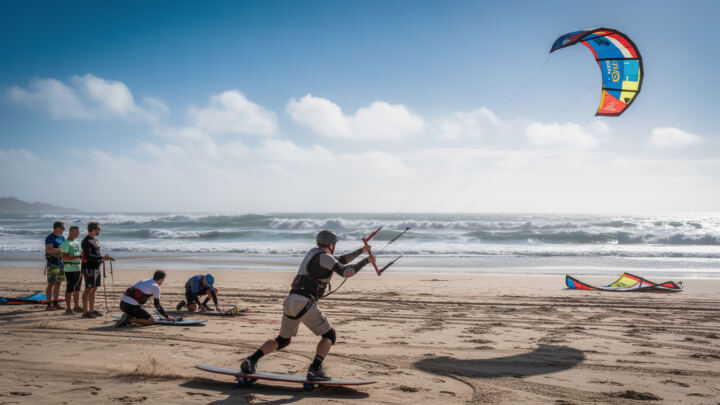
Maya didn’t pick traction kiting because she wanted a new hobby that eats weekends—she wanted a shortcut into kiteboarding and landboarding without being the person who shows up and gets humbled by the first power spike. The transfer is real, but only if you practice the right stuff. Random flying is fun, sure, but purposeful drills are what create ride progression.
Body positioning: the underrated cheat code
If you fly like a fence post, you’ll get yanked. If you fly like an athlete, you absorb spikes and stay in charge. Maya thinks “hips under shoulders, knees soft, chest open.” When the pull increases, she doesn’t fight it with her arms; she shifts weight and takes micro-steps to manage load. This is body positioning that directly mirrors edging and stance control later on a board.
She also pays attention to where her eyes go. If she stares at the kite nonstop, her posture collapses. So she practices glancing—kite, horizon, downwind space—like she’s driving. That habit makes her calmer and faster to react.
Drills that scale from beginner to confident
Here’s the structure Maya uses: one drill for steadiness, one for power timing, one for recovery. It keeps sessions focused and stops the “I’ll just do a few more loops” spiral that turns into sloppy habits.
- 🎯 Edge tracing: slow figure-eights near the window edge for 5 minutes. Goal: minimal pull, clean lines.
- 🧭 Parking with footwork: park at 10/2 and walk a small square. Goal: kite stays still while your feet move.
- 🔥 Soft power strokes: dip into the power zone and exit early (“touch the stove, don’t hug it”). Goal: same pull each rep.
- 🧱 Dead-stop landings: bring it down and kill power with brakes, then reset calmly. Goal: zero panic inputs.
- 🔁 Recovery reps: intentionally create mild slack (safely), then re-tension and regain heading. Goal: recover without yanking.
Session planning so you don’t plateau
Maya asks one question before she unrolls lines: “What’s my single win today?” Maybe it’s ten clean launches and landings. Maybe it’s consistent power strokes on both sides. This sounds simple, but it prevents cognitive overload and speeds up learning.
She also sets a hard stop when her inputs get messy. That’s not quitting; that’s protecting technique. If you practice while fried, you’re basically engraving mistakes into muscle memory.
Traction kiting as a bridge to boards
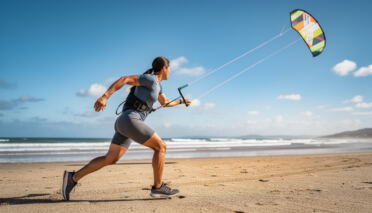
To make the transfer obvious, Maya sometimes practices with a pretend “edge”: she resists the pull by leaning slightly and stepping in a line, like she’s tracking on a board. The aim is not to be dragged; it’s to coordinate kite timing with lower-body control. When she later tries landboarding, the rhythm feels familiar: park the kite for stability, power stroke for speed, then redirect to stay balanced.
With control and body mechanics dialed, it’s time to keep the whole thing safe enough to practice harder—because safety tips are what let you push without gambling.
It also helps to study handle inputs frame-by-frame.
Safety Tips That Make You Progress Faster: Launch Protocols, Releases, and Decision-Making
People sometimes talk about safety like it’s a separate chapter from “getting good.” In traction kiting, safety is what lets you train consistently. Maya’s biggest upgrade wasn’t buying gear—it was learning to stop sessions early, reset when something felt off, and treat every launch as a moment that deserves full attention.
Release systems: practice them like a trick
Test your quick release and leash connection before you load the kite. Then practice activating the release in low-power conditions—on purpose. Under stress, fine motor skills vanish, and you do whatever you’ve rehearsed. Maya does a few “release reps” every month: load the kite gently, trigger the system, reset it, repeat. It takes five minutes and buys a lot of confidence.
Launch and landing protocols that reduce dumb injuries
Assisted launches need clear signals and zero guessing. Solo launches should use methods suited to your kite type and the space available. The key is having permission to abort. If the bridle is twisted, a line snags grass, or wind shifts during setup—stop and reset. Maya’s motto is “Reset is faster than regret,” and yeah, it’s cheesy, but it’s true.
For landing, she avoids “catching” the kite in the middle of the window. She brings it to the edge, bleeds power with brakes, and secures it before touching tangles. Fixing knots while the kite is still loaded is how people get surprised.
Equipment maintenance that prevents random failures
Fast progression needs reliable gear. Salt, sand, and dirt quietly destroy lines and bridles, and tiny nicks become big breaks under load. Maya does light equipment maintenance after sessions: shake out debris, wipe handles, and inspect high-wear points. She stores lines dry and loosely wound to reduce twists.
She also keeps a small kit in the car: spare pigtails, line connectors, tape for quick canopy patches, and a multitool. Not glamorous, but it turns “session over” into “back to practice in 10 minutes.”
Common mistakes that bite (and the smarter alternative)
- 🚩 Flying overpowered “just to see” → ✅ Downsize and focus on timing; power doesn’t replace skill.
- 🚩 Ignoring gust range in forecasts → ✅ Treat the gust number as the real story, not the average wind.
- 🚩 Launching with people or pets downwind → ✅ Wait, move, or skip; your buffer zone is non-negotiable.
- 🚩 Never drilling releases → ✅ Practice until it’s automatic with gloves on.
- 🚩 Fixing tangles under tension → ✅ Fully depower, secure the kite, then untwist calmly.
When safety becomes automatic, you can finally put energy into style and advanced kiting techniques—without the session feeling like a coin toss.
Advanced Kiting Techniques: Tricks, Slack Management, and Stamina Building for Confident Sessions
Maya’s first “trick” happened by accident—an ugly half-rotation created by oversteering and panic braking. It looked cool for half a second, then turned into chaos. That’s the moment she realized advanced moves aren’t luck. They’re controlled slack, clean timing, and solid recovery.
Slack-line moments: the hidden engine of freestyle
Many stunt maneuvers rely on briefly reducing line tension so the kite can rotate or flip. With four-line traction kites, you can create slack by popping the kite upward and stepping toward it, or by stalling with brake input and then releasing. The key is to start with “micro-slack”—tiny moments you can instantly recover from.
Maya practices this low and safe, with tons of downwind space. She’s not chasing big rotations at first; she’s learning the feel of “light kite” versus “loaded kite.” That sensitivity makes everything else easier.
Stalls and pivots before flashy combos
A controlled stall is the doorway to a lot of freestyle. Maya works on holding a stall mid-window, then initiating a pivot with asymmetrical inputs. The trick is making small, deliberate handle movements. Big inputs create big mistakes, especially when the wind pulses.
Once pivots are consistent on both sides, she adds simple flip entries with a strict rule: clean exit matters more than dramatic movement. A sloppy exit teaches panic recovery, and not in a good way.
Stamina building so technique survives fatigue
Here’s what most fast-progress riders figure out: your skill doesn’t disappear, your stamina does. When grip fades, you start death-gripping handles and overcorrecting. Maya’s approach is practical: shorter, higher-quality sessions plus a bit of off-kite conditioning.
She adds two simple routines a few times a week: light forearm endurance (wrist rollers or farmer carries) and shoulder stability (band work). Nothing extreme—just enough that her hands stay calm late in the session. On the kite, she uses “relaxed elbows” as a constant reminder, because relaxed arms reduce fatigue and improve precision.
Modern video + classic method = fast learning
Maya mixes slow-motion tutorials with old-school training structure: learn one move, repeat it until it’s boring, then repeat it again when you’re slightly tired. That’s how you make it reliable. She films from behind to check symmetry—often she thinks she’s doing even inputs, then the video shows a clear left-side bias.
The final test she uses is simple: can she repeat the move three times with the same kite position and the same pull? When the answer is yes, the trick is hers—not the wind’s. And that’s the moment you stop “trying tricks” and start riding your kite.
What’s the safest way to approach my first flight in traction kiting?
Pick a wide, obstacle-free area with a big downwind buffer, use a smaller kite in moderate wind, and focus on launch and landing, parking, and gentle control drills. Do a pre-flight check every time and test your quick release before loading the kite.
How do I know if wind conditions are too gusty for a beginner?
If the wind pulses hard, shifts direction, or the gust range is much higher than the average, it’s a rough learning day. On-site clues include sudden line tension spikes, the kite surging unexpectedly, and turbulence near trees/buildings. Downsize, stay on the edge of the window, or postpone.
Do traction kiting skills really transfer to kiteboarding or landboarding?
Yes. Parking the kite, timing controlled power strokes, managing the power zone, and recovering from slack lines all translate directly to waterstarts, riding stability, and calmer reactions during mistakes. Good body positioning and session planning also carry over cleanly.
What’s the quickest way to start learning tricks without getting overwhelmed?
Use a progression ladder: stalls and pivots first, then small pop-and-recover drills to understand slack, then simple flip entries, and only then short combos. Film your hands in slow motion, keep sessions short, and aim for repeatability on both sides before adding complexity.
What equipment maintenance should I never skip if I want consistent progression?
Inspect lines and bridles for nicks, check knots and connectors, keep your gear clean and dry, and store lines neatly to avoid twists. A small repair kit (spare pigtails, connectors, and patch tape) prevents minor issues from ending sessions early.