En bref
- 🌬️ Wind power is the shared engine, but traction kiting often happens on land/snow while kite surfing is a dedicated water sport with a board and a kite.
- 🧭 The real separator is kite control: traction setups can be a “kite-first” discipline, while kite surfing demands kite handling and consistent board riding.
- 🏄 Boards differ a lot: surfboards are long and directional; kitesurf boards are shorter, tough, often twin-tip, and usually have straps for jumps.
- 🧵 Lines matter more than people think: stronger materials (often Dyneema/Spectra) and longer lengths change pull, turning speed, and safety margins.
- 🧠 Learning curves are different: many find kite surfing “quicker to start,” but it can get technical fast once you chase tricks and gusty conditions.
- 🛟 Safety isn’t optional: stronger lines, clear launch zones, and clean habits reduce accidents for you and bystanders.
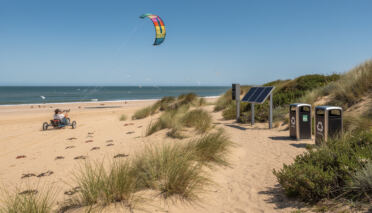
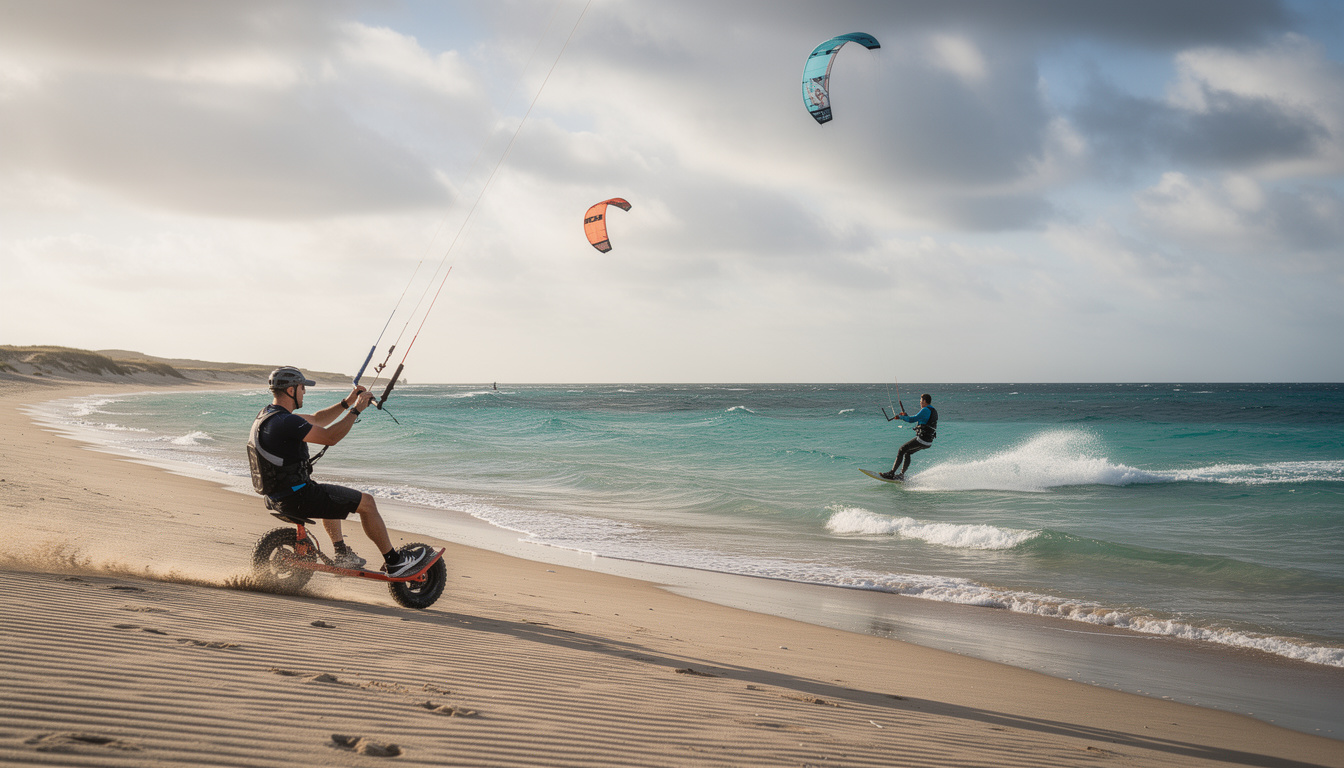
On a windy afternoon, you might see what looks like the same thing happening in two totally different worlds: someone getting yanked across a beach with a kite, and someone else skimming over water with a board, popping little jumps like it’s nothing. From far away, it’s easy to lump it all together under “kiting.” Up close, though, the key differences jump out fast: how you generate speed, what you do with it, and how much the surface under you changes the game. In the kiting community, people love debating labels, but the practical question is simple: are you using a kite mainly for pull and training (often called traction kiting), or are you doing full-on kite surfing where the kite and board have to work like a synchronized duo?
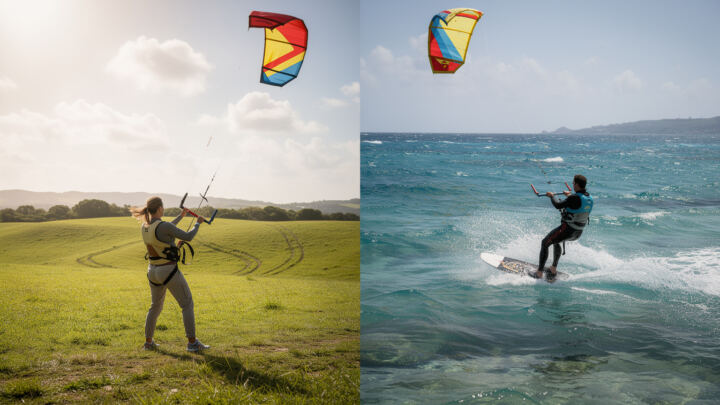
This sport comparison isn’t about crowning a winner. It’s about matching your personality to a style of riding: the “kite-first” vibe of land or snow sessions versus the “kite-and-board” rhythm of the sea or a windy lake. To make it real, we’ll follow a fictional rider, Maya, who starts with traction kites on the beach, then transitions into kite surfing once she’s tired of sand in her teeth and wants that floating feeling on water.
Traction kiting vs kite surfing: key differences in purpose, terrain, and vibe
Traction kiting is basically the art of using a kite to generate pull across a surface—most commonly a land sport (beach, fields, hard-packed sand) or snow. You’ll hear “landkiting” or “snowkiting” depending on where it’s happening. The vibe can be super accessible: you can show up with a kite, a harness, and a clean wind window, and you’re already learning how wind behaves without adding waves, currents, and waterstart chaos.
Kite surfing (often spelled kitesurfing) is a water sport where the kite is your engine and the board is your platform. You’re not just being pulled; you’re actively riding edges, controlling speed with board angle, and dealing with a moving surface. That changes everything: the same gust that feels “spicy” on land can become a whole new level of sketchy when you’re also balancing and managing water resistance.
Maya’s first day is classic: she sees someone flying a traction kite and getting dragged across a wide beach. She tries it with an instructor, and the early wins come quickly—parking the kite, feeling the pull, learning not to overcorrect. That “I can do this” moment is real. With kite surfing, her first session is more like: kite up, body drag, lose the board, find the board, repeat. Both are fun, but the early emotional arc is different.
How terrain rewires your instincts (land vs water)
On land, friction and surface grip shape your decisions. A buggy or landboard can roll fast, and on hard sand you can build serious speed with surprisingly little effort. On snow, the glide is smoother and quieter, and the kite can feel like it’s towing you through a wide-open playground.
On water, “grip” comes from edging your board against the pull of the kite. That’s a learned skill. The ocean also adds variables: chop, swell, tides, and other water users. If surfing is often described as “dancing on waves” (a cultural tradition rooted in Polynesia), kite surfing is more like playing chess at 25 km/h—your decisions have consequences two seconds later.
Insight: If traction kiting is learning to speak wind, kite surfing is learning to speak wind and water at the same time.
Kite control and kite techniques: what you actually do with your hands (and why it matters)
People talk about power, but the real separator in this sport comparison is kite control. Not “can you keep it in the air,” but can you manage it when the wind spikes, when your stance changes, or when you need the kite to do something specific right now.
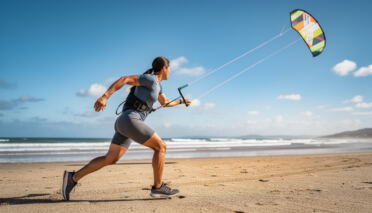
In traction kiting, you often build skills in a clean, repeatable way. You practice steering, hovering, and figure-eights. You learn how the kite loads up in the power zone and how quickly it accelerates when you send it across the window. That’s why many riders use traction sessions as cross-training—even experienced kite surfers will take a smaller kite to a field to sharpen reaction speed.
In kite surfing, those same inputs are tied to board behavior. If you pull too hard on the bar while edging poorly, you don’t just surge forward—you might get pulled over the board, lose your edge, or get lofted at the wrong time. It’s not “harder,” it’s just more coupled: your hands affect your hips, your hips affect your board, and the board feeds back into the kite through line tension.
Front lines, back lines, bridles: why line roles aren’t trivia
Modern traction and water kites rely on line systems that do different jobs. Even if you never geek out on gear, knowing what each line set contributes makes you calmer in weird moments.
- 🧵 Front lines: keep the kite driving and stable, basically holding the load when the kite is powered.
- 🎯 Back/steering lines: tell the kite where to go; small changes can mean fast direction shifts.
- 🪢 Bridle lines: spread force across the kite canopy and help it keep shape under load.
- 🔗 Leaders/connectors: the small stuff that matters when trim is off; misalignment can make a kite feel “haunted.”
Maya learns this the annoying way: her kite starts pulling to one side. She assumes it’s her technique, but it’s actually a twisted leader and uneven line lengths. Ten minutes of sorting fixes what felt like a “skill problem.”
Line length, tension, and that “extra pull” feeling
Traction kite lines are often longer than casual kite-flying setups, and they’re typically built from high-strength fibers (commonly Dyneema or Spectra) because the forces are real. Longer lines can generate more power and lift, which is great for advanced moves—but it also means your timing has to improve. The kite is physically farther away, so the loop arc is bigger and the acceleration window feels longer.
On water, that tension becomes feedback. When you edge properly, the lines load and the kite sits where it should. When you lose edge, line tension can drop suddenly, and the kite may drift or surge. That’s why kite techniques in kite surfing include not just steering, but trimming and depowering as conditions shift.
Insight: Better line management doesn’t just improve performance—it buys you time to think when the wind gets moody.
Want to see what “good hands” look like in motion? Watching slow-motion steering and body position helps a ton before you even rig up.
Board riding differences: twin-tip agility vs landboard grip (and where surf culture fits)
Let’s talk board riding, because this is where the sports really split into different personalities. In kite surfing, the board is designed to be quick to plane, easy to edge, and tough enough to handle repeated impacts. Many riders use a twin-tip: usually shorter, relatively symmetrical, and built to take abuse—especially if you’re jumping and landing with speed. Straps (often called foot straps) are common, because aerial control matters and losing a board mid-jump is… not the vibe.
In traction kiting, your board choice depends on surface. A landboard has wheels and trucks, so you’re dealing with rolling resistance and terrain bumps. On hard sand, it can feel like carving on a long skateboard with a sail in the sky. On grass, it’s slower and choppier; the kite needs to work more. On snow, you might use skis or a snowboard, and suddenly it’s all about glide and edge control on a slick surface.
Surfing culture also hangs around this conversation, because people confuse “kite surfing” with “surfing with a kite.” Traditional surfing uses paddling and wave energy—your body is the engine and the wave is the runway. Kite surfing borrows the ocean playground, but the propulsion is wind power. That’s why the board designs evolved differently: classic surfboards are longer and directional, built for glide and wave reading; kiteboards prioritize agility and durability for powered riding.
Why straps change your posture and your risk profile
Straps help you commit to jumps and keep the board attached to your feet. But they also lock your stance more than a surfboard deck does. That changes how you absorb impact. Maya notices she lands flatter when she’s tired, because the board can’t just slip away like it might in a strapless setup. Her coach tells her: “Straps are awesome, but you have to earn them with clean landings.”
On landboards, bindings can also exist, but many riders prefer a setup that lets them step off quickly. The surface can be unforgiving—falling on sand is one thing, catching a rut on a field is another.
Equipment comparison table (what you actually need)
| Category | Traction kiting (land/snow) | Kite surfing (water) |
|---|---|---|
| Primary environment | 🏜️ Beach/field or ❄️ snow (land sport) | 🌊 Sea or windy lake (water sport) |
| Main “ride” gear | 🛹 Landboard/buggy or 🎿 skis/snowboard | 🏄 Twin-tip or directional board |
| Kite + control system | 🪁 Kite, bar/handles, lines; often training-focused | 🪁 Kite, bar, lines, safety leash; tuned for water relaunch |
| Body attachment | 🧷 Harness common; sometimes optional in light setups | 🧷 Harness is basically standard |
| Foot retention | 👟 Often none; varies by board style | 🦶 Commonly straps; helps tricks and control |
Insight: If you love carving and ground speed, traction setups scratch that itch; if you want glide plus airtime, kite surfing delivers the full “air + water” combo.
Next up: let’s get practical about locations, conditions, and why “perfect wind” means different things depending on your surface.
Wind power, spots, and conditions: choosing water or land without guessing
Both sports run on wind power, but your “good day” definition changes depending on where you ride. In traction kiting, consistent wind and a wide open area can be enough for a great session. You don’t need waves. You don’t need a current forecast. You mostly need space, clean wind, and a surface that won’t surprise you.
In kite surfing, you can absolutely ride flat water—lagoons, bays, and lakes are popular. The difference is that you’re managing drift, self-rescue considerations, and sometimes boat traffic rules. Waves are optional, but wind direction and safety zones matter more. A side-onshore wind can feel friendly for many riders; offshore wind might look tempting but raises the stakes because you can get pushed away from land.
Maya’s turning point is a trip to Fuerteventura (a spot that’s been a kiting and surfing magnet for years). She realizes the island isn’t just “windy”; it has a mix of protected bays for progression and open-coast spots for advanced riding. That variety is a big deal in 2026, because more destinations are actively managing beach access and launch corridors to reduce accidents and conflicts with swimmers.
Reading the day: practical cues that change your plan
A traction session can tolerate gusts in a different way: you can step down kite size, move inland, or simply stop without worrying about floating gear. On water, gusts affect your ability to hold an edge and maintain control through chop. The same wind strength can feel totally different depending on water state.
Here are simple “go/no-go” questions Maya now asks before every session:
- 🧭 Is the wind direction giving me a safe exit if something breaks?
- 👀 Is the launch/land area clear of people and obstacles?
- 🌪️ Are gusts strong enough that my kite control will be reactive all day?
- 🌊 If it’s water: can I body drag upwind and self-rescue comfortably?
- 🧵 Are my lines and connectors clean, equal, and not worn?
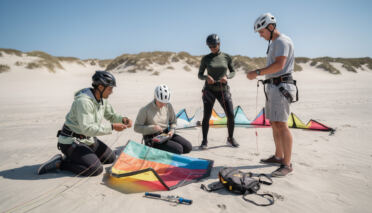
This is where traction kiting can be a smart stepping stone. You can drill kite handling without adding water complexity. Then, when you switch to kite surfing, you’re not learning everything at once.
Insight: The best “spot choice” isn’t the most famous beach—it’s the place where you can make controlled mistakes and learn fast.
Safety, durability, and line tech: the overlooked differences that change everything
When people get hyped about tricks, they often forget the unsexy parts: durability, line strength, and how quickly a small gear issue becomes a real problem. Traction kites can generate serious pull, especially in stronger wind, which is why line quality matters. A casual “toy kite” line mindset doesn’t translate here.
Modern systems lean on high-strength fibers with excellent strength-to-weight ratios. In 2026, it’s also common to see color-coded lines to reduce rigging mistakes, and more brands offering adjustable line lengths so riders can tune turning speed and power delivery. That’s not marketing fluff—tuning line length changes how the kite sits in the window and how quickly it responds.
Why strong lines and good habits are a safety feature, not a luxury
Weak or worn lines can snap under load. On land, that can mean an uncontrolled kite tumbling into a crowded area. On water, it can mean losing the ability to steer back to shore. Either way, it’s not just about you—bystanders can get hurt if a kite goes rogue.
Maya witnessed a near-miss when someone tried using older, thinner lines with a powerful setup. A gust hit, the kite surged, a line failed, and suddenly the kite was free-flying with partial control. Nobody was injured, but it was a loud reminder: the hidden parts of your rig are doing the hardest work.
Price vs performance (and what you’re really paying for)
Yes, premium traction and kitesurf line sets cost more. But you’re paying for consistent manufacturing, abrasion resistance, better coatings, and predictable stretch characteristics. That consistency is what makes your kite feel “the same” session to session.
Insight: The cheapest upgrade is usually a better pre-flight check—and it can save your season.
Is traction kiting the same as kite surfing?
Not really. Traction kiting is a broader category focused on using a kite’s pull (often as a land sport or on snow). Kite surfing is a specific water sport where you combine kite power with board riding on water, managing edging, relaunch, and water safety.
Which one is easier to learn first: traction kiting or kite surfing?
Many riders find traction kiting easier to start because you can focus on kite control without dealing with waterstarts and currents. Kite surfing can feel harder on day one, but progression can be quick once you’re comfortable with the kite and basic board handling.
Can I use regular kite-flying lines for traction kiting?
It’s not recommended. Traction kites produce higher tension, so you want lines made from high-strength materials with reliable connectors and predictable stretch. Using weak lines increases the risk of breakage and loss of control.
Do line lengths really change performance?
Yes. Longer lines can increase power and lift and can smooth out some movements, but they also demand better timing and control. Shorter lines often feel faster and more direct, which some riders prefer for tighter handling.
What’s the biggest safety habit that helps in both sports?
A consistent pre-flight routine: check wind direction, clear the launch zone, inspect lines and leaders for wear or twists, test your quick release, and make sure your safety leash is correctly connected. Those basics prevent a lot of avoidable problems.