In brief
- 🧭 Body positioning decides whether the kite pulls you cleanly or drags you into constant corrections.
- 💨 Better traction efficiency comes from lining up your hips, shoulders, and board/wheel angle with the wind force.
- 🧠 Solid kite control starts with calm arms and a stable base, not yanking the bar.
- 🦵 The fastest way to improve balance is soft knees, a low center of gravity, and smart weight shifts.
- 🛡️ Good posture boosts safety: fewer over-the-bars moments, fewer twisted knees, fewer panic recoveries.
- ⚙️ Real power management is edging + stance, then trimming the kite—never the other way around.
- 🌊 Choppy water and gusts punish sloppy stability; clean alignment makes rough sessions feel “normal.”
Traction kiting looks simple from the beach: a kite pulls, a rider moves, the wind does the rest. On the water or on land, though, it’s basically physics you can feel in your hips. The biggest difference between a rider who looks relaxed and one who looks like they’re wrestling an octopus is body positioning. Not because posture is “pretty,” but because it decides where the pull goes—into forward speed, into spray, or straight into your lower back. The kite’s pull is constant, and the wind force doesn’t care about your mood; your job is to stack your body so that pull has somewhere efficient to travel.
In traction kiting—whether that’s a mountainboard session on grass, a buggy run on hardpack, or a kiteboard tack in chop—your stance is the steering wheel you never see. Hips too square and you’ll skid. Shoulders too far forward and you’ll get yanked. Legs too straight and you’ll bounce like a shopping cart. Get it right, and suddenly you’re not “fighting” the kite anymore; you’re doing power management with tiny, boring-looking adjustments that add up to speed, control, and a lot more safety. And once you’ve got that, everything else—upwind angles, transitions, jumps, even freestyle—stops feeling like a coin toss.
Why body positioning is the real engine of traction kiting performance
Start with the uncomfortable truth: your kite can be perfectly tuned and your lines can be brand new, but if your body is out of alignment you’ll waste a big chunk of pull. That’s the heart of traction efficiency. The kite generates a force vector, and your body decides whether that vector becomes forward drive or sideways chaos.
Picture a rider named Maya learning traction kiting on a mountainboard. She’s confident with the kite overhead, but once she sends it to 45 degrees and tries to roll, she gets pulled upright and then sideways. The issue isn’t strength. It’s that her hips are drifting under the kite while her shoulders rotate away, creating a twist that turns smooth pull into a wobble. When she fixes it—hips slightly back, chest open, knees soft—she suddenly looks “heavier” and calmer. Same kite, same wind, totally different outcome.
Stacking: the cheat code for stability and safety
“Stacking” is a simple idea: line up your joints so the kite’s pull travels through your skeleton instead of through strained muscles. In practice, that means knees bent, hips set, ribs down, and shoulders relaxed. You’re not slouching; you’re braced like a spring.
This is where safety sneaks in. When the pull hits a stacked posture, your legs can absorb gusts and bumps. When it hits a tall, locked posture, it goes straight into the knees, lower back, or an over-the-front slam. If you’ve ever watched someone get “surprise-launched” on land, it’s often not because the kite was huge—it’s because they were standing like they were waiting for a bus.
Body positioning vs. kite control: who’s really steering?
People love talking about bar input, but kite control is heavily influenced by your base. If your lower body is unstable, your arms tense up, and then your steering becomes jerky. That’s why good riders look like they’re barely moving their hands. Their legs and torso handle most of the corrections, and the bar is for fine-tuning.
Here’s a quick mental test Maya uses now: “If I let go with my back hand for a second, do I fall apart?” If the answer is yes, her posture is doing too little and her arms are doing too much. That one question cleans up a lot of habits fast.
Micro-adjustments that add up
In real sessions, the wind isn’t a steady fan. It pulses. Your goal is to make posture changes small enough that speed doesn’t collapse every time the gust hits. The riders who progress quickly aren’t magical—they’re just good at tiny shifts: a bit more heel pressure, a bit lower center of gravity, a slightly different shoulder angle. That’s the difference between surviving a gust and converting it into speed.
Insight: when your posture is stacked, you can let the kite do more work without it feeling like it’s doing violence to your body.
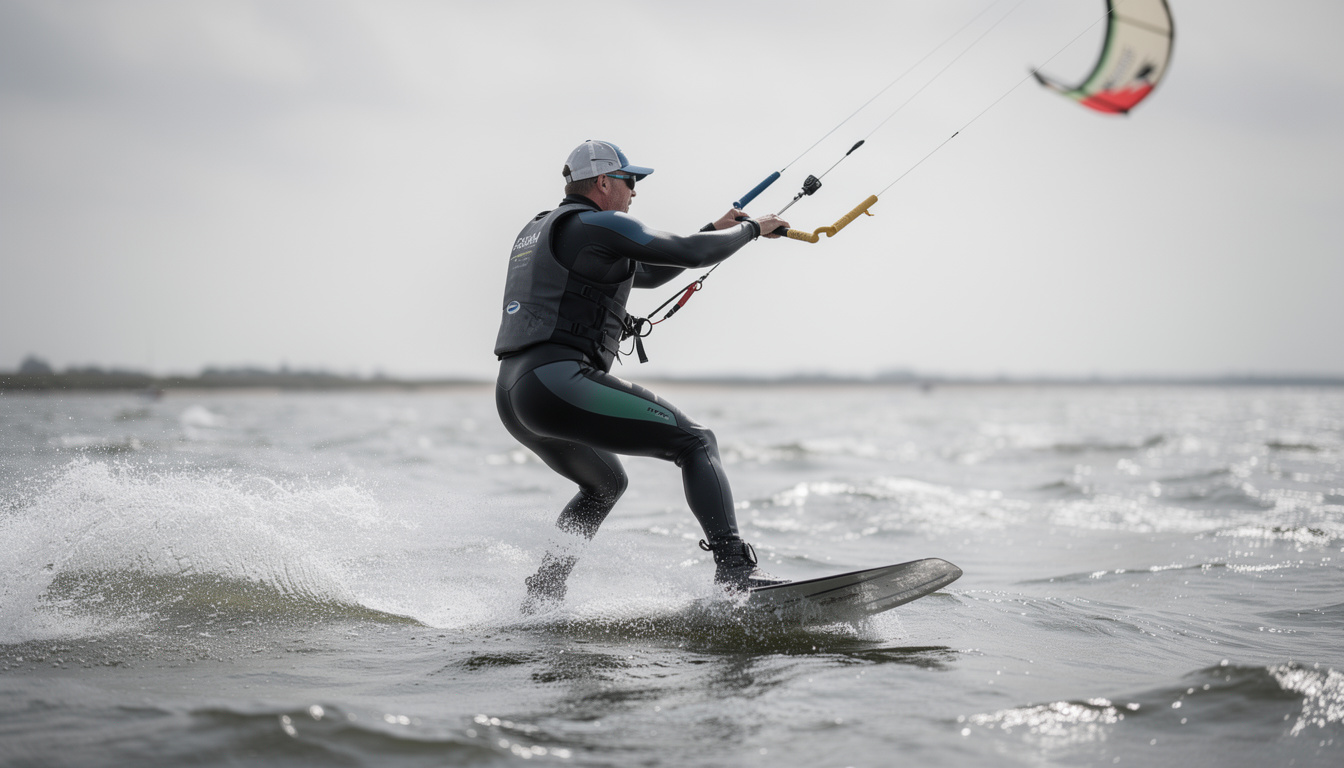
Dialing in stance and balance for clean traction efficiency (water and land)
Let’s get practical: your stance is where technique becomes real. People hear “bend your knees” and they do a half-squat for three seconds, then stand tall again the moment they get pulled. The trick is to make soft knees your default, not your emergency setting.
The baseline riding position you can always return to
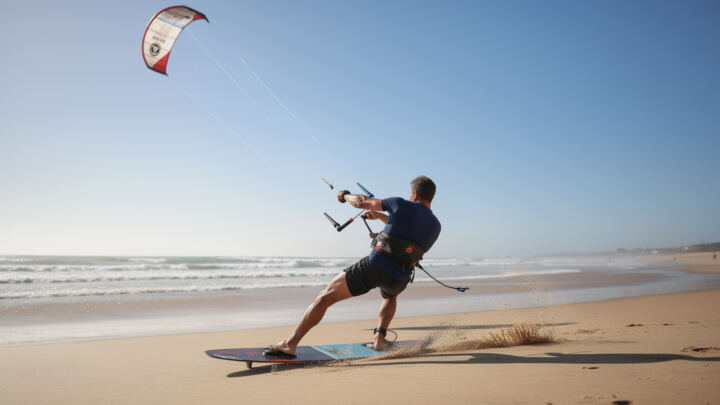
A reliable default posture looks boring, which is exactly why it works. Keep your knees flexed, keep your hips slightly back, and distribute pressure through both legs—then bias it depending on your craft (board, buggy, skis). On a kiteboard or mountainboard, most riders end up with more load on the back leg, sometimes a lot more, but the front leg still matters for trimming the edge and keeping direction clean.
On water, a simple cue is: chest proud, hips forward-ish, knees soft. You’re not sitting down; you’re keeping your center of gravity low so you can react without panic. On land, the same idea applies, but bumps transmit more sharply, so staying springy matters even more.
Balance is not “standing still”
Balance in traction kiting is active. You’re constantly trading pressure between feet while the kite’s pull changes. If you try to freeze, you’ll get rattled. If you stay loose, you glide.
Maya trains this off the water with two simple drills: one-leg stands while rotating her head (to simulate looking around), and slow squats with a pause at the bottom. It sounds too basic, but it builds the exact kind of leg endurance that keeps posture intact when you’re tired and the wind gets spicy.
Upwind posture: where most riders leak power
Going upwind is basically a posture exam. To point higher, you lean your upper body slightly toward the kite while maintaining a consistent edge. That lean is subtle; it’s not a collapse. Your hips stay engaged and your board/heels dig in as your torso counters the pull. When it works, you feel locked-in and quiet, almost like riding on rails.
If you’re slipping downwind, you often have one of two problems: you’re too upright (not enough edge), or you’re bent at the waist (your hips drift forward and your edge disappears). Fix the hips first, then fine-tune the bar.
A quick table of common stance fixes
| Symptom | Likely posture issue | Fast fix |
|---|---|---|
| 😵 Getting pulled over the front | Hips too far forward, knees too straight | Drop your center of gravity; push hips slightly back; keep eyes forward |
| 🧊 Sliding sideways instead of edging | Weight too even, not enough rear-leg load | Add heel pressure on the back foot; rotate shoulders slightly open |
| 💪 Arms burning fast | Using arms to “hold” the pull | Stack joints; relax shoulders; let legs resist the pull |
| 🌪️ Overreacting in gusts | Rigid posture, tall stance | Stay springy; sheet out a touch; keep board angle consistent |
Insight: the best stance is the one you can keep for another ten minutes without your arms turning into stone.
Next up is where this posture really gets tested: gusts, chop, transitions, and all the “why is it suddenly doing that?” moments.
Watching a few slow-motion breakdowns can help you spot what your body is doing when your brain thinks it’s doing something else.
Power management through posture: using wind force without getting yanked
Power management is often taught as “sheet in, sheet out,” but that’s like calling driving “pressing the gas.” In traction kiting, your posture and edge are the real throttle. The bar is a trim lever.
Edge, posture, then bar: the correct order
When the kite loads up, your first response should be in your lower body. Sink slightly, increase edge/rolling resistance, and align your torso so the pull goes through your stance. Only then do you adjust sheeting. This order matters because bar-only reactions tend to create oscillations: you dump power, lose speed, then power spikes again and you get pulled.
Maya’s “no drama” rule is simple: if she feels a gust, she lowers her center of gravity first. That single habit keeps her from doing panic steering inputs that accidentally send the kite into the power zone.
Where you park the kite changes your body geometry
Kite position in the window dictates what your body needs to do. A higher kite gives lift and reduces lateral pull, usually letting you stand a bit more upright. A lower kite increases horizontal pull and demands stronger edging and a more committed lean. This is why wakestyle and low-kite tricks feel so aggressive: the lines go more horizontal, so your posture has to resist more sideways force.
Even if you’re not doing tricks, understanding this makes normal riding smoother. If you insist on riding with a low kite while standing tall, you’re basically asking to be pulled off your edge.
Turning without collapsing your stability
Transitions and turns expose posture leaks. Many riders initiate a turn by twisting their shoulders hard, which drags the hips out of alignment. A cleaner approach is to start with the lower body: soften the knees, shift pressure, and let the board carve while the upper body stays relatively quiet. Your head leads your eyes to the new direction, and the rest follows.
On land, this is even more important because edges can catch abruptly. A calm torso and springy legs reduce the “snap” that causes wipeouts.
Real-world scenario: gusty session, crowded spot
On a gusty day at a busy launch, posture is also a traffic tool. When Maya rides past other kiters, she keeps a conservative stance—knees soft, kite stable, no sudden dives. It’s not just etiquette; it’s safety. A stable body reduces surprise line tension changes, which reduces surprise kite movements, which reduces the risk of tangles and collisions.
Insight: good posture is quiet power—other riders can literally read your control from how calm your body looks.
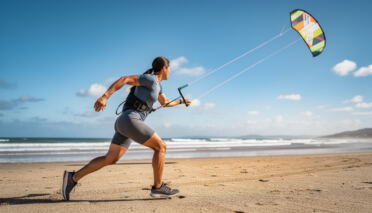
To connect the dots visually, it helps to see how experienced riders keep their arms calm while their legs do the heavy work.
Stability in chop, gusts, and recovery: fixing posture without losing speed
Perfect conditions are fun, but they’re not what makes you good. Choppy water, uneven terrain, and gusty wind are where stability becomes the skill that pays rent. The goal isn’t to avoid mistakes; it’s to correct them fast without killing your line or your confidence.
Chop and bumps: absorb, don’t fight
In chop, riders often stiffen up. That’s understandable—and it’s exactly why they bounce. Soft knees act like suspension. If you keep your legs springy and your hips engaged, your board can rise and fall without tossing your upper body around.
Try this cue: keep your head level relative to the horizon. Your board can dance underneath you, but your head stays surprisingly steady. That one idea encourages the right kind of leg absorption without overthinking it.
Recovering from “too much pull” without panic steering
When you get hit by a gust, the instinct is to yank the bar or oversteer the kite. A more controlled recovery sequence looks like this:
- 🧎 Drop your center of gravity by bending knees and engaging hips.
- 🛞 Increase edge (or rolling resistance on land) to convert pull into grip.
- 🧤 Relax your arms so the bar input stays clean.
- 🎛️ Sheet out slightly only after posture is solid.
- 👀 Look where you want to go; head position stabilizes the rest of the body.
This is not theory. Maya used to lose 10–20 meters downwind every time a gust hit because she’d dump power and wobble. Once she learned to “sit into it” with a stacked posture, she started gaining ground during gusts instead of bleeding it.
Board retrieval and body dragging: posture still matters
Even when you’re not riding, posture is a skill. Body dragging to retrieve a board is a prime example. Keeping your body long, one shoulder leading, and the kite parked to the same side as the direction you’re dragging keeps things efficient and less exhausting. When riders twist their torso and scissor-kick randomly, they waste energy and lose orientation.
If you practice this in waist-deep water, it becomes automatic later in deep water when you actually need it. It’s a sneaky way to train kite control and body alignment without the extra complexity of the board.
Avoiding collisions and hazards with better posture habits
Hazards show up fast: a rider drops their kite, a foil board appears upwind, a wave jacks up in front of you. If your posture is already stable, you have spare attention to scan and react. If your posture is shaky, your brain is busy just staying upright—and that’s when bad decisions happen.
Insight: stable posture is cognitive freedom; you ride better because you can actually think.
From basics to freestyle: how body positioning sets up pop, rotation, and landings
Once you start chasing jumps and freestyle, body positioning stops being “foundation stuff” and becomes the thing that makes tricks repeatable. You can copy a trick list all day, but without clean setup posture, you’ll land one out of ten and call it “progress.”
The pop starts before you leave the surface
Whether you’re going for a basic back roll or a more aggressive unhooked move, the pop is built by edging and loading—like compressing a spring. That requires a committed stance: weight into the heels (for many twin-tip riders), hips set, torso resisting the pull, and eyes looking where the rotation will begin.
If you try to pop with straight legs, you don’t load anything. If you bend at the waist instead of stacking, you lose your edge right as you need it most. The result is a weak takeoff and messy airtime.
Rotation is led by head and shoulders, not chaos
Spins look wild, but the clean ones are guided. A back roll often starts with looking over the front shoulder while keeping the bar stable and the body compact in the air. A front roll usually asks for that head turn over the back shoulder, plus thoughtful leg positioning to control speed of rotation.
The common thread is this: your posture on takeoff dictates how much control you have in the air. If you’re already off-axis at takeoff, you’ll spend the jump trying to fix your body instead of finishing the move.
Low-kite tricks demand even stricter alignment
Moves like raleys and handle-pass-style tricks (even if you’re not there yet) work with the kite lower in the window, meaning more horizontal pull. That’s exciting, but it’s unforgiving. The more horizontal the pull, the more your hips and shoulders must stay organized, otherwise you get slammed or spun unintentionally.
Maya’s coach gave her a rule that sounds funny but works: “Earn the low kite.” If she can’t ride comfortably with a low kite without her arms locking up, she doesn’t attempt low-kite pop. That keeps sessions fun instead of brutal.
Landing posture: downwind, soft knees, calm bar
Landings are where you cash the check. A good landing is usually downwind with knees absorbing impact and the kite providing just enough pull for a smooth touch. If you land stiff, you bounce and lose control. If you land with the kite yanking, you skip out or catch an edge.
A simple habit: as you come down, spot the landing zone early, let the board point downwind, and prepare to absorb like you’re stepping off a curb. Boring, repeatable, safe.
Insight: tricks don’t start in the air—they start in the stance you build before you pop.
What’s the correct body positioning for traction kiting when riding upwind?
Keep knees soft, hips engaged, and lean your upper body slightly toward the kite while holding a consistent edge. Aim for steady pressure through the board (or wheels) so the wind force converts into forward drive instead of sideways slip.
Why do my arms get tired so fast even though my kite feels trimmed correctly?
Most of the time it’s a posture issue: you’re using your arms to resist the pull instead of stacking your joints and letting your legs take the load. Relax shoulders, keep the bar movements small, and build stability through a low, springy stance.
How can I improve balance quickly for kiteboarding or land traction kiting?
Train soft-knee control and core endurance: slow squats, lunges, and one-leg balance drills help a lot. On the kite, focus on keeping your head level and making tiny weight shifts rather than big upper-body corrections.
What should I change in my stance in choppy water or gusty conditions?
Drop your center of gravity, keep knees acting like suspension, and resist the pull through your hips and edge before adjusting the bar. This improves stability and traction efficiency, so gusts become manageable instead of chaotic.
Is body dragging useful once I can already ride confidently?
Yes. It reinforces kite control and body positioning under tension, and it’s the fastest way to retrieve your board safely in deeper water. Practicing it in waist-deep water builds habits that hold up when conditions get rough.