En bref
- 🪁 The fastest progress in traction kiting comes from boring basics: wind awareness, clean setups, and calm decision-making.
- ⚠️ Most common mistakes are predictable: skipping an equipment check, standing in the wrong place, and rushing launch techniques.
- 🧤 Real safety tips are practical: rehearse your quick release, keep a “no-go” zone, and use a buddy system when possible.
- 🎯 Better kite control usually means smaller inputs, better stance, and learning to park the kite—especially when you’re stressed.
- 🌦️ Underestimating weather conditions (gusts, fronts, thermals) causes more scary moments than “big tricks” ever will.
- 🛬 Many sessions end badly because of preventable landing errors: wrong angle, tangled lines, or trying to “save it” too late.
Traction kites are funny like that: from a distance it looks like you’re just flying a kite and getting pulled around, but up close it’s a constant negotiation with wind, gear, space, and your own impulse to rush things. The good news is that most wipeouts, gear explosions, and dramatic “whoops” moments come from a small set of beginner mistakes that repeat across beaches, fields, frozen lakes, and buggy parks worldwide. The bad news is those mistakes are easy to make when you’re excited, your hands are cold, or a friend says, “It’s fine, just send it.”
In 2026, the sport is more accessible than ever—better depower systems, more stable foil designs, and a mountain of tutorials—but the fundamentals didn’t magically change. You still need strong wind awareness, you still need to treat your bar and lines like safety-critical equipment, and you still need a plan for launching, riding, and landing that doesn’t depend on luck. Let’s walk through the big errors people make, using a simple storyline—Alex, a new kiter who’s enthusiastic, athletic, and slightly too confident—to show what goes wrong and how to fix it before it gets spicy.
Wind Awareness Mistakes: Reading the Sky Wrong (and Paying for It)
The #1 trap in traction kiting is thinking wind is a single number. Alex checks an app, sees “15 knots,” and assumes the session is sorted. Then the kite surges, stalls, surges again, and suddenly Alex is jogging sideways like a cartoon. This is classic: the app gives a regional estimate, while your kite lives in a very local reality shaped by obstacles, temperature shifts, and terrain.
Good wind awareness starts with asking: is it steady, gusty, laminar, or turbulent? A wide, clean beach with wind coming straight onshore often feels smoother than wind rolling over trees or buildings onto a small field. The mistake isn’t “going out in gusts” (gusts happen); it’s failing to adjust kite size, setup position, and expectations. If you treat gusts as “free power,” you’ll eventually get yanked at exactly the wrong moment.
Common mistakes with weather conditions: fronts, thermals, and false confidence
A lot of scary sessions begin with “It was fine for an hour.” That’s when a small front line arrives, or the thermal breeze drops as the sun lowers, or the wind direction clocks 20 degrees and turns your safe area into a hazard zone. In many coastal spots, late-afternoon shifts can increase speed while adding chop or turbulence—great for experienced riders, chaotic for someone still learning neutral kite positions.
Alex’s case: the wind “builds” but also becomes more offshore. Alex keeps riding because it still feels doable… until it’s time to land. The kite now wants to drift back, lines slack, and the landing becomes a wrestling match. The fix is boring and effective: watch clouds, feel temperature changes, and keep an exit plan. If landing is getting harder, that’s not bad luck—it’s information.
Practical safety tips for wind awareness (that actually work)
Use at least two sources: a forecast and what you observe on site. Bring a small anemometer if traction kiting is more than a once-a-year thing; it pays for itself the first time it stops you from rigging too big. Look at wind indicators: flags, dunes, whitecaps, tree movement, sand drift. And before you launch, do a 30-second “space scan”: where will you go if you get dragged 20 meters? If the honest answer is “into rocks,” that’s your sign.
Wind knowledge isn’t about being a meteorologist; it’s about being consistent. Consistency makes kite control easier, and that’s the bridge to everything else.
Equipment Check Errors: The Small Oversights That Cause Big Problems
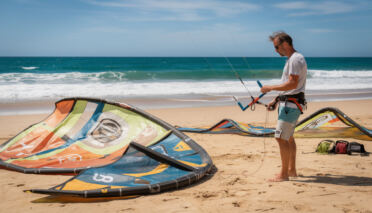
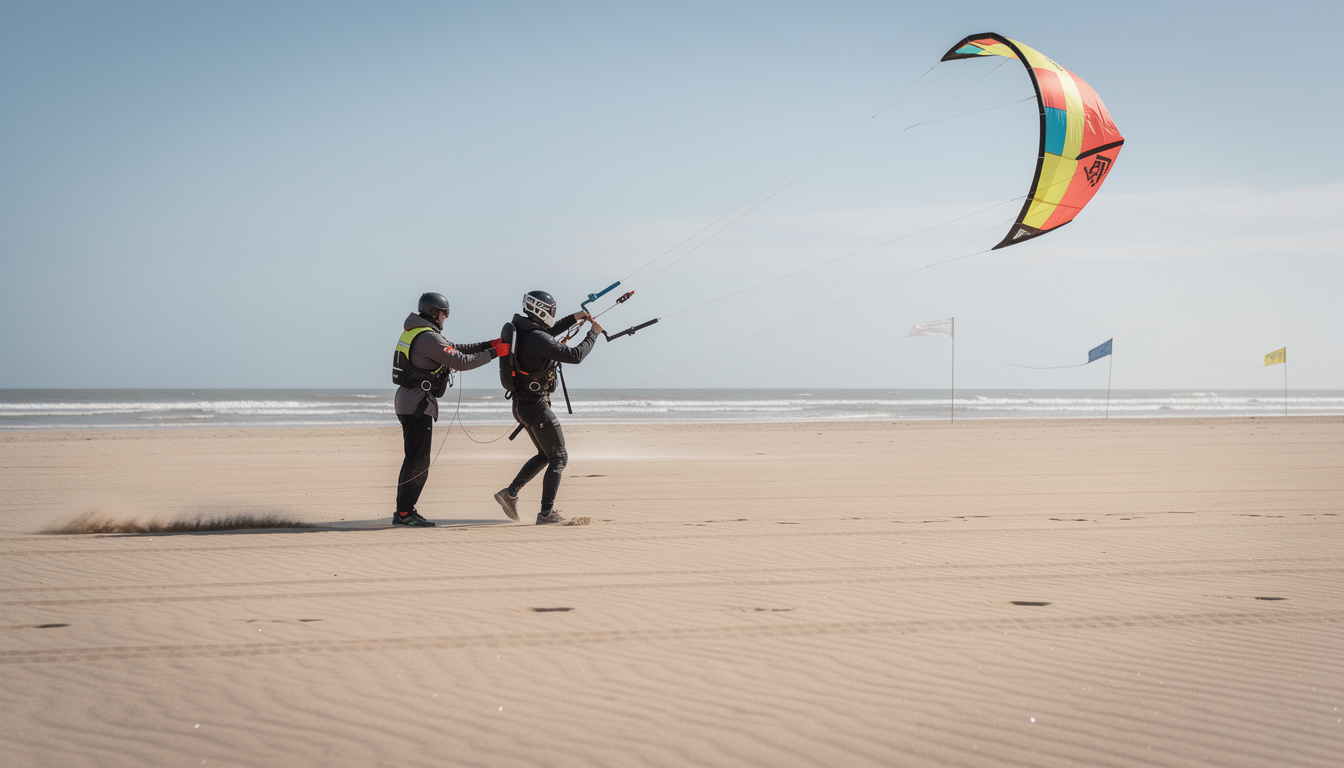
If wind is the invisible variable, your gear is the variable you can actually control. Yet one of the most stubborn common mistakes is skipping a proper equipment check because “it worked last time.” Alex unrolls lines fast, clips in, and launches—only to discover one steering line is wrapped once around the bar end. The kite reacts like it’s possessed, and suddenly Alex is learning a new dance move called “panic steering.”
A clean equipment routine is not a ritual; it’s a safety system. In traction kiting, small asymmetries amplify. A tiny bridle snag can create a constant pull to one side. A worn pigtail can snap on a gust. A half-twisted line can turn a controlled depower into a surprise power spike.
What “equipment check” should mean in real life
Start with the kite: inspect the leading edge (for inflatables), valves, seams, and bridles. On foils, check intake cells and any obvious bridle tangles. Then the lines: look for knots, fuzzy wear points, and uneven lengths. Finish at the bar: verify the quick release moves freely, the leash is correctly attached, and the trim system runs smoothly.
Alex’s best upgrade is adopting a “touch every critical point once” rule. The logic is simple: if you physically touch the quick release, you’re less likely to forget to test it. If you run fingers down the bridles, you’re more likely to catch that one snag that would otherwise wait for the worst time to reveal itself.
Table: Quick gear scan before you commit
| Checkpoint | What to look for | Why it matters |
|---|---|---|
| 🧷 Quick release | Opens/closes smoothly, no sand jam | Fast exit when power spikes |
| 🧵 Lines | No knots, no wraps, even tension | Predictable steering and depower |
| 🪢 Bridles | No snags, no crossed cascades | Stops sudden stalls or surges |
| 🔗 Leash attachment | Correct ring, not clipped to the wrong point | Prevents runaway kite scenarios |
| 🧰 Harness/spreader | Secure buckle, no cracks, hook closed | Reduces accidental unhook or twist |
A short example: the “two-minute reset”
Alex now does a quick reset after any interruption. Phone call? Stop and re-check line routing. Someone steps over your lines? Reset. It feels overly cautious until you realize most incidents begin with “I was distracted for a second.”
Once your gear is reliable, the next weak link is how you put the kite into the air—and how you get it back down.
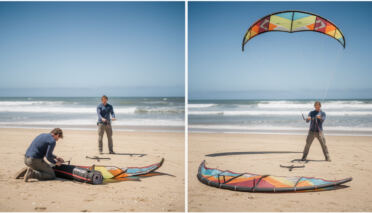
Seeing these checks in action helps, especially the way experienced riders keep their movements calm under pressure.
Launch Techniques and Landing Errors: Where Most Sessions Go Sideways
Launching is the moment when power goes from theoretical to real. And it’s where a lot of beginner mistakes happen because people treat it as a formality. Alex stands too close to obstacles, lines not fully tensioned, kite not aligned to the edge of the wind window, and then wonders why the kite rockets overhead like it’s late for a meeting.
Clean launch techniques are about controlling angle and tension. If you launch too deep in the window, you get a power hit. If you launch with slack lines, the kite can luff and then re-power unpredictably. If you launch with your body facing the wrong way, you can’t resist the pull efficiently and you’ll stumble into a worse position.
Common mistakes during launch (and what to do instead)
- 🧭 Launching without checking wind direction on the spot: do a last-second check with sand, grass, or a ribbon before you signal.
- 🪢 Launching with crossed lines: visually confirm left/right and run your eyes from bar to kite tips.
- 🏃 Standing “downwind of trouble”: choose a clear downwind corridor so a drag doesn’t become an impact.
- ✋ Forgetting hand signals with a helper: agree on “hold,” “launch,” and “abort” before you even connect.
Alex’s biggest breakthrough is learning to abort early. If something feels off—kite flapping weirdly, bridle looks odd, helper unsure—Alex drops the kite safely and resets. That’s not timid; that’s mature.
Landing errors: the quiet cause of injuries
Landing is where fatigue and complacency team up. You’re done, adrenaline fading, and you just want the kite down. Alex tries to self-land in gusty wind next to a narrow path. The kite dips, catches a gust, and suddenly Alex is doing an involuntary shuffle toward a fence.
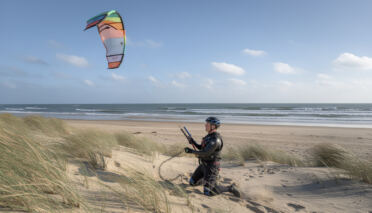
Good landings are planned. You pick a wide area, you bring the kite to the edge of the window, and you keep tension controlled. With a helper, communication matters more than strength. Alone, you need a proven method for your specific kite type—foils and inflatables behave differently—and you need the humility to wait for a lull if gusts are rolling through.
A strong rule: if you can’t describe exactly how you’ll land before you launch, you’re not ready to launch. That single habit prevents a ton of end-of-session chaos.
Technique demos can be useful here, especially watching how riders manage the kite at the edge of the window.
Kite Control Mistakes: Oversteering, Freezing Up, and Fighting the Kite
Once the kite is up, the real learning begins. And the most frustrating common mistakes aren’t dramatic—they’re subtle control habits that keep you from progressing. Alex’s default reaction to stress is pulling harder on the bar. That’s totally human, and it’s also the opposite of what helps.
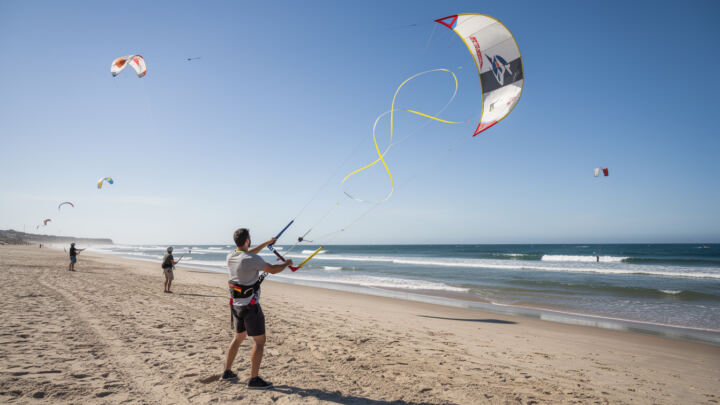
Kite control improves when you reduce unnecessary input. Think “small corrections, early.” Oversteering creates oscillation: the kite swings, you counter-swing, it accelerates, you panic, and suddenly you’re on a power rollercoaster. Another frequent problem is staring at the kite. It feels logical, but it disconnects you from your trajectory and your surroundings. You want to glance at the kite, not worship it.
The power zone problem (and why it bites beginners)
The power zone is where the kite generates the most pull. Alex keeps accidentally diving through it because the hands are moving too much and the kite is being flown like a toy. In traction kiting, you often want the kite parked higher or closer to the edge while you stabilize. Diving the kite is a tool, not a default behavior.
A practical drill: park the kite at 10 o’clock or 2 o’clock and hold it steady for 20 seconds. Then do a slow figure-eight without letting it accelerate. If it speeds up, your inputs are too sharp. If it stalls, you’re starving it of airflow or you’re too close to the edge.
Body position: the underrated part of control
Alex’s stance used to be upright, feet close, shoulders tense. That stance can’t absorb power. A better posture is athletic: knees soft, hips engaged, shoulders relaxed, and your weight ready to resist the pull. When your body does its job, your hands can stay calm—and calm hands create predictable flight.
Also, respect the mental load. When you’re tired, decision-making gets sloppy. Alex now ends sessions with “one clean run and land,” instead of squeezing in a messy extra attempt. Progress loves consistency more than heroics.
Up next: what happens when the environment changes fast, and how to stop “it escalated quickly” moments before they start.
Safety Tips That Actually Reduce Risk: Space, People, and Real-World Habits
Some safety advice is so generic it becomes wallpaper. The useful safety tips are the ones you can apply on a windy day with sand in your teeth. The big picture is this: traction kiting is safer when you manage three things—space, systems, and social coordination.
Space means you don’t fly near cars, roads, rocks, power lines, or crowds. Sounds obvious, but Alex once chose a “convenient” spot near a parking area because it was closer to friends. When the wind shifted, the downwind corridor disappeared. Convenience is a terrible safety metric.
Systems: make your “boring routine” non-negotiable
Build a repeatable routine: check wind, check gear, check area, rehearse release, then launch. The quick release practice is huge. If you’ve never popped it under light load, the first time you try might be during a real emergency—when your grip strength is gone and your brain is loud. In 2026, many modern bars have reliable releases, but sand, salt, and neglect still turn good designs into sticky surprises.
Alex now does a “release touch”: hand to release, confirm orientation, confirm it’s clear. It takes two seconds. It’s saved sessions from becoming stories.
People: helpers, bystanders, and the “expert” trap
You’ll meet confident kiters everywhere. Some are brilliant. Some are reckless. A classic community problem is the loud “expert” who encourages oversized kites or risky launches. Alex learned to filter advice: if someone can’t explain the why, or dismisses conditions you can plainly see, their confidence isn’t useful.
When you do use a helper, use them well. Agree on signals. Confirm they understand what you want. If they seem unsure, stop. Social pressure is a sneaky hazard; the wind doesn’t care that you feel awkward.
A simple checklist Alex keeps on the phone
- 🌬️ Wind awareness: direction stable? gust range acceptable? escape route clear?
- 🧰 Equipment check: lines clear, bridles clean, release tested, leash correct.
- 📍 Space: downwind corridor free of hazards for a long slide.
- 🤝 Launch plan: helper signals agreed, abort plan understood.
- 🛬 Landing plan: where, how, and with whom—decided before launch.
There’s no magic trick here—just fewer surprises. And fewer surprises is what turns traction kiting into a sport you can enjoy for decades.
What are the most common mistakes in traction kiting for first-timers?
The big ones are skipping an equipment check, misreading wind awareness on site (especially gusts and turbulence), rushing launch techniques, and not having a clear landing plan. Many beginner mistakes come from trying to ‘save’ a bad setup instead of aborting early and resetting.
How do I know if weather conditions are too risky even if the wind speed looks okay?
Look beyond the average wind number: watch for rapid direction changes, increasing gust spread, building dark clouds, temperature drops, or wind shadow/turbulence from obstacles. If the kite behaves inconsistently during ground handling—or landing starts to feel harder—that’s a strong signal conditions are degrading.
What’s one equipment check that prevents the most problems?
Test and visually confirm your quick release and correct leash attachment every session. Then scan lines for knots/wraps and confirm left/right routing. These checks prevent runaway-kite scenarios and unpredictable kite control issues that escalate fast.
Why do I lose kite control when I panic, and what’s the fastest fix?
Panic often causes oversteering and pulling the bar in, which increases power and makes the kite accelerate. The fastest fix is to reduce inputs: ease the bar out slightly, steer toward the edge of the window, and focus on stance (soft knees, stable hips). Practicing parked-kite drills builds calm reflexes.
What are the most common landing errors, and how can I avoid them?
Common landing errors include trying to land in a narrow or obstacle-filled area, bringing the kite too deep into the power zone, and attempting self-landing in gusty wind without a proven method. Avoid them by choosing a wide landing zone, keeping the kite at the edge of the window, communicating clearly with a helper, and being willing to wait for a lull or walk to a safer spot.