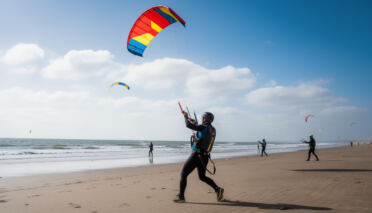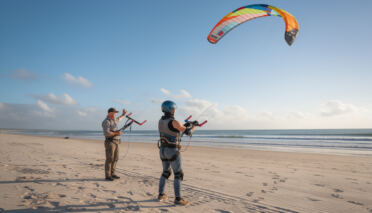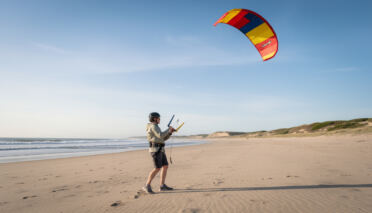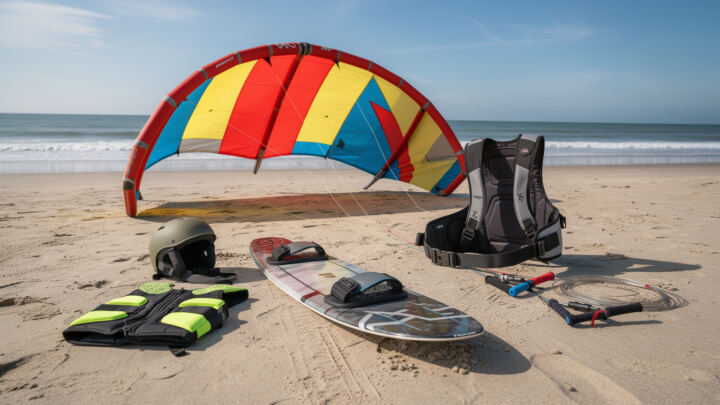
On a windy beach, traction kiting looks deceptively simple: a kite in the sky, a rider gliding, and a grin you can spot from a mile away. But the “easy” part is usually what you see from the parking lot. Up close, it’s a controlled tug-of-war between you and the wind, and the difference between a smooth session and a sketchy one often comes down to equipment choices—tiny details like line length, a correctly fitted harness, or whether your helmet actually stays put when you hit the sand hard. The gear isn’t just a shopping list; it’s your control language with the wind.
To make this real, we’ll follow Mia, a fictional rider who’s moving from flying a trainer kite to proper traction kiting on land and shallow water. She’s not trying to win competitions—she just wants reliable, repeatable sessions without getting dragged like a suitcase. Her setup decisions will mirror yours: picking a kite that matches conditions, choosing a kite control system that makes sense, and rounding it out with protection that’s comfortable enough to actually wear. Let’s get into the essentials—what they do, why they matter, and how to avoid the classic beginner-to-intermediate gear mistakes that waste money and confidence.
En bref
- 🪁 Match your kite size and type to your spot’s wind range—power is fun until it isn’t.
- 🧰 A reliable kite control system (especially the quick-release) is your “panic button” when things get weird.
- 🧵 Treat lines like climbing ropes: inspect, measure, and replace before they fail.
- 🎛️ The control bar is your steering wheel—bar width, trim, and grip matter more than most people think.
- 🪢 A properly fitted harness reduces fatigue and helps you hold edge/control without wrecking your back.
- 🪖 Wear a helmet and an impact vest; they’re not “beginner stuff,” they’re longevity stuff.
- 🧤 Gloves save your hands during repeated launches, self-rescues, and cold sessions.
- 🧥 A well-chosen wetsuit can extend your season and keep your reactions sharp.
Essential Traction Kite Selection: Sizes, Types, and Wind Matching That Actually Works
The kite is the engine, and like any engine, the wrong one turns a fun day into a stressful one fast. For traction kiting, you’ll usually choose between foil kites (often used for land and snow) and inflatable LEI kites (common on water). Mia started with a small trainer, but the first time she tried a bigger wing without thinking about wind strength, she got the classic “surprise acceleration.” That moment taught her what every rider eventually learns: wind range is not a suggestion.
Foil kites are popular on land because they pack small, launch easily, and don’t need pumping. Closed-cell foils can even be used on water because they resist taking on water. LEI kites float and relaunch well on water, but they require more setup time and care. The “best” choice depends on where you ride most—beach, fields, frozen lakes, or shallow lagoons—and how much you want to carry.
Kite size is where people make expensive mistakes. Bigger doesn’t mean “better,” it means “more pull.” If your goal is learning control and body positioning, a slightly smaller kite that you can comfortably depower is usually the smarter move. Mia’s local spot is gusty—wind goes from mellow to spicy in seconds—so she prioritized a kite known for stable behavior and predictable depower. That single decision made her progression smoother because she spent more time practicing technique and less time managing panic.
Practical wind range planning for traction kiting (with a real-world mindset)
Instead of treating the forecast like a magic number, think in bands: lulls, average, and gusts. The gust number is the one that tests your gear and decision-making. A kite that feels “fine” at 14 knots can become a handful when gusts punch to 22. That’s not theoretical—on open beaches and wide fields, gust fronts can build quick.
One habit that helped Mia: she started logging sessions in a simple note—kite size, rider weight, surface (sand vs. grass vs. water), and what the gusts felt like. Within a few weeks, she stopped guessing. She could look at the day and say, “This is my small kite day,” and she’d be right more often than not.
To avoid buying a pile of gear, many riders build a two-kite quiver that covers most conditions. On land, the “sweet spot” often focuses on a mid-size plus a smaller high-wind option. Your exact numbers depend on weight and local wind, but the principle is universal: choose overlap, not gaps, so you’re not tempted to ride overpowered. The insight worth keeping: a slightly underpowered session builds skill faster than an overpowered session builds confidence.
Kite Control System Essentials: Control Bar, Safety Releases, and Clean Rigging Habits
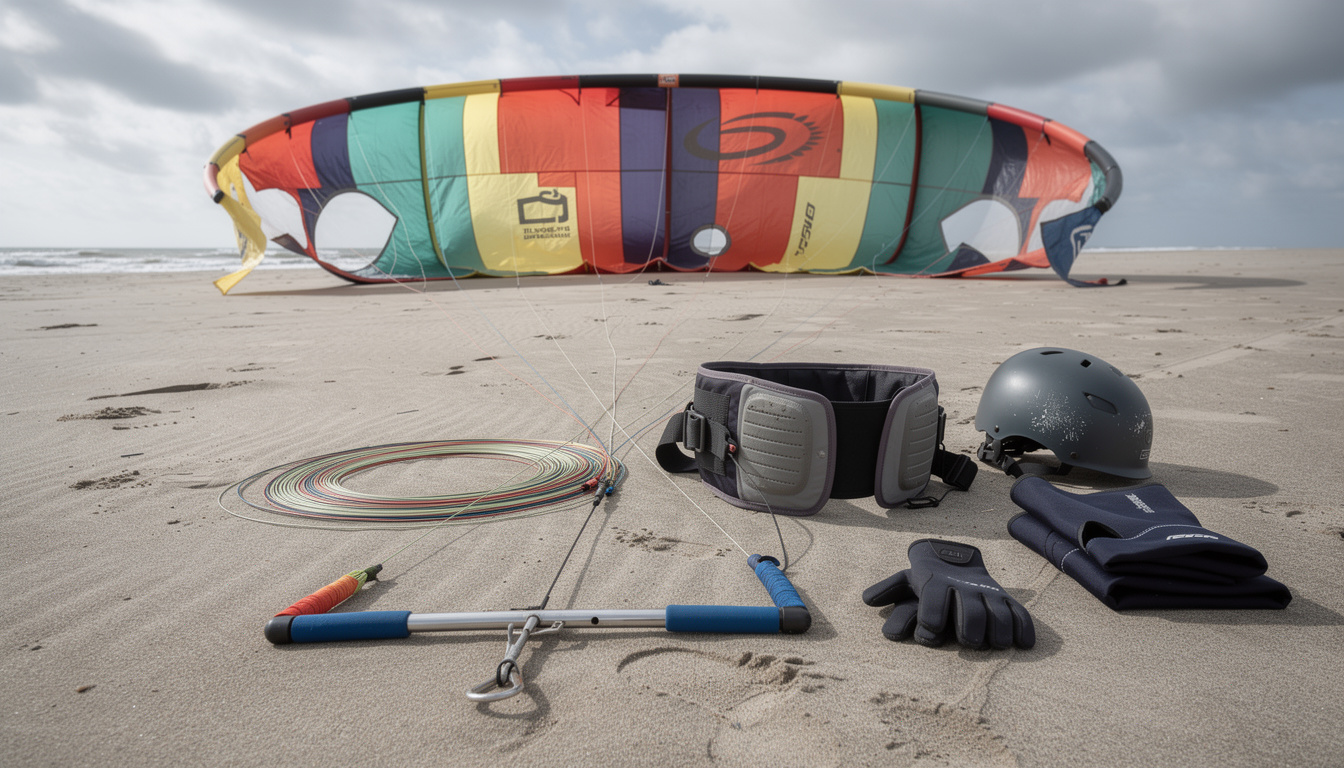
If the kite is the engine, the kite control system is the cockpit. This is where traction kiting stops being “holding on” and becomes actual steering. Most setups revolve around a control bar, a depower/trim system, a leash, and a primary safety release (plus secondary release points depending on design). When riders talk about “feeling connected,” they’re really describing how smoothly this whole system communicates load and direction changes.
Mia’s first upgrade was a better bar. She didn’t do it for style; she did it because her old setup had a sticky quick-release and a trim strap that was awkward to reach under load. Those two issues sound minor until you’re getting yanked and you need the system to behave instantly. A quick-release must be easy to activate with one hand, under tension, with cold fingers. If yours needs “just the right angle,” it’s not ready for real traction sessions.
Control bar setup that reduces drama (and hand fatigue)
Bar width and grip matter. A wider bar typically gives faster turning on many kites, which can be great for responsive flying but can also make the kite twitchy for newer riders. Mia chose a medium-width bar with a comfortable grip because she was doing long tacks and didn’t want forearm burn after 30 minutes. She also added a simple routine: before launching, she checks that the depower line runs clean, the trim is set neutral, and the bar slides freely.
The chicken loop and leash connection are another “small thing” that becomes a big thing. A leash should be attached exactly as your kite brand intends—because different safety systems flag the kite differently. On some systems, you want the kite to fully depower to a single front line; on others, the behavior changes. The point isn’t to memorize every design on earth; it’s to test yours on land, in light wind, before you rely on it. Do you know what your kite does when you hit the release? You should.
A no-nonsense pre-flight rigging checklist for lines and safety
Your lines are your lifeline. Twists, uneven lengths, and worn sections can turn a stable kite into a looping machine. Mia learned this after a session where her kite kept pulling left; it turned out one line had stretched slightly from a previous rough landing. After that, she started doing a quick tension check: hook in, pull the bar in evenly, and confirm the kite sits symmetrical at the edge of the window.
It also helps to develop “clean rigging habits”: keep sand out of the quick-release, avoid stepping on lines, wind them neatly, and store them dry. People love buying new kites, but it’s the boring maintenance on the control system that keeps you riding week after week. Next, we’ll look at the gear that lets your body handle that power comfortably: the harness and the way you connect to the pull.
Choosing the Right Harness for Traction Kiting: Fit, Comfort, and Power Management
A harness is where traction becomes manageable. Without it, your arms take all the load, your posture collapses, and you fatigue fast. With the right harness, you can lean against the pull, keep your hands light on the bar, and ride longer with better control. This is the piece of gear that quietly determines whether you feel “in charge” or “just surviving.”
Mia tried a friend’s harness that was too big and immediately understood the problem: it rode up, crushed her ribs, and made it hard to breathe when the kite loaded up. Later she tried one that fit correctly and the difference was night and day—suddenly she could focus on steering and edging rather than constantly readjusting straps. Fit is not vanity; it’s performance and safety.
Waist vs. seat harness: which one makes sense for your sessions?
Waist harnesses are popular because they allow more freedom of movement and feel natural once you have technique. Seat harnesses sit lower and tend to reduce “ride up,” which can help beginners or anyone doing long cruising sessions where comfort matters most. For land traction (like buggying or landboarding), a seat harness can feel especially stable. For more dynamic riding, a waist harness can be more versatile.
Mia chose a waist harness but added a simple rule: if conditions are gusty or she’s practicing new skills, she tightens it properly and checks spreader bar alignment before every launch. That alignment matters because a twisted spreader can create pressure points and weird body angles, which makes your control inputs sloppy.
Harness details that matter more than marketing
Look for solid back support, comfortable edging without sharp pressure, and a spreader bar that matches your discipline. Some bars have hooks, others use rope sliders—sliders can feel smoother for some riding styles but change how the kite’s pull centers. The best move is to test under load, not just in a shop mirror.
Here’s a quick comparison table Mia used when narrowing down options:
| Gear Factor | What to Look For | Why It Matters |
|---|---|---|
| 🪢 Harness fit | Snug without crushing; minimal ride-up | Less fatigue, cleaner body position |
| 🎛️ Spreader bar style | Hook or slider matched to your riding | Smoother pull, better edging feel |
| 🧵 Lines condition | No frays, equal length, clean knots | Prevents accidental looping and failure |
| 🪖 Helmet + vest | Certified helmet, snug impact vest | Reduces head/torso injury risk |
The takeaway: comfort is control. When the harness disappears on your body, you start riding better almost by accident. Next up: the protective layer that keeps the inevitable falls from turning into time off the water or the field.
Protective Gear for Traction Kiting: Helmet, Impact Vest, Gloves, and Smart Layering
Traction kiting has a funny way of humbling you. One moment you’re cruising; the next, a gust shifts and you’re doing an unplanned slide. Protective gear isn’t about being scared—it’s about staying consistent. Mia noticed she progressed faster once she stopped “saving” her gear for big days and started wearing it every time. Less hesitation equals better learning.
A helmet is non-negotiable for land traction and still a very good idea on water. Look for a model designed for action sports or watersports with a secure fit system. If it wiggles when you shake your head, it will shift in a crash. Mia picked a helmet she could wear for an hour without hotspots because discomfort is the quickest path to leaving it in the car.
An impact vest protects your ribs and adds a bit of flotation in water. On land, it helps with those “I landed on my side” moments that don’t seem serious until you try to laugh later. The vest should fit close; if it rides up, it won’t protect what you think it’s protecting.
Gloves and wetsuit choices that keep you sharp (not just warm)
Gloves sound optional until you’ve had a session of repeated launches in cold wind. They reduce rope burn risk, improve grip on wet bars, and make safety releases easier to operate with numb fingers. Mia uses thinner gloves in mild weather so she still has good feel, and thicker neoprene gloves when wind chill is real. The trick is balance: too bulky and you lose dexterity; too thin and you lose function.
A wetsuit isn’t only for winter. Even in moderate conditions, it prevents “cold stiffness,” which slows reactions and makes mistakes more likely. Mia’s rule is simple: if she’ll be wet and the wind is strong, she wears a suit that keeps her comfortable when standing around rigging—because setup time is part of the session. If you’re mainly on land, you may use layered technical clothing instead, but the same logic applies: your clothing should keep you mobile, not puffy and restricted.
Safety accessories that quietly save sessions
Beyond the headline items, a few small pieces of kit can prevent a day from falling apart: a line knife (easy to reach), a whistle for water sessions, and a simple first-aid kit in the car. They don’t look exciting on a shopping page, but they’re the kind of “adult gear” that experienced riders always seem to have.
By now you’ve got power, connection, and protection covered. The next step is what makes traction kiting feel like a sport rather than a stunt: choosing a board setup that matches your terrain and skill goals.
Kiteboard and Terrain Setup: Matching Boards, Bindings, and Conditions for Real Progress
In traction kiting, the board is your interface with the ground or water. Pick the wrong one and it feels like learning to drive on ice; pick the right one and suddenly you’re carving, controlling speed, and stopping where you want. A kiteboard isn’t just “a board”—shape, flex, rocker, and bindings change how the power translates into motion.
Mia rides both a beach and a grassy field depending on the day. On water, a twin-tip kiteboard is the common all-rounder: durable, predictable, and forgiving. On land, a mountainboard/landboard with pneumatic tires absorbs bumps and keeps rolling over rough patches. The big mental shift is that on land, friction and terrain irregularities demand more from your stance and board choice than flat water does.
Bindings and stance: the overlooked control upgrade
Foot retention is a big deal. Straps, boots, and binding angles all affect control and safety. Too loose and your feet pop out when you need leverage; too tight and you risk awkward falls. Mia started with straps that allowed quick exits, then moved toward a more supportive setup once she had consistent control. She also adjusted her stance width slightly wider to improve stability when gusts hit.
On a landboard, trucks and tire pressure change the feel dramatically. Softer tires can grip better and smooth rough ground, but they can also feel sluggish. Harder tires roll faster but transmit more vibration. It’s worth experimenting in small increments, not dramatic changes all at once. The goal is to reduce surprises.
A practical progression path (so your gear matches your skills)
If you’re building toward confident sessions, structure helps. Mia uses a simple progression: start with steady riding and controlled stops, then practice transitions, then add small jumps only when she can reliably depower and redirect. Her gear supports that: a predictable kite, a comfortable harness, and a board that isn’t fighting her.
Here’s a list that captures the “supportive setup” mindset—stuff that makes practice smoother without turning into a gadget obsession:
- 🧭 A clear wind window and launch plan (avoid obstacles, pick a safe downwind zone)
- 🪁 A kite size that leaves room for gusts, not one that “barely holds” in lulls
- 🎛️ A control bar with a clean trim range you can reach under load
- 🧵 Lines inspected and equalized regularly (measure if behavior changes)
- 🪢 Harness adjusted before launch, not after it starts hurting
- 🪖 Helmet on for every session, not just “big wind days”
- 🦺 Impact vest when practicing new skills or riding crowded spots
- 🧤 Gloves for repetitive handling and cold wind sessions
- 🧥 Wetsuit or layers that keep you warm enough to stay precise
The core insight: traction kiting rewards repeatable practice, and the right board-and-terrain setup turns repetition into real progression instead of repeated wipeouts.
Do I need a different kite for land traction kiting versus water kiteboarding?
Often, yes. Many riders use foil kites for land and snow because they’re efficient, pack small, and don’t need inflation. Water kiteboarding commonly uses inflatable LEI kites because they float and relaunch well. That said, closed-cell foil kites can work on water too, so the best choice depends on your spot, relaunch needs, and how much setup time you want.
How often should I replace or check my lines?
Check your lines before every session for frays, knots, and abrasion points, especially near the bar and pigtails. If your kite starts pulling unevenly or looping unexpectedly, measure line lengths and re-tune. Replacement intervals depend on usage and conditions, but heavily used lines (salt, sand, strong wind) should be swapped sooner rather than later—treat them like critical safety gear, not accessories.
What’s the single most important safety feature in the kite control system?
A reliable quick-release that you can activate instantly under load. Test it in light wind on land, keep it clean of sand/salt, and practice the motion until it’s automatic. Pair it with the correct leash connection so the kite flags out as designed.
Is a helmet and impact vest really necessary if I’m not jumping?
Yes. Most injuries happen during unexpected events: gusts, failed launches, collisions, or awkward falls while simply riding. A helmet protects your head from impact with the ground, board, or hardware, while an impact vest helps protect ribs and torso—both support consistent riding and faster learning because you’re less hesitant.
What beginner gear mistake wastes the most money?
Buying a kite that’s too big for typical gusts at your local spot. It might feel powerful in a demo, but it often slows progression and increases risk. A better approach is choosing a kite with a manageable wind range, pairing it with a well-fitted harness, and investing in safety gear like a helmet, impact vest, and gloves so you can train more often and with more confidence.