In brief:
- 🌬️ Read wind conditions before you even unroll the lines: direction shifts matter as much as wind strength.
- 🪁 Match your traction kite size and design to strong winds so you’re not fighting the sky all session.
- ✋ Build reliable kite control with small inputs, steady tension, and calm kite steering—especially in gusts.
- 🧤 Prioritize wind safety: space, obstacles, protective gear, and a practiced release plan.
- 🧵 Prep and inspect your setup so kite handling stays predictable when the breeze turns punchy.
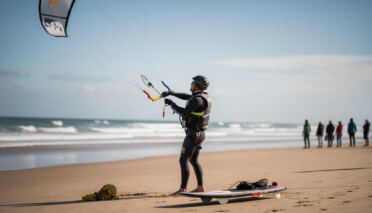
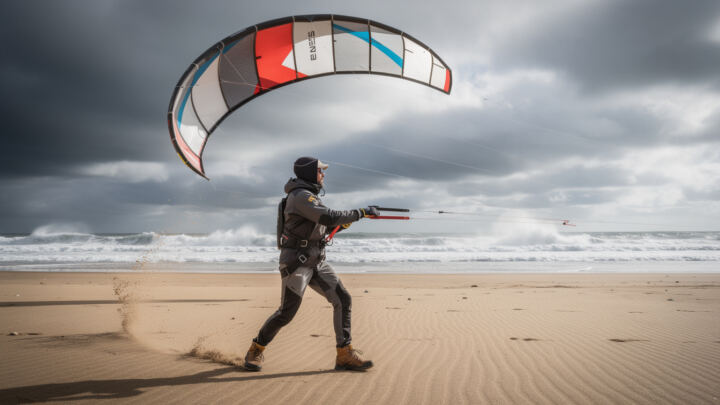
On a windy beach, everything feels amplified: the sound of the canopy snapping, the sand stinging your ankles, the lines humming like guitar strings. A traction session in strong wind can be the most addictive kind of fun—fast, lively, and powerful—but it also has a way of punishing sloppy habits. Gusts don’t just add power; they add surprise, and surprise is what turns an “awesome day” into a tangled mess or a scary moment.
The trick isn’t being fearless. It’s being methodical. You’re basically doing two jobs at once: reading the wind like a weather nerd and flying a wing like a pilot. That means choosing the right kite, setting it up so it behaves, and using control inputs that keep you ahead of the next gust instead of reacting late. And since real sessions aren’t in a lab, you’ll also need a plan for crowds, obstacles, and those moments when the wind spikes and your brain goes, “uh-oh.”
Understanding wind conditions for traction kite control in strong winds
Let’s get one thing straight: “windy” isn’t one condition. You can have smooth, steady wind that’s strong but manageable, and you can have gusty chaos that’s technically the same average speed but twice as sketchy. For traction kiting, that difference is everything, because your kite doesn’t feel the average—it feels the peaks. A gust that jumps 8–10 mph above the baseline can turn comfortable pull into instant overpowered drama.
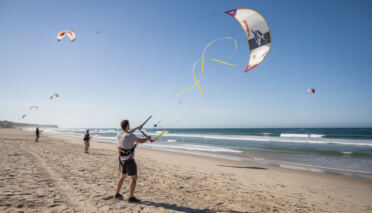
Start by reading wind conditions like you’re scouting a surf break. Look at flags, treetops, blowing sand, and whitecaps if you’re near water. If everything is moving in one consistent direction, you’re likely dealing with cleaner flow. If it swirls, changes direction, or “puffs” in pulses, treat it like gust city. Why? Because sudden direction changes can dump lift and then slam it back on, which is how kites fall out of the sky and then re-power right when your lines are crossed.
Wind window basics that actually matter when it’s nuking
The wind window isn’t just a theory diagram. In strong winds, the difference between the edge and the power zone is the difference between “I’m cruising” and “I’m water-skiing on land.” High in the middle is typically max pull; edges are lower pull and more control. When it’s gusty, you want to spend more time near the edge until you’ve confirmed the wind is behaving.
Here’s a simple mental model: if your kite is spending lots of time overhead at 12 o’clock because it “feels safe,” you might be setting yourself up for a lofting risk when a gust hits. A lower, more controlled position—when appropriate for your discipline and space—often gives you more predictable feedback. It’s not about being brave; it’s about managing where the power can build.
A quick reality-check table for wind strength decisions
You don’t need to memorize numbers to be safe, but having a few anchor points helps, especially if you’re teaching yourself discipline. The idea is to connect wind strength to decisions: kite size, line length, and whether the session is even worth it.
| Wind strength feel 🌬️ | What your kite tends to do 🪁 | Smart control move 🎯 | Wind safety flag 🚩 |
|---|---|---|---|
| Steady, firm breeze ✅ | Predictable pull, smooth turns | Practice clean figure-eights with gentle inputs | Still keep wide spacing from people/objects |
| Gusty pulses ⚡ | Surges of power, occasional stalls | Shorter steering motions, keep tension, avoid big dives | Avoid crowded spots; pre-plan your release |
| Borderline overpowered 🧨 | Kite accelerates fast, yanks during lulls-to-gusts | Downsize, slow the kite, keep it nearer the edge | If you’re unsure, don’t launch—walk away |
To make this concrete, imagine a rider named Sam who loves a fast power kite session after work. Sam checks the forecast: it says “20 mph,” but on the beach the wind is punching in bursts. Sam notices the kite would be feeling 20… then 28… then 18. That’s not “20.” That’s gust management, and it changes everything about kite control. The insight: your decisions should match the gusts, not the average.
Choosing the right traction kite and setup for strong winds (size, shape, lines)
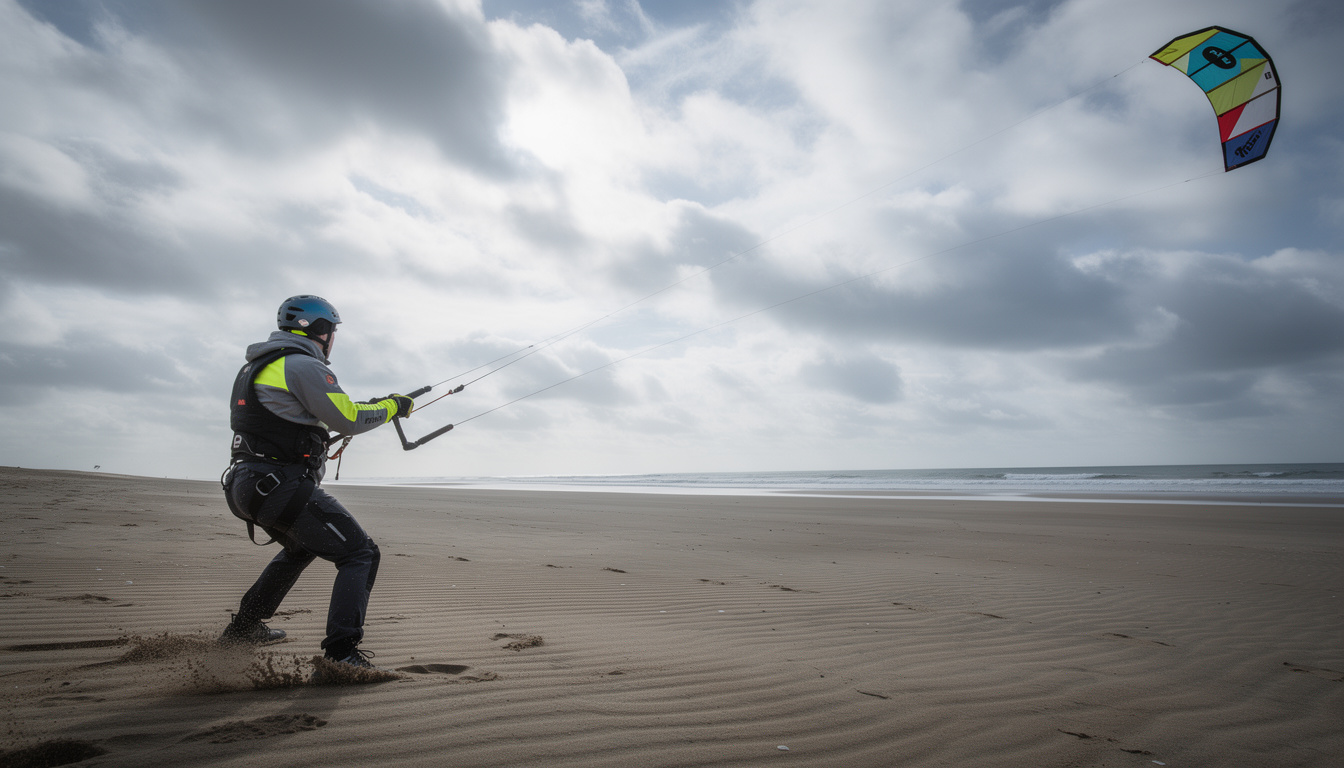
If you try to “muscle through” with too much canopy, you’ll spend the whole day surviving instead of flying. The easiest win in strong wind is simple: pick the right kite. For traction sports, smaller kites reduce pull and give you more room to steer without panic. That sounds obvious, but people still rig big because they want power—then get dragged, oversteer, and blame the gusts.
Different kite designs also behave differently when the wind gets aggressive. Some riders prefer direct, responsive designs (think classic C-shaped kites in kiteboarding contexts) because the feedback is immediate and the turn is tight. Others prefer kites built for stability that dampen twitchiness. The point isn’t which is “best,” it’s which matches your skill and what you’re doing: buggying, landboarding, snowkiting, or on-foot traction practice.
Dialing gear choices into your real session
Sam (our fictional after-work kiter) has two options in the bag: a larger kite that feels amazing in moderate wind and a smaller wing that feels “boring” in lighter air. On a gusty day, Sam chooses the smaller one and suddenly the session becomes technical and fun instead of terrifying. That’s not losing—this is what experienced riders do. They chase control first, then speed.
Line length is another underused lever. Longer lines can smooth the feel by giving the kite a little more “time” through gust transitions, but they also increase the window size and potential power sweep. Shorter lines can make things tighter and reduce the power spike from big dives, but they can also make the kite feel more reactive. If your spot is small or the wind is punchy, experimenting with slightly shorter lines can improve kite handling—as long as you’re ready for quicker reactions.
Pre-flight inspection and rigging habits that prevent ugly surprises
In gusty wind, tiny problems become big problems. Check the canopy for tears, inspect bridles for knots, and look closely for frayed sections near connection points. If you’re flying four lines, confirm they’re equal or intentionally trimmed; uneven lines can cause constant backstalling or accidental diving. Make sure all attachments are solid—because the “it’ll probably hold” mindset is how sessions end early.
One more practical tip that sounds boring but saves sessions: keep your lines organized and weighted before launch. In strong wind, a line loop can flick into a knot fast. Clean rigging is not a vibe; it’s a performance upgrade. The insight: strong-wind sessions are won in setup, not in hero moves.
If you want to see how experienced riders choose and tune their kites in real-world wind, watching a few rigging walk-throughs helps a lot before you ever clip in.
Kite steering and kite control techniques that work when gusts hit
Gust management is mostly about doing less… better. In strong wind, big dramatic bar or handle movements create big dramatic problems. Your job is to keep the kite stable, slow it down when needed, and avoid accidental dives through the power zone. That’s where modern kite flying tips often point: small inputs, steady tension, and planned positioning.
A key rule: keep tension, but don’t death-grip and yank. A firm hold on the lines or bar helps you feel the kite, but pulling too hard can overcorrect and start oscillations. Think “calm pressure” rather than “fight.” When gusts punch in, your hands should be ready to soften the power—often by easing out (bar systems) or reducing aggressive steering inputs (handles), depending on your rig.
Keeping the kite low vs high: it’s situational, not dogma
You’ll hear advice like “keep the kite low” because, in many traction disciplines, lower positioning can be more controllable and reduces lofting risk compared to parking it overhead. But “low” doesn’t mean “drag it across the ground.” It means controlled flight near the edge of the window, with enough clearance to react and enough space downwind to be safe.
Sam learns this the hard way on a gusty day: parking the kite too high feels relaxing until a gust lifts and pulls upward. After that, Sam starts flying a bit more to the side, keeping the wing active and predictable. It’s not about being flashy; it’s about staying connected to what the wind is doing.
Micro-movements that stabilize a twitchy kite
When the kite starts to surge, the instinct is to crank a hard correction. In gusts, that often becomes oversteering, and oversteering is how canopies spiral, dive, or slam. Instead, use short, measured corrections—tiny pulses—to “catch” the kite before it accelerates. If your system allows it, slowing the kite’s turning response (shorter throw, moving hands closer to center, or using a slower setting) can make control easier in heavy air.
Launching and landing are where gusts cause the most chaos. A good approach is to keep the kite moving slightly during these phases so it doesn’t get slammed by a gust at a weird angle. Think of it like balancing a bicycle: a little motion gives you stability. The insight: smooth control beats strong control.
For a visual breakdown of gusty-wind steering patterns and recovery techniques, it’s worth studying how riders reset the kite from minor collapses without panicking.
Wind safety and risk management for traction kiting in strong winds
Strong wind adds energy to everything: your mistakes, your launches, your landings, and your bails. So wind safety isn’t a separate topic—it’s baked into every decision. Start with location: wide open space, clean wind, and no obstacles downwind. Power lines, trees, buildings, fences—those aren’t just “things to avoid,” they create turbulence that makes gusts nastier and less predictable.
Protective gear is not overkill when you’re dealing with traction pull. A helmet and sturdy footwear are common-sense basics, and gloves can save your hands if you need to manage lines under load. In a rough gust cycle, line friction can burn fast. If you ever watched someone try to “just hold it” while a kite powers up, you know how quickly confidence turns into pain.
A practical safety checklist you’ll actually use
- ✅ 🧭 Confirm wind direction and identify a clear downwind escape zone.
- ✅ 🪢 Inspect lines and connection points for frays, knots, or uneven trim.
- ✅ 🧤 Wear helmet + gloves; add shin/knee protection if you’re landboarding.
- ✅ 🚫 Avoid launching near trees/buildings that create rotor and sudden lulls.
- ✅ 🧨 Rehearse your emergency release or kill switch motion before you hook in.
- ✅ 👥 Keep a safe buffer from people—spectators drift closer than you think.
What to do when you lose control (before it becomes a story)
If the kite starts spiraling or surging out of your control, your priority is to stop feeding it power. That often means releasing to a safety system if your setup has one, or letting the kite settle rather than yanking it back into the power zone. If the wind spikes suddenly, bring the kite to a safer position and wait it out. Waiting is a skill—especially when your adrenaline wants action.
Sam’s “rule” after one spicy afternoon: if the session requires constant emergency corrections, it’s not a session—it’s a warning. That mindset keeps you progressing long-term. The insight: the smartest strong-wind riders are the ones who can choose not to launch.
Advanced kite handling in strong winds: gust strategy, drills, and real-world scenarios
Once your basics are solid, the next level is building reflexes that hold up under pressure. Gusty wind is basically random practice: you don’t get to choose when the challenge arrives. So you create drills that mimic it. The goal isn’t perfection; it’s making your response automatic and calm when the canopy loads up unexpectedly.
One reliable drill is “edge-of-window tracking.” Keep the kite near the edge and slowly move it up and down that boundary without letting it dive. You’ll learn exactly how little steering is needed, and you’ll feel the moment the kite wants to accelerate. Another drill is controlled figure-eights where the focus is on speed control, not speed generation. If your kite rockets through the middle, you’re practicing danger, not skill.
Case study: Sam trains for a windy weekend spot
Sam plans a weekend trip to a wide coastal flat known for punchy thermals. Instead of showing up and sending it, Sam spends two weekday sessions practicing short steering inputs and “soft hands.” On the weekend, when the wind ramps and the gusts come in lines, Sam already knows how to keep the kite from overflying and how to recover from small collapses without a full crash.
That’s the underrated truth about kite steering in strong air: the kite is only half the system. Your habits are the other half. If your default move is to overcorrect, the kite will look “unstable.” If your default is measured input with consistent line tension, the same kite suddenly feels calm.
When to change something instead of “trying harder”
Advanced riders aren’t stubborn—they’re adaptive. If you’re fighting repeated surges, you downsize. If the kite is too twitchy, you tune for slower turning or adjust how much throw you use. If the wind is dirty behind dunes or buildings, you relocate. If you’re tired, you stop. These are performance choices, not defeats.
And yes, kite flying is still supposed to be fun. Even in 2026, with better forecasts and more shared knowledge, gusts can still humble anyone. The insight: progress in strong winds is mostly about smarter decisions, not stronger arms.
How do I control a traction kite in gusty strong winds without getting yanked?
Prioritize kite position near the edge of the wind window, use small steering inputs, and keep steady line tension without over-pulling. If gusts spike, reduce power immediately (push out on a bar system or ease steering on handles) and avoid diving the kite through the power zone.
What’s the biggest mistake with kite control in strong winds?
Flying too large a kite for the gusts and then oversteering to compensate. Downsizing and slowing your inputs usually fixes the root problem faster than trying to “fight” the kite.
Should I keep the kite low or high for wind safety?
In strong winds, many riders prefer a controlled, lower position nearer the edge rather than parking overhead, which can increase lofting risk in gusts. The safest choice still depends on your spot, obstacles, and discipline—always keep a clear downwind area.
How do I choose the right power kite for strong wind conditions?
Look for a kite known for stability and solid construction, then choose a smaller size for the day’s gusts (not just the average). A strong frame/bridle and predictable handling matter more than maximum pull when wind strength is high.
What should I do if I lose control and the kite starts looping?
Stop feeding power: use your safety release/kill system if available, or let the kite settle rather than yanking harder. Get the kite to a safer position, keep people clear, and only relaunch after checking lines and canopy for tangles or damage.