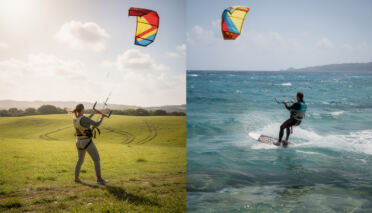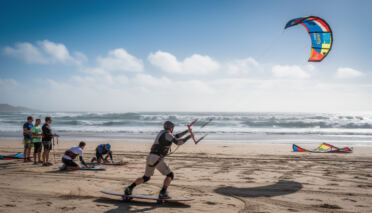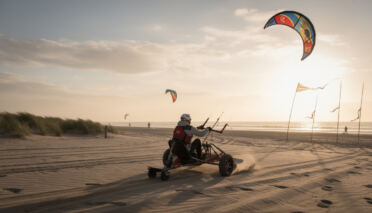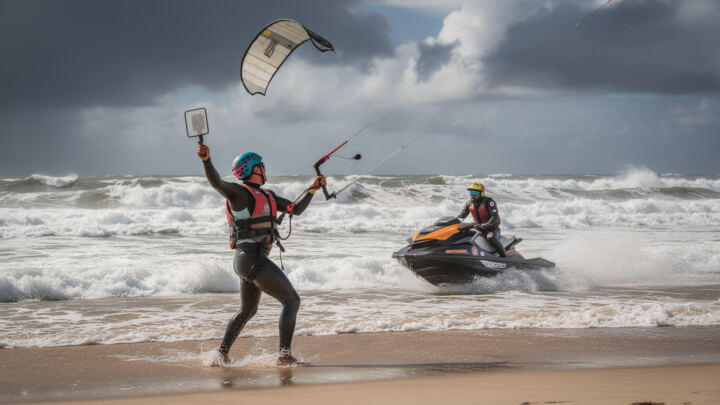
Traction kiting looks harmless from a distance: a canopy in the sky, a rider gliding across sand or snow, and a vibe that screams “weekend freedom.” Up close, it’s a fast-moving puzzle made of wind conditions, tight lines, changing terrain, and the very human tendency to rush when you’re excited. Emergencies don’t usually start with a dramatic crash. They start with small stuff: a gust that hits during a distracted launch, a bridle snag you didn’t notice, a landing spot that looked “fine” until the wind rotated, or a crowd that wandered downwind because they didn’t understand the danger zone.
The good news is that most scary moments in traction kiting are predictable. If you treat safety procedures like a routine (not a vibe), if you rehearse emergency handling until it’s boring, and if you build a simple decision tree for “depower, release, secure, recover,” you can turn chaos into something manageable. This article follows a fictional rider, Alex, who’s athletic, eager, and occasionally overconfident—basically the perfect person to learn the hard lessons without you having to. You’ll see where things go wrong, what to do in the first five seconds, how to avoid equipment failure surprises, how emergency signals keep helpers on the same page, and why self-rescue and first aid deserve a spot in your kit right next to your gloves.
En bref
- 🌬️ Treat wind conditions as a range (gusts + direction shifts), not a single number from an app.
- 🧰 Prevent most equipment failure moments with a two-minute routine: lines, bridles, leash, and a tested quick release.
- 🛑 The safest skill isn’t looping the kite—it’s aborting early and resetting before power builds.
- 🧠 Better kite control under stress comes from smaller inputs and “park the kite” habits you practiced when calm.
- 🆘 Real emergency handling follows a simple ladder: depower → release → secure → self-rescue → first aid.
- 🤝 Use clear emergency signals with buddies and respect the “no-go downwind zone” around people and obstacles.
- 📍 Strong risk management means choosing space like you’re planning for a 20-meter drag, not a perfect run.
Emergency Handling While Traction Kiting: The 5-Second Decision Tree That Prevents Escalation
When something goes wrong in traction kiting, the first five seconds matter more than the next five minutes. Alex learns this on a breezy beach day: the launch feels slightly “off,” the kite jitters, and then a gust punches through. Instinct says “pull in and fight.” That’s the classic mistake—pulling in often adds power and speeds up the kite, which turns a wobble into a sprint.
A cleaner response is a simple decision tree you can run even when your brain is loud: depower, release, secure, recover. Depower is your “still in control” step. Release is your “control is fading” step. Secure is your “protect people and stop re-power” step. Recover is where self-rescue and calm problem-solving live.
Step 1: Depower fast (before panic chooses for you) ⚠️
Depower isn’t magic—it’s angle and tension. Alex’s best quick move is steering the kite toward the edge of the wind window (higher and off to the side) while easing the bar out slightly. If you’re on land, stepping toward the kite reduces line tension; leaning back and bracing usually increases it.
If your setup has trim, use it early. Waiting until you’re already getting dragged is like trying to put a seatbelt on during a crash. Depower is also where “boring basics” win: riders who practice parking the kite can do it under stress without overcorrecting.
Step 2: Release without negotiation 🧨
Here’s the hard truth Alex finally accepts: if you’re moving toward rocks, people, fences, a road, or shallow water hazards, the correct play is often to trigger the quick release immediately. Beginners delay because they don’t want to lose their kite, look silly, or “waste” the session. That delay is how minor trouble becomes major injury.
Modern bars in 2026 are generally reliable, but sand and salt still jam mechanisms. That’s why practicing the release isn’t optional; it’s part of your safety procedures. You want the motion to feel automatic, like hitting the brakes.
Step 3: Secure the scene (your kite can re-power) 🚦
After releasing, Alex’s next job isn’t “save the kite.” It’s “stop a second incident.” Kites can tumble, catch wind, and load lines again. Keep distance, keep other people back, and approach from upwind when the canopy settles. Don’t wrap lines around hands; don’t grab random bridles under tension.
This is where emergency signals matter. If you’re with friends, a simple shout like “RELEASED—STAY BACK!” is surprisingly effective. The insight: good emergency handling is less about heroics and more about preventing the problem from multiplying.
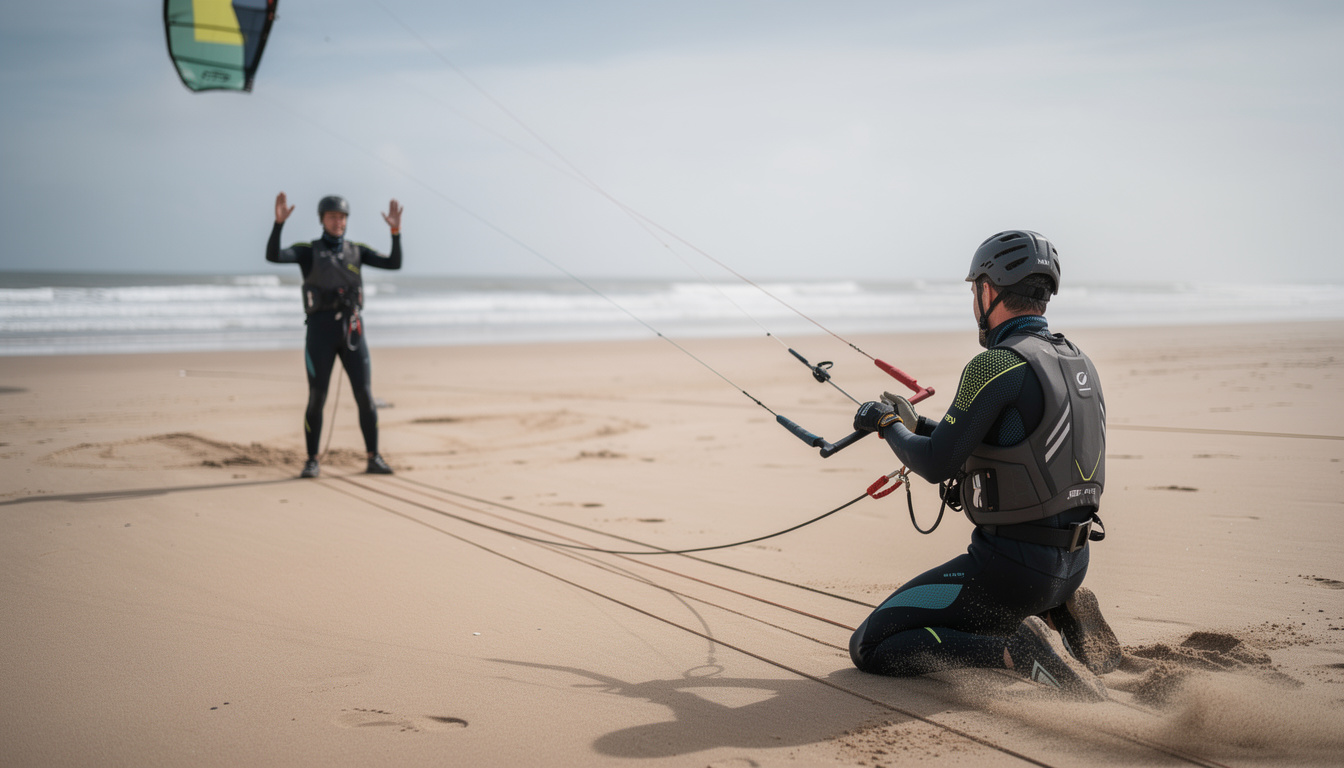
Wind Conditions Emergencies in Traction Kiting: Gusts, Fronts, Thermals, and the “It Was Fine an Hour Ago” Trap
Alex used to treat wind like a single number—“15 knots, let’s go.” Then comes the day the forecast is right but reality is messy: gusts hit hard, lulls feel dead, and the kite alternates between surging and stalling. That’s when you learn the most underrated skill in traction kiting: wind awareness that’s local, not theoretical.
Wind emergencies rarely show up as a single dramatic event. They show up as conditions that slowly slide from manageable into sketchy. The session starts smooth, you get comfortable, then the wind clocks 20 degrees and your “safe downwind buffer” quietly turns into a hazard corridor. Or a small front line arrives—temperature drops, clouds stack, and gust spread jumps. The kite doesn’t care that you already drove to the spot.
What to watch on site (not just on apps) 🌦️
Alex’s new routine uses at least two sources: a forecast plus a real-time reading (local station, beach meter, or an anemometer if traction kiting is a regular thing). But the real upgrade is observing: flags snapping, sand drifting in sheets, whitecaps forming, trees moving unevenly, and the “feel” of pulses on your face.
Gust spread is a big deal for emergency handling. A steady 16 can be easier than an average 12 with spikes to 20. Gusts create surprise power, and surprise power is what triggers rushed steering, loss of stance, and accidental dives through the power zone.
The offshore drift problem (landing becomes the emergency) 🛬
One sneaky scenario: the wind strengthens but also rotates more offshore. Alex keeps riding because it still feels controllable—until it’s time to land. Offshore drift introduces slack lines and weird canopy behavior near the ground. You end up “wrestling” the kite, which is exactly where bad decisions happen.
The fix is boring: treat harder landings as information. If landing starts to feel complicated, that’s your cue to stop and reset while you still have margin. The insight: your safest exit is the one you choose early.
Simple risk management rules that actually hold up 📍
- 🧭 If wind direction is shifting and your downwind area shrinks, land immediately and move.
- 🌩️ If you see fast-building dark clouds, sudden temperature drops, or sharp gust increases, don’t “squeeze one more run.”
- 🏜️ If sand is blasting at ankle height and you’re “hanging on,” you’re already behind the curve—downsize or stop.
- 🚫 If you can’t describe your landing plan out loud before launch, you’re not launching yet.
Up next is the part nobody likes to admit: a lot of emergencies are self-inflicted through preventable gear mistakes—so let’s make equipment failure rarer.
Seeing wind-window behavior helps this click faster, especially for newer riders who don’t yet “feel” the edges.
Equipment Failure and Safety Procedures: The Two-Minute Pre-Flight That Stops Runaway Kites
Alex’s worst near-miss didn’t come from a huge gust. It came from a tiny setup mistake: one steering line wrapped a single turn around the bar end. The kite launched and immediately behaved like it had a mind of its own—pulling unevenly, accelerating unexpectedly, and forcing Alex into panicky corrections. That’s the thing with traction kiting gear: small asymmetries amplify.
A clean equipment routine isn’t a ritual for good vibes. It’s a safety system designed to catch the boring failures that create exciting emergencies. If you build this as a habit, it becomes part of your risk management, not an optional warm-up.
The “touch every critical point once” method 🧤
Alex stops relying on memory and starts relying on touch. He physically touches the quick release, the leash attachment, and the trim. He runs his fingers down bridles to feel snags. He looks down the full line length for knots and fuzzy wear points. Doing it the same order every time is the secret—interruptions are inevitable, but the routine still works.
Quick scan table (fast, visual, no drama) ✅
| Checkpoint | What to check | Why it matters |
|---|---|---|
| 🧨 Quick release | Opens/closes smoothly; no sand jam; oriented correctly | Fast exit when power spikes during emergency handling |
| 🔗 Leash | Clipped to the right ring/point; gate closed; no twists | Prevents runaway kite scenarios after a release |
| 🪢 Lines | No knots/wraps; left/right correct; even tension | Predictable steering and stable kite control |
| 🧵 Bridles | No crossed cascades; no snags; pulleys (if any) run clean | Avoids sudden stalls, surges, and surprise loops |
| 🪖 Protective kit | Helmet fitted; gloves on; hook knife reachable | Reduces injury severity and helps with entanglement response |
When to assume something is wrong (and reset immediately) 🛑
Distraction is the real enemy. If someone steps over your lines, if you answer a call, if a dog runs through your setup, treat it like you just time-traveled: you don’t “continue,” you restart the final checks. Alex calls it the “two-minute reset,” and it saves him from launching with a hidden problem.
One more detail that matters: practice resetting your release in low tension at least a couple times a season. A release you can’t reset calmly turns minor issues into session-ending chaos. Next, we’ll talk about where most sessions actually go sideways: launching and landing.
It’s easier to copy a clean setup when you’ve watched a few experienced riders do it step by step.
Kite Control Under Stress: Oversteering, Freezing Up, and How to Regain Control Fast
In the middle of a sketchy moment, Alex’s hands want to do one thing: pull harder. That’s human. It’s also why beginners lose kite control when adrenaline hits. Pulling in can increase power, and aggressive steering can create oscillation—dive, surge, panic-correct, dive again—until you’re basically riding a pendulum.
The fastest way back to control is counterintuitive: do less, earlier. Calm inputs, a stable stance, and a plan to park the kite reduce the “power rollercoaster.” Emergencies often feel like they come out of nowhere, but the body language that causes them is usually consistent: stiff legs, shoulders up, and frantic hands.
Micro-moves that work when your brain is loud 🧠
Alex trains three “micro-moves” so they show up automatically. First: ease the bar out a touch instead of yanking in. Second: steer toward the edge of the wind window to reduce pull. Third: step toward the kite (on land) to soften tension. These moves buy time, and time is what prevents a release from becoming your only option.
Park-the-kite drills (the boring stuff that saves sessions) 🎯
Alex starts doing a simple drill at the start of each session: park the kite at about 10 o’clock or 2 o’clock and hold it there for 20–30 seconds without wandering. Then he does slow figure-eights where the goal isn’t speed; it’s constant, controlled movement without diving deep into the power zone.
Why it matters for emergency handling: if you can park the kite calmly, you can stabilize before landing, before walking, and before helping someone else. Parking is also the bridge to safer launches and landings because it keeps the kite from powering up unexpectedly.
Stance: the secret teammate of control 🧍
Alex used to stand upright with locked knees. That stance can’t absorb load, so every gust travels straight into panic steering. He shifts to an athletic posture: knees soft, hips engaged, shoulders relaxed, eyes scanning the space instead of staring at the canopy. When the body does its job, the hands can stay quiet.
The insight here is simple: real kite control is mostly about what you do before things go wrong—because in the moment, you’ll default to your habits.
Self-Rescue, Emergency Signals, and First Aid: What to Do After You’ve Depowered or Released
Once you’ve depowered or triggered a release, the situation isn’t automatically “over.” Alex learns that the post-incident phase is where people get hurt again—walking into lines, letting the kite re-power, or focusing on gear while ignoring injuries. This section is about cleaning up safely: self-rescue, clear communication, and basic first aid priorities.
Self-rescue mindset: slow down the problem 🆘
Self-rescue in traction kiting starts with a pause. Alex takes a breath, checks for hazards (people downwind, waves, rocks, vehicles), then decides the next move. On land, it often means securing the kite with sand/snow or anchoring safely if your system allows it. On water, self-rescue might mean working your way up a line to the kite, using it as flotation or sail, and returning in a controlled direction—always depending on your equipment and local rules.
The key idea is consistency: don’t invent techniques under stress. Practice a method that fits your kite type (foil vs inflatable) and your environment (beach, field, snow). If you can’t explain your self-rescue steps clearly, you’re trusting luck.
Emergency signals that reduce chaos 🤝
When you have a buddy, your best safety upgrade is communication. Alex and his friend agree on a few emergency signals before connecting lines: a clear “HOLD” hand up, a “LAUNCH” nod/thumb, and an “ABORT” cross-arm signal. They also agree that any person can call abort—no debates, no ego.
If you’re already in trouble, verbal calls help bystanders understand what’s happening. Simple phrases like “STAY BACK FROM THE LINES” or “I’M RELEASING” prevent well-meaning people from grabbing dangerous parts of the system.
First aid priorities for common kiting injuries 🩹
First aid in this context isn’t about being a medic; it’s about doing the basics well. Alex keeps a small kit in the car and knows what he’s likely to need: sterile wipes, bandages, blister care, a wrap for sprains, and saline for sand in eyes. For line burns, clean and cover early—those cuts can look minor but get nasty fast.
For head impacts, treat it seriously even if the person insists they’re fine. Helmets reduce risk, not consequences to zero. If there’s confusion, persistent headache, vomiting, or unusual behavior, the session is done and medical evaluation is the move.
Risk management after an incident: don’t “get it back” 🎛️
Alex’s final lesson is emotional: after a scare, people try to reclaim confidence by launching again too fast. Smart risk management says the opposite—debrief, inspect gear, check the wind trend, and only continue if conditions are stable and your head is clear. Sometimes the win is packing down.
The insight that sticks: the safest riders aren’t the ones who never mess up—they’re the ones who recover cleanly and don’t let one mistake become a chain.
What should I do first if I’m being dragged during traction kiting?
Start with emergency handling that buys time: steer the kite toward the edge of the wind window, ease the bar out slightly, and (on land) step toward the kite to reduce line tension. If you’re moving toward hazards or losing control, trigger the quick release immediately, then secure the kite so it can’t re-power.
How do I know if wind conditions are too risky even if the average wind speed looks fine?
Look at gust spread and direction stability, not just the average number. Red flags include sudden temperature drops, fast-building dark clouds, sand blasting, whitecaps appearing quickly, or the kite feeling inconsistent during ground handling. If landing starts getting harder, treat that as a signal conditions are degrading and end early.
What equipment failure check prevents the most emergencies?
Test your quick release (and confirm you can find it instantly) and verify correct leash attachment every session. Then scan for line knots/wraps and bridle snags. These are small checks that prevent runaway kites, surprise loops, and loss of kite control.
What emergency signals should my buddy and I agree on before launching?
Keep it simple and obvious: HOLD (hand up), LAUNCH (clear nod/thumb), and ABORT (arms crossed). Agree that anyone can call ABORT without argument. Also decide where your helper stands and how you’ll communicate if you release.
What first aid items are most useful for traction kiting sessions?
Prioritize what you’ll actually use: sterile wipes, bandages, blister care, a compression wrap for sprains, saline/eye rinse for sand, and tape. Treat line burns and cuts early, and take any head impact seriously—if symptoms persist or behavior is off, stop and get medical help.