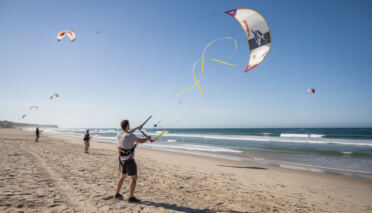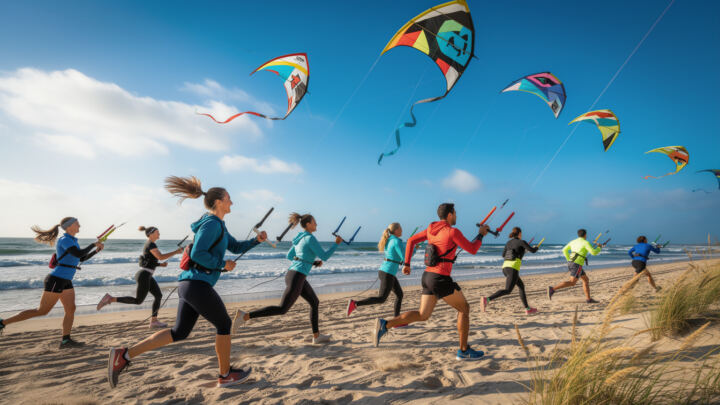
Wind has this funny way of turning a regular day into something cinematic. One minute you’re standing on a beach, a wide open field, or a frozen lake, and the next you’re getting pulled forward by a wing of fabric that feels almost alive. That’s the core vibe of traction kiting: it’s part flying, part riding, part learning to read the sky like a weather nerd—except you’re laughing the whole time. And while the highlight reels focus on speed, jumps, and epic scenery, the real surprise is how quickly it becomes legit fitness without feeling like a chore. You’re not “doing reps,” you’re chasing clean lines in the wind window, adjusting stance, and working with (not against) the gusts.
It’s also one of those rare outdoor exercise options that can scale with you. You can start with a smaller, mellow kite and simply practice control, then grow into landboarding, buggying, snowkiting, or kitesurfing as skills and confidence stack up. Along the way you build core strength, rack up a sneaky cardio workout, and improve balance and coordination—all while doing something that feels like play. If you’ve been looking for a fun activity that also scratches the itch for adventure sports, traction kiting is basically a cheat code.
- 💨 Traction kiting turns wind into motion, making exercise feel like a game, not a grind.
- 🏋️ It naturally builds core strength, grip, and leg stability through constant micro-adjustments.
- ❤️ Expect a real cardio workout when you’re walking, edging, and managing power in changing gusts.
- 🧠 It sharpens coordination and decision-making because the wind window keeps you honest.
- 🛡️ Smart gear choices and safety habits make it a sustainable outdoor exercise routine.
- 🏄♂️ The same skills transfer into snowkiting, kitesurfing, landboarding, and buggying—classic adventure sports.
- ⏱️ It’s excellent endurance training because sessions can be long, steady, and mentally engaging.
Traction Kiting for Fitness: Why Wind-Powered Riding Feels Like Play (and Works Like Training)
One of the best things about traction kiting is that your brain files it under “play” while your body quietly files it under “work.” You’re walking backward to launch, stepping forward to keep tension, shifting your hips to stay stable, and constantly checking where the kite sits in the wind window. That constant movement adds up fast, especially when the wind is variable and you’re doing little corrections every few seconds. It’s outdoor exercise that doesn’t feel like clocking in.
Take a simple scenario: a beginner session on a wide beach with a small foil kite. You might spend 45 minutes just doing controlled figure-eights, practicing smooth turns, and learning how to park the kite without it diving. You’re not sprinting, but your heart rate rises because you’re moving with intention, bracing against pull, and staying alert. That’s a cardio workout disguised as a skill session.
Core strength, legs, and grip: the “hidden gym” effect 🏋️
The big physical payoff is core strength. Not “six-pack in two weeks” nonsense—more like the useful kind of core that stabilizes your spine and helps you stay upright when the kite loads up. Your torso resists twisting when you steer, your obliques light up when you edge against the pull, and your lower back learns endurance. It’s the same kind of functional stability athletes chase with carries, chops, and anti-rotation drills.
Legs get involved in a way that’s different from running. You’re often in a semi-squat athletic stance, weight slightly back, knees soft, ready to absorb changes. On land (especially with landboarding or buggy starts), you’ll feel quads and glutes working. On snow, you’ll feel the “forever burn” of staying stacked and controlling speed. And don’t sleep on your forearms: steering and managing power builds grip endurance, especially when you’re learning and still a bit tense.
Balance and coordination: skill-based fitness that sticks 🎯
Balance and coordination improve because traction kiting is basically a moving puzzle. Your hands steer while your feet and hips counter-steer. Your eyes track the kite while your body senses gusts and surface changes. If you’ve ever tried to pat your head and rub your stomach, it’s that—except you’re being pulled by the wind and it’s weirdly addictive.
Here’s a quick mini case: Maya, a desk-worker who hated treadmills, started static traction kiting on weekends. After a month, she noticed her posture improved during long workdays because her trunk endurance was better. After three months, she could hike longer without her lower back complaining. Same person, same schedule—just swapped one “workout” she dreaded for a fun activity she looked forward to. The insight: when training is enjoyable, consistency becomes automatic.
And that consistency is where the real fitness gains hide, which sets up the next big question: what gear makes this safe and beginner-friendly?
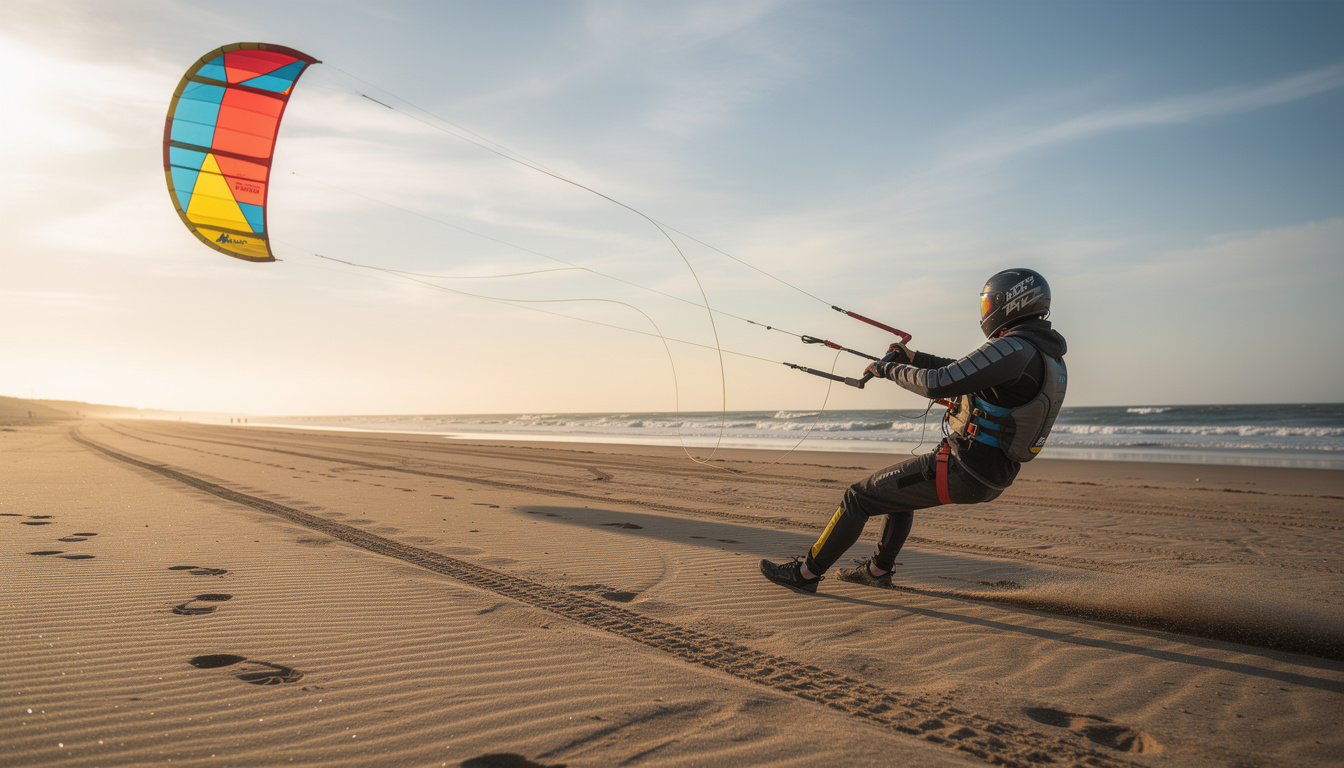
Best Traction Kiting Gear for Beginners: Kites, Bars, Harnesses, and Smart Add-Ons
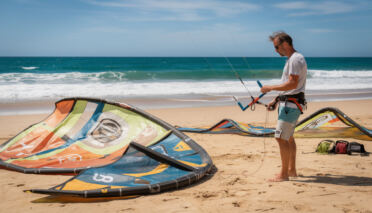
Getting into traction kiting is like getting into cooking: you can do a lot with simple tools, but the right setup makes everything smoother (and safer). At minimum, you need a kite and a control system. If you want to progress into powered riding—buggy, landboard, snow, or water—you’ll also want a harness and a few protective items. The good news is that in 2026, beginner bundles are easier to find than ever, and demo days are common in windy regions.
Let’s break it down in plain terms. Your kite is the engine. The bar or handles are the steering wheel. The harness is your drivetrain that moves load from arms to your body. Safety gear is your seatbelt. A wind meter is your dashboard. Put together, it’s a system that lets you scale from cautious first flights to proper pulling power.
Choosing a traction kite: size, shape, and brands that actually deliver 🪁
Traction kites are designed more like wings than classic diamond kites. Many use an airfoil-style profile to generate lift and pull, and they’re usually built with durable fabrics like ripstop nylon so they can survive repeated launches, drags, and the occasional messy crash. Historically, innovators like Peter Lynn helped push these designs into mainstream traction use in the 1990s, which is why some brand names still get spoken with a little reverence.
For beginners, brands often recommended for approachable handling include HQ and Prism for smaller power-friendly options, plus larger traction-focused names like Ozone, Slingshot, and Flexifoil once you start thinking about real pull. The “best” kite depends on where you’ll ride and your wind range, not just hype.
Two-line vs four-line control: why brakes matter 🧩
Two-line kites are straightforward: pull left, it turns left; pull right, it turns right. They can still generate serious pull, but your ability to depower is limited compared to four-line setups. Four-line (quad) traction kites add brake lines on the trailing edge, which help you reduce pull and bring the kite down more deliberately. That’s a big deal when you’re learning, because “less drama” is the best teacher.
Some setups use handles, others use a bar. Handles can feel precise for learning kite control on land. Bars often feel more natural if you’re aiming toward water sports later. Either way, prioritize a safety system that lets you dump power quickly.
| Gear 🧰 | What it does ⚙️ | Why it helps fitness + fun 😄 |
|---|---|---|
| Traction kite 🪁 | Generates pull from wind; airfoil design boosts lift | Makes movement exciting; turns sessions into a fun activity |
| Control bar or handles 🕹️ | Steering and power management (especially with 4 lines) | Builds coordination and forearm endurance |
| Harness 🎒 | Transfers load to hips so arms don’t gas out | Supports longer sessions for endurance training |
| Helmet + impact protection 🛡️ | Reduces injury risk on land or water | Keeps confidence high so you practice more consistently |
| Wind meter 🌬️ | Measures wind speed to match kite size | Helps you pick safe conditions and avoid sketchy surprises |
If you’re unsure on sizing, the most practical rule is: strong wind = smaller kite, light wind = larger kite. Your weight matters too, and it’s totally normal to ask local kiters what sizes they fly in your area. With gear sorted, the next step is learning how to actually move with the wind instead of getting dragged around by it.
Traction Kiting Techniques That Build Cardio, Balance, and Real-World Athleticism
Technique is where traction kiting turns into a genuine athletic practice. Not because you need perfect form like a ballet dancer, but because tiny adjustments decide whether the kite feels smooth or chaotic. The better you get, the more efficient your body becomes—and that efficiency is exactly what makes it sustainable fitness over time.
At a basic level, you’re learning three things at once: kite control, body position, and wind awareness. That combo is why traction kiting improves balance and coordination so quickly. Your brain is constantly mapping cause and effect: “If I send the kite up, power drops; if I dive it, power spikes.” It’s like learning a new language, except the words are gusts and angles.
Body positioning: the stance that saves your energy ⚖️
Most beginners face the wind too squarely. That makes every pull feel like a tug-of-war, and your arms fatigue early. A better approach is standing more sideways to the wind so the pull moves you forward rather than straight back. Keep knees soft, hips engaged, and shoulders relaxed. When your stance is right, you can kite longer and turn the session into real endurance training instead of a 10-minute struggle.
Try this drill: park the kite at the edge of the wind window and take slow steps sideways while keeping steady line tension. It sounds boring, but it teaches you how to move under load—basically the athletic foundation for landboarding, buggy starts, and controlled riding.
Steering and power control: smooth beats strong 🚦
Steering is less about yanking and more about timing. Pull down slightly on one side to turn, release the other to let it pivot. With four-line systems, you can use brakes to reduce pull and bring the kite down safely. This is where you stop being “pulled by the wind” and start “using the wind.”
And yes, it’s a cardio workout when you’re doing repeated power strokes, walking or jogging under the kite to manage slack, and recovering from turns. If you want a practical measure: many riders find their heart rate sits in a moderate-to-vigorous zone during active drills, especially in gusty conditions where you’re constantly repositioning.
From static flying to adventure sports: land, snow, and water 🏄♂️
Traction kiting is basically a gateway into a whole menu of adventure sports. Snowkiting lets you glide across frozen terrain with a snowboard or skis. Landboarding brings skateboard vibes to open fields. Buggying is seated speed with surprisingly technical kite handling. Kitesurfing adds water reading and board skills, and it’s worth taking lessons when you’re ready because water introduces new risks and complexity.
Here’s the cool part: the skill carryover is real. If you can launch, land, and park a kite confidently, understand the wind window, and manage depower, you’ve already built the mental toolkit that makes progression safer. The insight: mastering basics is the fastest route to doing the flashy stuff later.
Next up is the topic nobody loves but everybody needs: safety and wind judgment—the stuff that keeps traction kiting a lifelong hobby instead of a one-time mistake.
Traction Kiting Safety and Wind Skills: How to Stay in Control (Even When Conditions Change)
Traction kiting is safe when it’s treated like a wind sport, not a toy. The wind doesn’t care if you’re new, tired, or trying to impress someone. So the “secret” is simple: build habits that reduce surprises. When you do, you unlock the best version of the sport—long sessions, steady progression, and the confidence to explore new spots.
Start with the environment. Wide open spaces are your best friend: beaches with clear downwind areas, open fields without trees, or frozen lakes with permission and visibility. Avoid crowded places and hard obstacles. It’s not just about you; it’s about keeping everyone around you safe too.
Wind awareness: the skill that makes everything else easier 💨
Wind is rarely steady. It funnels around buildings, gets turbulent near dunes and treelines, and can spike with passing weather. That’s why a small wind meter is such a practical tool—especially early on. You don’t need to obsess over numbers, but you do need to know whether conditions are within the kite’s comfortable range.
Also, watch the tells: flags snapping, sand drifting, whitecaps on water, and the way your kite behaves at the edge of the window. If your kite is surging unpredictably, that’s a clue you’re dealing with gusts or turbulence. In those moments, downsizing is often the smarter move than “muscling through.”
Pre-flight checks and safe exits: boring steps that prevent chaos 🛡️
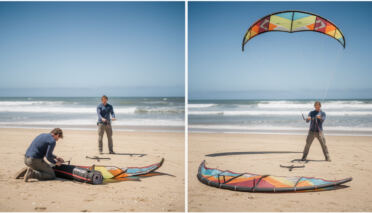
Before every session, do a quick gear inspection. Look for frayed lines, knots, worn bridles, or harness issues. These are small problems that become big problems under load. Make your setup routine consistent so you don’t skip steps when you’re excited.
- ✅ 🧵 Check lines for knots, twists, and abrasion before launching
- ✅ 🔗 Confirm attachments and quick-release function (test it, don’t just stare at it)
- ✅ 🧭 Choose a launch spot with a clean downwind “runoff” area
- ✅ 🧠 Set a personal stop-rule: if wind builds beyond comfort, you land and reassess
“Fallback techniques” matter too. Know how to safely let go, activate your safety, and move away from the pull if something goes wrong. Practicing these in light wind is like practicing a fire drill—it feels silly until it saves your day.
Community norms: the underrated safety multiplier 🤝
One of the best safety tools is other kiters. Local clubs and informal groups often share spot rules, wind warnings, and landing help. In 2026, social media groups and messaging channels make it easy to ask, “Is this beach riding today?” or “What size are people on?” That little bit of info can prevent bad decisions.
The insight: safety isn’t just gear—it’s culture, routine, and knowing when to call it.
Traction Kiting Community, Progression, and Staying Motivated for Long-Term Fitness
The reason traction kiting sticks for people isn’t only the adrenaline. It’s the mix of measurable progression and shared stoke. You can literally feel yourself improving session to session: cleaner launches, calmer landings, smoother turns, better power management. That sense of “I’m getting better at something real” is a huge motivation engine for long-term fitness, especially if traditional workouts bore you.
Community plays a big role. Many places have local kite groups that organize meetups, practice days, and casual coaching. Brands and shops sometimes host demo events where you can try different designs before buying. You might see riders flying Ozone, Slingshot, or Naish gear at a gathering, and someone will usually let you feel the difference between a mellow trainer and a grunty traction kite (with good judgment and safe conditions, obviously).
A realistic progression path: from “first pull” to confident rider 📈
If you want a roadmap that doesn’t rush things, think in phases. Phase one is control: learning the wind window, launches, landings, and basic steering. Phase two is power management: understanding how kite position changes pull, using depower (especially with four lines), and staying relaxed under load. Phase three is discipline choice: landboarding, buggying, snowkiting, or kitesurfing—each with its own learning curve.
A practical example: Jordan starts with a small fixed-bridle kite to learn steering. After a few weekends, Jordan upgrades to a four-line trainer to learn braking and safer landings. Once kite control feels automatic, Jordan tries a mountain board on a wide grassy field. The first rides are short, but the sessions quickly turn into full-body endurance training because riding plus walking back upwind adds steady work. That’s the pattern: skill + repetition = conditioning.
Keeping it fun while still training (without realizing you’re training) 😄
If your goal is outdoor exercise, you can structure sessions without making them rigid. Do 10 minutes of control drills, 20 minutes of riding practice, then finish with a “play block” where you just cruise and enjoy. Want more intensity? Add walking lunges during resets, or practice controlled power strokes that spike your heart rate. Want more stability work? Focus on slow edging and posture holds to challenge core strength.
And because it’s a social sport, motivation stays high. People share clips, compare windy spots, and trade little technique tips that save you weeks of frustration. The insight: the community turns learning into momentum, and momentum is what keeps you consistent.
Is traction kiting good for fitness if I hate the gym?
Yes. Traction kiting is a skill-based outdoor exercise that naturally builds core strength, balance, and coordination while delivering a legit cardio workout. Because it feels like play, most people stay consistent without forcing it.
What’s the safest traction kiting setup for a beginner?
A smaller beginner-friendly kite (often sold as a trainer), a control system with a reliable safety/quick-release, and protective gear like a helmet. If you’re moving into stronger pull, add a harness so you’re not fighting the kite with your arms.
How do I choose the right kite size for the wind?
Match kite size to wind strength and your body weight: stronger wind usually means a smaller kite, lighter wind means a larger one. A wind meter helps a lot, and local kiters can tell you what sizes work best at your spot.
Can traction kiting translate into adventure sports like snowkiting or kitesurfing?
Absolutely. The core skills—wind window awareness, steering, power control, safe launching/landing—transfer directly into snowkiting, landboarding, buggying, and kitesurfing. For water, lessons are strongly recommended because conditions and risks are different.
What muscles does traction kiting work the most?
You’ll feel it in your core (anti-rotation and stability), legs (athletic stance and edging), and forearms/grip (steering and load management). Over time it also improves endurance training capacity because sessions often last a while with lots of walking and repeated efforts.