In brief
- 🧭 Use Google Maps, lesson marketplaces, and local shops to find kite lessons near me fast—then verify credentials and rescue support.
- 🦺 Prioritize traction kite training with structured safety steps: wind theory, right-of-way, self-rescue, and radio coaching.
- 🌬️ Match the spot to your level: shallow water lagoons and steady wind for beginner kiting lessons; waves and gusty launches can wait.
- 🏫 Compare kiting schools by instructor ratios, certified programs, and what’s included (gear, boat support, insurance).
- 🧳 If you can travel, purpose-built centers like REAL in Cape Hatteras make progression smoother with on-water coaching and easy rentals.
- 📅 Book around the wind season, and ask about backup plans (the best operations have land drills or rescheduling built in).
The search for traction kiting lessons usually starts the same way: someone watches a rider glide upwind like it’s nothing, hears the canopy snap in the wind, and thinks, “Okay… I need to learn that.” The good news is that kiting classes are easier to find than ever—if you know where to look and what to ask. The tricky part is separating a legit, safety-first setup from a “meet me at the beach, we’ll figure it out” situation. Because whether you’re into land-based traction kiting with a foil kite, snowkiting, or you’re aiming at full kiteboarding lessons on water, the early stages are all about controlled power, safe launches, and repeatable skills.
To keep things real, we’ll follow a fictional learner named Maya. She lives inland, has decent athleticism, and wants a clear path to learn traction kiting without wasting money—or risking her shoulders. She starts with a simple search for kite lessons near me, but quickly learns that the “near me” part depends on wind, terrain access, instructor logistics, and whether a school has rescue support. If you’re in that same boat, this guide breaks down the best places and methods to find traction kiting courses that actually deliver progress.
Where to Find “Kite Lessons Near Me”: Search Like a Local, Not a Tourist
If Maya types kite lessons near me into a search engine, she’ll get a messy mix: shops, random instructors, outdated listings, and sometimes even paragliding pages. The move is to search like someone who actually rides there. Start with Google Maps and search combinations such as “kiteboarding school,” “traction kiting,” “kitesurfing lessons,” and the name of the nearest windy spot. Then click into reviews and look for phrases that signal quality: “radio coaching,” “rescue boat,” “certified instructor,” “clear safety briefing,” and “structured progression.” When reviews mention consistent coaching and calm risk management, that’s usually a green flag.
Next: lesson marketplaces and directories. Platforms that let you compare providers can be useful because they force basic transparency—availability, pricing ranges, and location. They also help you spot patterns. If a coach has dozens of reviews that mention punctuality, good gear, and patient instruction, that matters more than one flashy Instagram clip. Maya makes a shortlist of three providers within a two-hour drive and notices something: the best-rated ones are attached to a shop or a beach concession rather than operating from a personal vehicle.
Don’t ignore community organizations either. While the American Kitefliers Association is more about traditional kites, their “find a flying field” and event listings can still point you to active kite communities—exactly the kind of network that knows who teaches safely and where people practice without drama. Local parks and recreation programs can also surprise you. Some municipalities publish outdoor activity catalogs, and while traction kiting isn’t universal, adjacent programs (windsports clinics, outdoor skills events) often connect you to instructors.
Quick vetting checklist before you message a school
Maya sends the same short message to each provider, because comparing apples to apples saves time. She asks about instructor-to-student ratio, whether gear is included, and what happens if the wind is wrong. The replies tell her a lot: professional schools answer directly and don’t oversell.
- ✅ 🦺 Do you teach traction kite training with a defined safety curriculum (wind window, launch/land, self-rescue)?
- ✅ 📻 Do you use radio helmets or real-time coaching?
- ✅ 🚤 For water sessions: is there rescue support (boat, ski, or dedicated staff)?
- ✅ 🪢 What kite sizes and bars do you use for beginners (modern quick releases, tuned safety systems)?
- ✅ 📅 If conditions fail, is rescheduling free or partially credited?
By the time Maya finishes this step, she’s not just “finding lessons.” She’s filtering for professionalism—and that’s the first real skill in kiting. The next step is choosing the right lesson format for her goals.
Choosing the Right Traction Kiting Courses: Private Coaching, Group Camps, or Progression Packages
Not all traction kiting courses are built the same, and the differences aren’t just price—they shape how fast you improve and how safe you feel. Maya’s first mistake (almost) was assuming she needed the cheapest option to “try it out.” In reality, the cheapest lesson can become the most expensive if it leaves you confused, stalls your confidence, or forces you to repeat basics later. A clean learning curve is worth paying for.
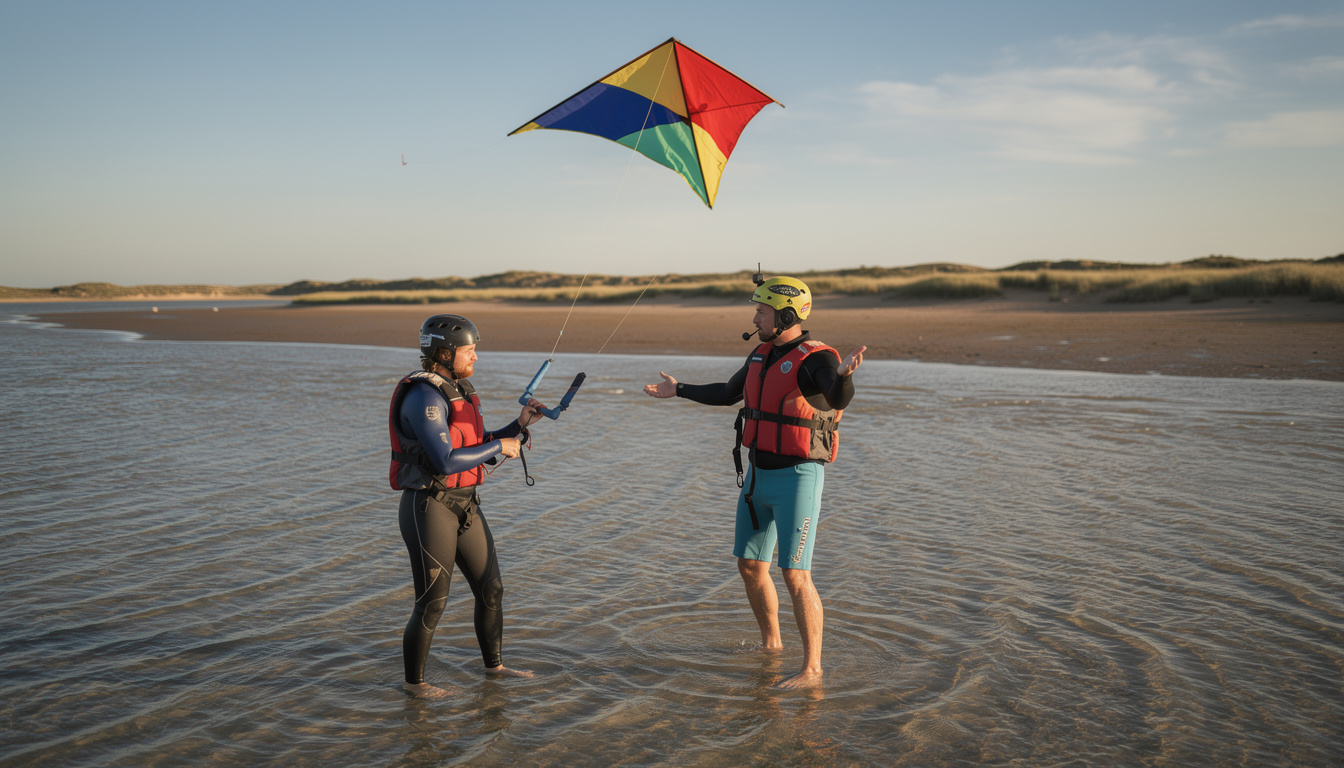
Most schools offer three broad formats. Private kite lessons give you the fastest feedback loop. If you’re nervous, time-crunched, or learning in a gusty area, private sessions are often the smartest spend because the coach can adapt instantly. Group kiting classes can be great for vibe and budget—especially if the group is genuinely small and the school rotates active practice time fairly. Then there are multi-day camps (often marketed as “zero to hero”), which bundle sessions into a progression plan and tend to include extra support like video debriefs.
What “beginner” should include (and what to be wary of)
Maya learns to ask one key question: “What skills will I have by the end of day one?” A solid beginner pathway usually includes kite control with a trainer kite, understanding the wind window, safe launch/land procedures, and emergency systems. For water-based progression, it typically moves into body dragging and board starts—only when control is consistent.
Be wary of any instructor who promises you’ll be riding upwind immediately. Upwind riding is a milestone that depends on board control, kite position, and edging—all of which take repetition. A better promise is: you’ll leave with real safety habits and a plan to progress.
A practical comparison table you can use when calling schools
| Lesson format | Best for | Typical inclusions | Watch-outs |
|---|---|---|---|
| 👤 Private | Fast progression, anxious beginners, limited wind days | 📻 Radio coaching, tailored drills, flexible pacing | 💸 Higher hourly price; confirm total hours needed |
| 👥 Small group | Social learners, budget-focused riders | 🪁 Shared setup demos, alternating practice time | ⏳ Too many students per instructor slows progress |
| 🏕️ Camp / package | Travelers, structured learning, confidence-building | 📅 Multi-day plan, progression milestones, sometimes video | 🌬️ Ask the wind policy; check what happens on light-wind days |
Once Maya compares formats, she realizes she wants a progression package: enough continuity to build muscle memory, but not so rigid that she’s stuck if conditions change. That naturally leads to the next big decision—where you learn matters as much as how you learn.
How to Pick a Safe Spot and Legit Kiting Schools (Because Conditions Teach You Too)
You can learn traction kiting in a lot of places, but not every place is beginner-friendly. Maya lives near a windy beach, yet the launch is narrow, lined with dunes, and crowded on weekends. That’s not ideal for beginner kiting lessons. A good school will steer you toward forgiving terrain: wide launch areas, clean wind, and a low-stress exit plan if something goes sideways.
For water-based kiteboarding lessons, shallow flats or protected lagoons are gold. They reduce the intimidation factor, make body dragging less exhausting, and let instructors stay close. For land traction kiting (think foil kite practice on a field), you want open space, consistent wind, and no power lines—ever. Snowkiting adds avalanche awareness and terrain reading, so schools that specialize in it should talk as much about route choices as they do about kite handling.
Credentials and teaching systems: what “good” looks like in 2026
By now, most reputable kiting schools lean on recognized certification systems or standardized curricula. The exact badge matters less than the behavior: clear risk briefings, modern safety systems, and a willingness to cancel when conditions are sketchy. Maya asks one school how they handle offshore wind days. They tell her, “We don’t teach in it.” That answer is basically a love letter to your future self.
Also pay attention to gear. Modern beginner setups are built to reduce chaos: reliable quick releases, clean depower, leashes rigged correctly, and kites sized for control rather than ego. A school that looks after its equipment usually looks after its students.
Micro-case study: why “local knowledge” beats internet hype
Maya considers a coach who advertises heavily online. The photos are epic, but the coaching spot is notorious for gusts due to nearby buildings. A quieter local shop recommends a different beach 30 minutes away with steadier airflow and fewer obstacles. She chooses the boring-looking option—and progresses faster because she spends the day learning, not surviving. The insight here is simple: the best learning environment is the one that feels almost uneventful.
Next, Maya starts thinking beyond her local area. If she’s going to invest real time, would a destination lesson center make her progression easier?
Watching a few safety-focused breakdowns helps you spot good instruction language: clear steps, consistent hand signals, and a calm tone when things go wrong. That’s exactly what you want when you’re powered up for the first time.
Destination Option: Why REAL Watersports in Cape Hatteras Is a Benchmark for Kite Lessons
Even if you want kite lessons near me, it’s worth knowing what a top-tier lesson center looks like—because it gives you a standard to compare against. In the U.S., Cape Hatteras, North Carolina has a long-standing reputation for windsports, and REAL is often mentioned as a benchmark. Their instructional programs have been evolving since the late 1990s, which matters because both kites and teaching methods have changed a lot. In 2026, “old-school” isn’t about being stuck in the past; it’s about having decades of iteration behind a modern system.
One thing Maya notices when she explores the REAL Lesson Center content is the focus on logistics: a purpose-built facility with quick access to conditions that suit instruction. That’s not just convenience. It translates into more time practicing the essentials and less time dealing with awkward beach setups. Students often describe the staff vibe as unusually welcoming—something that sounds fluffy until you realize how much it lowers stress in a sport where nerves can spike.
What makes a lesson center feel “state-of-the-art” in practice
“State-of-the-art” can mean fancy buildings, but the practical version is: the operation has systems. Clear check-ins, gear that’s sized and ready, radios that work, and an instructor who can stay close enough to coach every decision. Some student stories highlight how fast they progressed when a coach stayed right there during the session, guiding every step. That kind of proximity-based coaching often compresses the learning curve dramatically because mistakes get corrected before they become habits.
REAL also supports the gear side with a rental shop that covers kiteboarding plus other boardsports. If you’re traveling, that’s huge. You can rent what you need, and some programs let you apply a day’s rental cost toward buying gear later—smart if you’re trying to avoid buying the wrong kite after two lessons. It’s basically a built-in “try before you buy” strategy, which helps new riders avoid the classic beginner trap: overspending on gear before their preferences are even formed.
Where you stay can support your progression (seriously)
Maya laughs when someone tells her lodging matters—until she imagines the alternative: staying 45 minutes away, missing the morning wind window, showing up stressed and late. Facilities like Watermen’s Retreat, located next to major centers, make the whole trip smoother. Options can range from higher-end waterfront units to simpler cabanas, which is useful if you’d rather spend on coaching hours than luxury. Being close means you can rest between sessions, review notes, and come back fresh—small details that add up.
If you don’t want to travel, you can still use this as a checklist: does your local school feel organized, supported, and consistent? If yes, you can get excellent training at home. If not, a destination week might actually be the efficient choice.
It’s worth watching a facility walk-through before booking anywhere. You’re not just buying time on the water—you’re buying a system that should keep you safe while you level up.
Booking, Budget, and Progress: Turning Traction Kite Training Into a Real Skill (Not a One-Off Thrill)
Finding traction kiting lessons is step one. Turning them into a lasting skill is step two, and this is where a lot of people stall. Maya’s plan is simple: book a first block of sessions close together, then schedule a follow-up before she forgets the feel of the kite. Skill in kiting is ridiculously perishable early on; spacing lessons too far apart turns every session into a rewind.
Budgeting helps too. Schools price differently depending on location, rescue requirements, and instructor ratios. Instead of chasing the lowest sticker price, Maya calculates “cost per milestone.” If one school gets her to consistent body dragging and safe board starts in fewer hours because coaching is tight, it can be cheaper overall than a bargain option that drifts.
What to ask so you don’t get surprised by hidden costs
Some programs include everything: kite, board, wetsuit, helmet, radio, and sometimes even photos or video. Others charge add-ons. Maya asks for a written breakdown so she can compare cleanly and avoid that last-minute “you need to rent a wetsuit too” moment.
- 💰 What’s included in the lesson price (kite, board, wetsuit, helmet, radio)?
- 🧾 Are there extra fees for beach access, boat support, or permits?
- 🌬️ What’s the wind policy—reschedule, credit, or partial charge?
- 🪪 Do you provide proof of completion or a skills log for future rentals?
- 🛟 What’s your safety coverage if conditions change mid-session?
How to keep progressing between lessons (without doing dumb stuff)
Maya wants to practice, but she’s not trying to freestyle her way into a hospital visit. The safe middle ground is controlled drills: wind reading, gear setup familiarity, and if appropriate, trainer kite work in a wide open area with permission. Some schools are happy to recommend specific exercises that reinforce what you learned without pushing into new risk territory. That’s the kind of support that separates “we taught you today” from “we’re building a rider.”
Finally, Maya sets a goal that isn’t ego-based: she wants to be able to confidently decide when not to kite. That’s the real graduation moment. Next up, you’ll want quick answers to the most common last-minute questions people have before booking.
How do I know if a coach is legit for traction kiting courses?
Look for structured safety teaching (wind window, launch/land, emergency systems), modern gear with functioning quick releases, and clear policies on wind limits. Good instructors talk about when they cancel lessons as easily as they talk about progression. Reviews mentioning radio coaching and rescue support are strong signals.
Should I start with traction kiting on land or jump straight into kiteboarding lessons on water?
If your goal is water riding, a proper kiteboarding school can teach you safely from day one using trainer kites and controlled steps. Land traction kiting can be great for learning kite feel and wind awareness, but it needs a safe, obstacle-free area and a coach who understands land-specific risks (hard impacts, dragging hazards). Many learners do a mix.
What’s a reasonable timeline from beginner kiting lessons to riding consistently?
With solid instruction, many people reach first controlled rides within a few sessions, but consistent riding (including staying upwind and handling variable conditions) takes more practice. The fastest progress usually comes from lessons scheduled close together, steady wind, and coaching that corrects mistakes in real time.
Do I need to buy gear before I learn traction kiting?
No—most schools include gear, and it’s smarter to wait. Your ideal kite size, board style, and bar setup depend on your weight, local wind range, and the type of riding you end up liking. Programs with rentals or “try before you buy” options let you test equipment before committing.