En bref
- 🌬️ Traction kiting feels “clean,” but its environmental impact often hides in materials, travel, and beach pressure.
- 🧵 Gear choices matter: fabrics, bladders, lines, and boards can shrink your carbon footprint when designed for durability and repair.
- 🗑️ The fastest win is waste reduction: pack-out habits, microplastic control, and smart maintenance beat any single “green” product.
- ⚡ Events and schools can switch to green energy setups and better logistics without killing the vibe.
- 🌱 Real nature conservation starts with where you launch, when you ride, and how you share space with wildlife and locals.
- ✅ Practical eco-friendly tips exist for every budget, from repair kits to lower-impact travel and used-gear swaps.
Traction kiting sits in that weird sweet spot: it’s powered by wind, it pulls you across sand, snow, or water, and it makes you feel like you’re doing something almost “zero-emissions.” But if you zoom out for a second, the story is more complicated—and honestly more interesting. The environmental impact isn’t just about the session itself; it’s about what it takes to make a kite, ship it, maintain it, and eventually dispose of it. It’s also about the places we use: fragile dunes, busy beaches, nesting areas, mountain plateaus, frozen lakes. As the sport keeps growing, the pressure on those landscapes grows too, even if each rider feels small in the moment.
In 2026, the conversation around sustainable sports is less about guilt and more about design, behavior, and community standards. You’ll hear riders asking: “Can I fix this bladder instead of replacing the whole wing?” “Is there a brand using recycled fabrics?” “Can our local event run on renewable resources and stop leaving tape and zip ties all over the beach?” These aren’t abstract questions. They’re the kind of choices that stack up over a season and start to change what traction kiting looks like—without taking the fun out of it.
Understanding the Environmental Impact of Traction Kiting: The Hidden Footprint Behind the Wind
It’s tempting to say traction kiting is automatically “green” because you’re powered by wind. On the water or on land, there’s no engine, no fuel tank, no exhaust pipe. But the environmental impact lives upstream and downstream: manufacturing, transport, maintenance, and end-of-life. If you’ve ever unboxed a new kite and seen the plastic wrap, foam spacers, spare parts in little bags, and the shipping carton, you’ve already met the footprint—just wearing a friendly face.
Start with materials. Most modern kites rely on technical fabrics (often coated) for strength, lightness, and stability. Add bladders, valves, bridles, and lines made from polymers and high-performance fibers. These are great for performance, but they’re not trivial to recycle. The same goes for boards, bindings, harnesses, helmets, and wetsuits: layered composites and mixed materials that don’t separate cleanly. This is where the sport’s carbon footprint often concentrates—energy-intensive production and complex supply chains.
Then there’s travel, which can dwarf everything else. A weekend road trip to a local spot is one thing; flying across continents chasing wind is another. Plenty of traction kiting content (and culture) is built around destination riding. That’s not “bad,” but it’s a real lever if you care about sustainable sports: fewer flights, longer stays, carpooling, and choosing closer spots can matter more than obsessing over one “eco” accessory.
Local pressure: dunes, beaches, and “small” impacts that add up
Even without motors, we physically occupy sensitive areas. Launch zones often overlap with dune vegetation, shorebird nesting habitat, or tidal ecosystems. Repeated foot traffic can widen informal paths, compact sand, and weaken plant roots that hold dunes together. On snow, repeated passes in certain conditions can scar fragile alpine vegetation below thin cover. On water, the activity can disturb resting birds or push riders into seagrass shallows if launches are poorly planned.
Here’s a simple case: Maya, a fictional but very believable rider, helps run a small traction kiting meet at her coastal spot. The first year, they used any open beach access and parked wherever. By day two, the “launch corridor” became a trampled strip cutting through dune grass. The following season, they worked with a local conservation group to rope off the dune edge, set a defined rigging zone, and post a clear walking route. Same wind, same stoke—way less damage. The insight is straightforward: the way we organize space is environmental policy in disguise.
Next up: once we accept that the impact isn’t only about the wind, we can talk about gear choices that actually move the needle.
Eco-Friendly Tips for Gear and Materials: Buying Less, Repairing More, and Choosing Smarter
If you want eco-friendly tips that don’t feel like a lecture, start with a truth every rider learns: gear that lasts is gear that wins. Durability is underrated sustainability. A kite that survives five seasons beats a “greener” kite that delaminates in one. That’s why the most effective eco-conscious practices often look boring: rinsing, drying, storing correctly, and repairing early before tiny issues become landfill problems.
Manufacturers have been experimenting with recycled inputs and cleaner processes for a few years now, and by the mid-2020s you see more talk about recycled plastics in certain components, lower-waste cutting layouts, and better chemical management in coatings. Some brands also push “concept” lines that try to prove performance and sustainability can coexist—less about perfection, more about directional change. The practical takeaway: you don’t need a marketing label to act sustainably; you need transparency, repairability, and long-term support for spare parts.
Repair culture: the most underrated form of waste reduction
Think of repair as the sport’s equivalent of sharpening a kitchen knife: not glamorous, but it changes everything. Bladder patches, valve replacements, canopy tape, stitched reinforcements—these can extend life dramatically. And it’s not just about saving money. It’s waste reduction in the most literal sense: fewer kites produced, fewer shipped, fewer discarded.
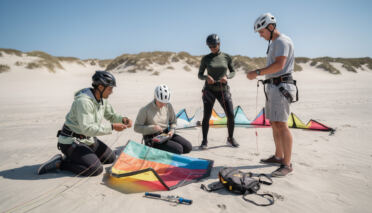
Another real-world pattern: schools and rental centers churn through gear quickly. A smart school that schedules preventative maintenance, rotates quivers, and trains staff on basic repairs can cut its replacement rate noticeably. That’s sustainability at scale because high-use fleets amplify every small improvement.
Smart buying in 2026: used gear, modular parts, and fewer “panic upgrades”
Traction kiting has always had a bit of “new toy” energy. The eco-friendly version of that excitement is the used market and modularity. Buying a well-maintained kite from last season, replacing lines, and doing a proper safety check can be a huge win for your carbon footprint. It’s also a way to keep newcomers from buying cheap, fragile gear that fails quickly.
Practical eco-friendly tips for gear (that riders actually follow)
- 🧰 Carry a small repair kit (bladder patches, sail tape, spare valve, multitool) to prevent “ruined session” panic buys.
- 🧼 Rinse with fresh water when needed, but avoid wasting water—spot-clean salt-sensitive parts instead of long hose sessions.
- 🌤️ Dry gear fully in shade when possible; UV damage shortens life fast.
- 🧵 Learn one basic stitch repair or find a local sailmaker; a 20-minute fix can save a season.
- ♻️ Buy used harnesses/boards where safety isn’t compromised; spend new-money on lines and critical safety systems.
- 📦 Reuse shipping bags and keep packaging for resale—extending product life through the secondhand chain.
Gear is only half the story, though. The next big lever is how sessions, schools, and events use energy and logistics—where green energy and renewable resources can show up in a very real way.
Green Energy and Low-Carbon Logistics: Making Traction Kiting Events and Schools More Sustainable
Most riders think about sustainability as a personal thing: what you buy, how you travel, how you behave on the beach. But the biggest upgrades often happen at the group level—schools, clubs, and event organizers. Why? Because they centralize decisions: power, transport, waste systems, and site management. If a school teaches 500 students a year, its eco-conscious practices ripple outward into how those riders behave for years.
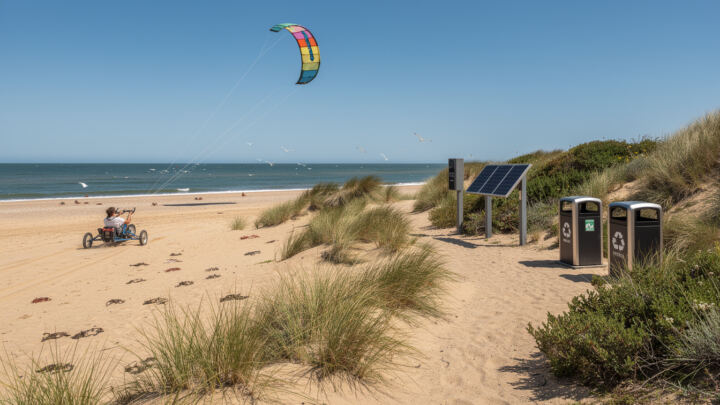
Let’s talk energy first. Traction kiting events increasingly rely on sound systems, safety boats or ATVs (depending on location), charging stations for radios and phones, laptops for registration, and sometimes livestream setups. This is where green energy can stop being a buzzword. Portable solar plus battery storage is now common enough to handle registration tents, comms charging, and small-scale lighting. For bigger loads, organizers can use hybrid generators, or connect to venue power that’s backed by renewable resources where available.
Transport: the carbon footprint you can actually measure
Event travel can dominate emissions. The simplest fix isn’t sexy: plan carpools, coordinate shuttles from train stations, and reward low-carbon arrivals. Some events have started offering “wind miles” perks—discounted entry or free merch for riders who come by public transport or shared rides. The point isn’t to police people; it’s to make the lower-impact option the easiest option.
Maya’s club did a small experiment. They created a ride-share spreadsheet and partnered with a local bike shop to provide temporary racks and secure storage. The result wasn’t perfection, but parking chaos dropped, and the event’s vibe improved because the beach felt less like a traffic jam. Environmental benefit plus better experience is the dream combo.
Waste reduction systems that don’t rely on “please be nice” signs
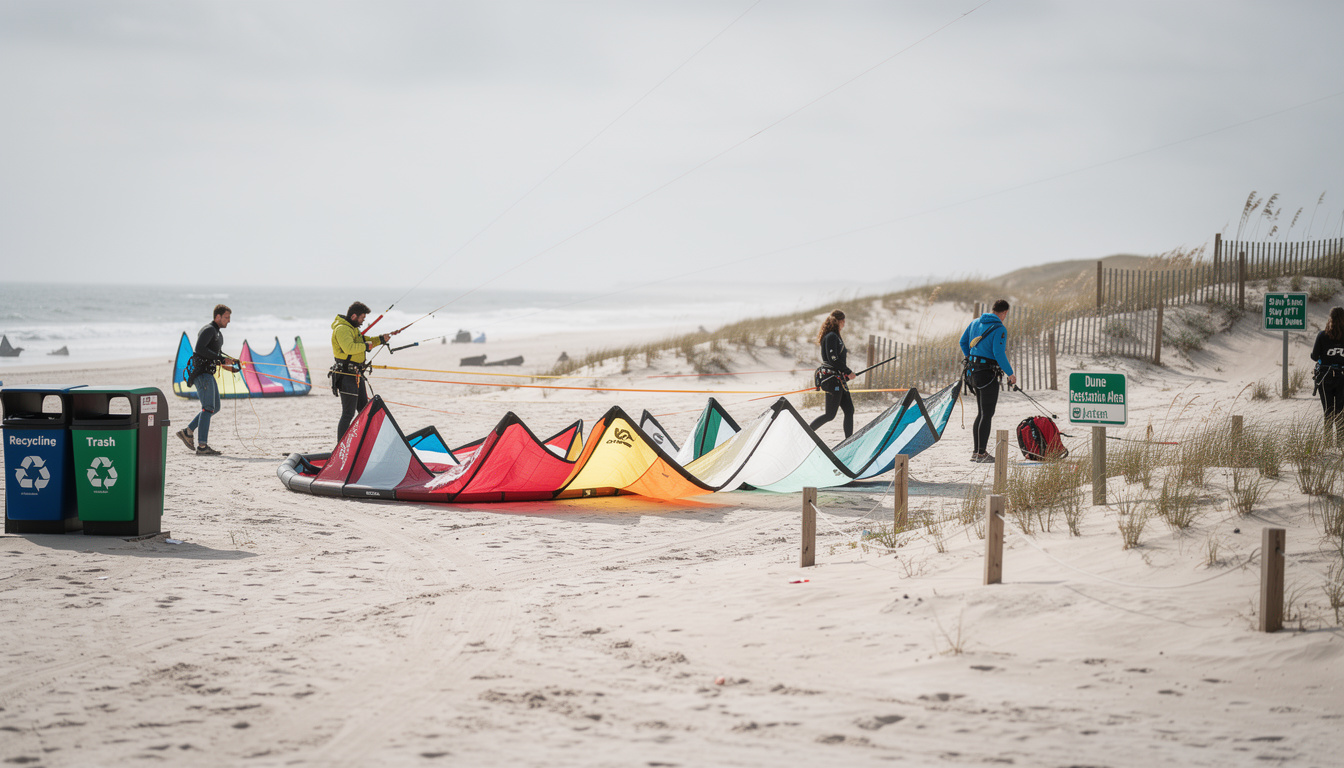
Beach litter after events is rarely about malicious people. It’s about micro-trash: tape strips, cut zip ties, snack wrappers, cigarette butts, broken fin screws, bits of line. The fix is design: place bins where people rig, offer separated recycling where it exists, hand out pocket ashtrays, and put one volunteer in charge of a “last sweep” with a checklist. Make it normal, not heroic.
| Event lever | Typical problem | Lower-impact alternative | Quick win |
|---|---|---|---|
| ⚡ Power | Fuel generator for small loads | Solar + battery; grid power with renewable resources plan | Charge radios/phones on solar station |
| 🚗 Transport | Solo driving, parking sprawl | Carpool matching, shuttle loops, train/bus tie-ins | Discount for shared arrivals |
| 🗑️ Waste | Micro-litter in rigging zones | Rigging-area bins, sweep teams, reusable signage | Hand out trash bags at check-in |
| 🧴 Consumables | Single-use water bottles | Refill stations, sponsor reusable bottles | “Bring-your-bottle” rule |
Once logistics are cleaner, you can zoom back into the environment itself—because nature conservation isn’t just about trash; it’s also about wildlife, habitats, and social friction at crowded spots.
Nature Conservation at Launch Spots: Wildlife, Dunes, and Sharing Space Without Killing the Stoke
Traction kiting is a nature-first sport whether you call it that or not. Wind, tides, snowpack, thermals—your session is basically a weather report with feelings. That’s why nature conservation fits so naturally here: if the spot degrades, the sport gets worse. The tricky part is that many impacts are indirect. You might never see the bird you disturbed, or the dune plant you stepped on that was holding sand in place, or the local resident who now wants “no kites” signs because the beach feels chaotic.
A strong conservation mindset starts with reading the place. Some beaches have seasonal nesting closures. Some lakes have protected reed beds. Some dunes are actively restored and can’t handle short-cuts. There are also social ecosystems: swimmers, walkers, anglers, paddlers. If the kiting community doesn’t self-manage, someone else will manage it for you, usually with restrictions.
How disturbance happens (even when nobody “does anything wrong”)
Wildlife disturbance often comes from repeated approach, not a single pass. Birds that keep flushing burn energy and may abandon feeding. In colder months, that energy cost matters. On coasts, roped nesting areas exist for a reason, but riders sometimes treat them like optional decorations. A cleaner norm is simple: treat closed zones as hard boundaries and teach newcomers the “why,” not just the rule.
On dunes, the problem is path creation. One person taking a shortcut becomes ten, then a hundred. The sand loosens, plants die back, and the dune’s ability to buffer storms drops. That’s not abstract climate talk; it changes whether your favorite launch exists after a rough winter. The rider-friendly fix is designated access points and rigging mats in high-traffic areas.
Spot etiquette as an environmental tool
Etiquette isn’t only about avoiding collisions. It’s also about controlling where feet and gear go. A clean rigging line, kites kept off vegetation, no dragging inflated wings over dune grass—these reduce wear. Even choosing to self-launch in the right place, instead of wherever there’s empty sand, can protect sensitive edges.
Maya’s group started doing a “two-minute spot briefing” for visitors on windy weekends. Nothing preachy: where to rig, where not to walk, what to do if a seal is on the beach, and how to pack out micro-trash. The surprising result? Locals complained less, and visiting riders appreciated not having to guess. The key insight: clear norms beat conflict, and they also protect habitats.
With place-based conservation in mind, the final piece is turning individual habits into a consistent routine—eco-conscious practices that stick even when you’re tired, cold, or chasing the last wind window.
Eco-Conscious Practices That Stick: A Realistic Routine for Sustainable Sports
Most people don’t fail at sustainability because they don’t care. They fail because the “good” choice is slightly annoying in the moment. Your hands are numb, you’re hungry, the wind is dropping, and suddenly the chocolate wrapper becomes tomorrow’s problem. So the best eco-friendly tips are the ones that survive real life: simple defaults, prepared systems, and habits tied to the rhythm of a session.
Think of it like safety checks. You already have routines: check lines, check quick release, check wind. Sustainability can piggyback on that same muscle memory. Pack-out becomes part of the de-rig. Spot respect becomes part of the launch. Repair checks become part of drying and storage. And when you do it as a crew, it stops being “extra” and becomes culture.
A session-based routine (before, during, after)
Before: Bring one reusable bag dedicated to trash and tiny gear bits. Pack a water bottle and snacks with minimal packaging. If you’re driving, set up a default carpool message in your group chat: “Two seats from town, leaving at 10.” Small, repeatable actions are what shrink a carbon footprint over time.
During: Keep to established paths and rigging zones. If someone new is wandering into vegetation, a friendly redirect works better than a public scolding. If you see wildlife hauled out or nesting, give it space and model the behavior you want copied. Sustainable sports are basically social learning with wind.
After: Do a “micro-trash scan” around your rigging area. It takes 30 seconds and catches the line offcuts and tape bits that bins don’t magically attract. When you get home, dry gear properly and store it clean—because replacing blown seams early is better than replacing an entire kite later.
What about manufacturers and the bigger system?
Riders aren’t the only ones responsible. Brands and retailers can support repair programs, publish spare-part guides, and design products with end-of-life in mind. Schools can standardize maintenance schedules. Events can use green energy and reduce single-use items. The point is not perfection; it’s momentum in the right direction, so traction kiting remains a sport that belongs in wild places instead of wearing them down.
Ultimately, eco-conscious practices work best when they feel like pride, not punishment—because the goal is to keep the wind playground open for the next crew.
Is traction kiting automatically a low-impact sport because it uses wind?
Wind power helps during the session, but the environmental impact often comes from gear manufacturing, shipping, travel to spots, and end-of-life disposal. Treat it like a wind-powered activity with a real supply-chain footprint, and you’ll spot the best places to improve.
What are the easiest eco-friendly tips to reduce my carbon footprint without spending money?
Ride locally more often, carpool when you can, extend gear life with better drying and storage, and do a quick micro-trash sweep after rigging down. These habits typically beat buying new “green” products if your current gear still works.
Do recycled materials in kites make a big difference?
They can, especially when paired with durable design and accessible repairs. Recycled inputs and cleaner production reduce reliance on virgin feedstocks (renewable resources where applicable) and can lower overall impact, but the biggest gains still come from keeping gear in use longer.
How can clubs or event organizers use green energy in a realistic way?
Start small: solar + battery for charging radios/phones, registration laptops, and low-power lighting. Combine that with reduced-idling policies, shared transport planning, and better waste reduction systems in rigging zones. Those steps are practical and visible to the community.