Some days, you don’t want to “pick a sport.” You want the wind, the dirt, the speed, and that weird little grin you get when everything clicks at once. That’s where traction kiting becomes more than a standalone hobby and starts acting like a power source you can bolt onto other outdoor sports. One weekend it’s landboarding on a hard-packed beach, the next it’s a snow session that feels like kiteboarding without the water, and by midweek you’re using kite drills as cross-training for trail running or mountain biking. The fun part is the remix: the same wind window awareness and line control can carry over into windsurfing, downhill rolling, or even your overall stability when you’re tired and still need clean decisions.
The trick is combining sports without combining risks. Wind doesn’t care if you’re “just trying something new,” and the ground is less forgiving than water. So the goal is to stack skills intelligently: learn kite handling in a clean field, then add wheels, then add terrain, then add speed, then finally add tricks. To make it real, we’ll follow a fictional weekend crew—Maya (former kitesurfer), Jon (mountain biker), and Leila (trail runner)—as they build a year-round routine that keeps the stoke high and the injuries low. If you’ve been craving a more “adventure sports” lifestyle without living in the ocean, this is the playbook.
En bref
- 🌬️ Use traction kiting as a “wind engine” to extend outdoor sports year-round.
- 🛹 Start with landboarding basics: kite overhead first, then create sideways pull like a sail.
- 🧠 Treat kite control as a skill ladder: trainer kite → larger kite → terrain → speed → freestyle.
- 🏃♀️ Add kite drills as cross-training for trail running and stability work for mountain biking.
- 🏄 Link concepts across kiteboarding and windsurfing: wind window, edging, power management.
- 🛡️ Ground hurts more than water—helmets, pads, and conservative progression aren’t optional in extreme sports.
Traction Kiting + Landboarding: the easiest gateway to multi-sport outdoor sessions
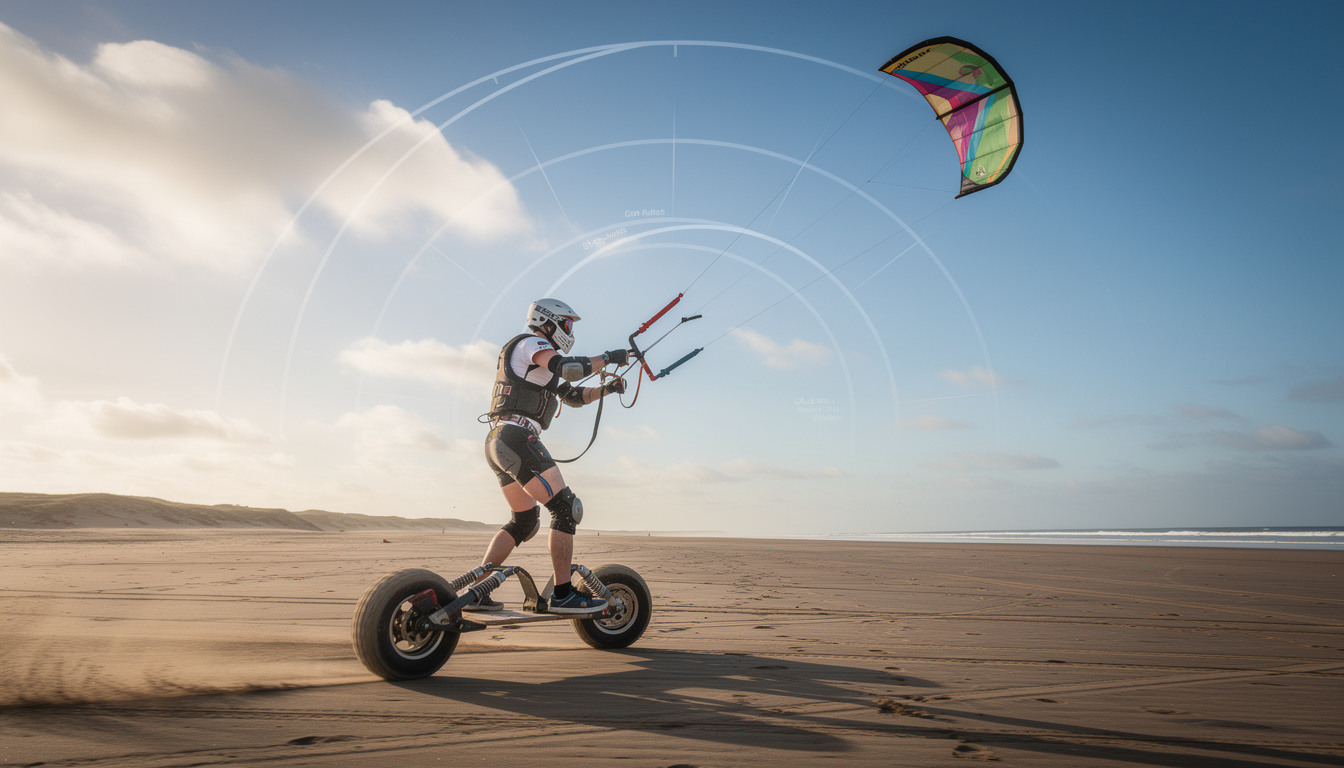
Landboarding (also called kite landboarding, land kiteboarding, or even “land surfing”) is basically the “you don’t have to get wet” cousin of kiteboarding. You take a traction kite, find a big open space, and ride a landboard—think oversized skateboard built to handle rougher terrain. The skill transfer is immediate if you’ve ever watched a sail pull: you first park the kite overhead, then bring it down to generate a steady sideways pull, and once the kite’s moving in the same direction as the board, you’re rolling.
For newcomers, landboarding has a reputation for being surprisingly learnable. A lot of people can get the basics in under a couple of hours because the feedback loop is clear: if the kite drifts to the edge of the wind window, power drops; if you dive it aggressively, power spikes. That speed of learning is one reason land sessions have become a default “off-season” option for riders who usually live for the ocean.
Where it fits with other outdoor sports (and why it’s so mixable)
Landboarding is the Swiss Army knife of wind-powered adventure sports. If your local beach is cold, if the swell is wrong, or if you’ve got only a couple hours after work, you can still get a legit session on a sports field or hard-packed sand. Historically, the sport took off in the 1990s, and it keeps absorbing better kite tech—more stable foils, cleaner depower systems, better safety releases—so the “entry cost” in bruises has gone down if you train smart.
Maya in our little crew uses landboarding as her bridge between kitesurf trips and everyday life. She’ll do a tight 45-minute land session and still feel like she got that “wind fix,” without the logistics of tides and wetsuits. Jon, the mountain biker, likes it because it scratches the same carving-and-commitment itch, except the throttle is the sky.
How to learn without turning it into an injury hobby
There are three common routes: buy cheap gear and send it (exciting, painful), binge instructional videos and practice carefully, or take a course with a certified instructor. The course costs more, but it’s the most reliable way to get a safe start—especially learning launches, landings, and what “too gusty” actually feels like before you’re attached to a board.
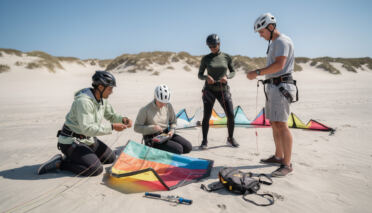
A practical lesson sequence looks like this: set up the kite/harness/board; get kite skills that specifically relate to moving with traction; practice getting on/off the board plus starting and stopping; then progressively add power as your control improves. That order isn’t “school bureaucracy”—it’s injury prevention disguised as structure.
One more thing: beginners often do best with a small trainer kite (around 2 m²) because it’s forgiving. You won’t set speed records, but you’ll build clean sports techniques—smooth steering, power modulation, safe bails—without getting dragged.
Choosing terrain and spots for traction kiting combos: parks, fields, beaches, and dry lakebeds
If you want to combine traction kiting with other outdoor sports, your location is basically your “training partner.” The best spots are large, flat, and free of obstacles, with smooth wind and a clean launch zone. That sounds obvious, but it’s where most mixed-sport plans either become magical or become a story you tell your friends with a limp.
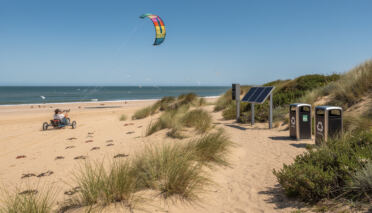
The classic do-not-hit list is non-negotiable: power lines, buildings, trees that create nasty turbulence, fences that love to snag lines, and people who did not agree to be part of your experiment. Beaches with hard-packed sand are popular because they give you distance and predictable rolling resistance. Dry lakebeds can be incredible for speed and drills, while parks and sports fields work for kite handling and low-speed practice if rules allow it and the area is truly clear.
A location checklist you can actually use
Leila, the trail runner, uses a simple rule: if she wouldn’t sprint blindfolded through a space, she won’t kite there. That mindset keeps you honest. Before you set up, walk the area and look upwind for turbulence sources. Then decide whether today is a “skills day” or a “send it day,” because terrain choices should follow that decision.
- 🧭 Wind consistency: steady wind beats strong gusts every time.
- 🚫 Obstacle clearance: no lines near poles, wires, or tight paths.
- 👟 Surface quality: hard-packed sand or short grass is friendlier than loose gravel.
- 🛟 Emergency space: plan a safe bail direction with nothing to hit.
- 👥 People management: if it’s crowded, it’s a “trainer kite only” day—or a different spot.
- 📍 Access and permission: some sports fields allow it, others don’t; know before you rig.
How to stitch a multi-sport day together on one venue
This is where combos get fun. A big open beach can host a landboarding session, a short barefoot recovery walk, and a sand-based strength circuit—all in one loop. A dry lakebed can host speed runs on the board plus line-handling drills and GPS tracking. A park can host kite handling followed by a trail run on nearby paths, turning the session into cross-training rather than a single-sport mission.
And yeah, people do kite near airfields in viral videos—but don’t. The “aircraft in the background” clip might look cool, but it’s the opposite of a smart access strategy. Keep your access friendly if you want your local scene to survive.
If you build a location routine, the next step is choosing gear that doesn’t fight your plan—because nothing kills progression faster than the wrong kite on the wrong day.
To see what modern freestyle landboarding looks like in clean terrain, it helps to watch a few recent clips and notice how much space riders keep around them.
Gear strategy for mixing traction kiting with outdoor sports: kites, boards, harnesses, and safety
Combining sports means you’re juggling more variables: wind strength, surface friction, fatigue from your other activity, and the fact that ground impacts are harsher than water. So your gear plan should be boring in the best way: predictable, compatible, and easy to downshift when conditions get spicy. That’s how people keep traction-based sessions fun instead of chaotic.
A typical progression is a small trainer kite first, then one or two bigger kites to cover a wider wind range. The logic is simple: you match the kite to the day. If it’s honking, the little kite that felt “too tame” last month suddenly becomes your best friend. The same idea applies to boards: a stable deck and forgiving trucks (or bindings) make learning smoother than a twitchy setup built for advanced tricks.
A practical comparison table for multi-sport setups
| Setup 🧰 | Best for ✅ | Trade-offs ⚠️ | Who in the crew uses it 👤 |
|---|---|---|---|
| Trainer kite (~2 m²) 🪁 | Skill drills, safe launches/landings, first board pulls | Limited speed in lighter wind | Leila (trail runner building kite control) |
| Mid-size traction kite 🌀 | Everyday landboarding, learning transitions and edging | Needs tighter judgment in gusts | Jon (mountain biker chasing carving feel) |
| Depower-style kite + control bar 🎛️ | Variable conditions, longer sessions, refined power management | More complex systems and checks | Maya (former kiteboarder) |
| Fixed-bridle kite on handles ✋ | Some freestyle styles, direct feel, simpler rigging | Less depower flexibility | Maya (for handle-based practice days) |
| Kite buggy / parakart 🛒 | Relaxed cruising, low-impact sessions, big-wind management | Less “board feel,” needs space | Leila (recovery day wind therapy) |
Safety gear and habits that actually matter on land
Freestyle looks amazing, but missing a trick on sand or grass can sting in a way water usually doesn’t. That’s why land riders lean hard on protection: a proper helmet, wrist guards, knee pads, and sometimes impact shorts. If you’re mixing with other extreme sports like downhill biking, you already know the vibe: protective gear doesn’t make you invincible, it just gives you more attempts before your body files a complaint.
Also, don’t skip the “boring” checks: line condition, bridle tangles, quick-release function, and a clean downwind area. If you’re tired from a long ride or run, you’re more likely to make sloppy calls—so that’s the moment to rig smaller, not bigger. The insight here is simple: the best sessions are the ones you can repeat next week.
Once gear and venue are dialed, you can start blending kite skills into other sports in a way that improves performance instead of stealing energy.
Cross-training plan: using traction kiting to improve mountain biking, trail running, and windsurfing skills
Here’s the underrated secret: even when you’re not “sending it,” traction kiting can build transferable athletic qualities—balance under load, fast decision-making, and calm breathing while your body is doing something slightly sketchy. That’s gold for mountain biking and trail running, and it even lines up mentally with windsurfing and kiteboarding: read the wind, manage power, choose lines, commit.
Jon noticed it first on the bike. After a few months of wind days, he started cornering with a quieter upper body and better pressure control through his feet. It wasn’t magic; it was kite edging practice teaching him how to “stack” his body and resist lateral pull. Leila found that kite handling sharpened her reaction time when trails got technical—because she’d trained her eyes to scan constantly for changes in wind and terrain.
Drills that blend sports techniques (without needing hero wind)
You don’t need huge power to train. In fact, moderate wind is better because you can focus on mechanics. Try these as a structured block before your main sport session:
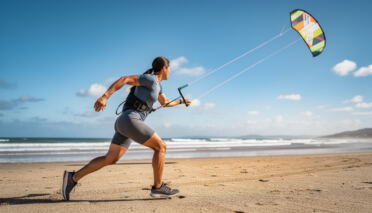
- 🪁 Wind window mapping: fly controlled figure-eights while walking, then jogging, staying aware of where power increases.
- 🧍 Isometric edging: harness in, lean against steady pull for 20–40 seconds, focusing on posture and breathing.
- 🦶 Foot pressure switches: on the board at low speed, practice shifting pressure heel-to-toe without steering changes.
- 🛑 Stop-start reps: build the habit of powering down, stopping cleanly, and re-launching with intent.
How this carries into mountain biking and trail running
For mountain biking, the biggest win is lateral stability and “quiet hands.” Kiting forces you to stop fighting with your arms and start using your hips and legs to manage force. On the trail, that translates into better braking posture and fewer panic corrections. For trail running, the benefit is proprioception—knowing where your body is in space when the ground is uneven and fatigue is loud. The kite adds a second variable, so your nervous system gets better at handling complexity.
For windsurfing and kiteboarding, land training is like doing reps without the water logistics. You can rehearse sheeting concepts (power in/power out), stance, and the “look where you’re going” habit. Maya uses land sessions to keep her timing sharp before a coastal trip—then when she hits water, she’s already in rhythm.
Next up is the fun-but-serious part: how to mix traction kiting with other action sports without turning your weekend into an orthopedic memoir.
Advanced combinations: traction kiting with freestyle parks, speed runs, and multi-sport adventure days
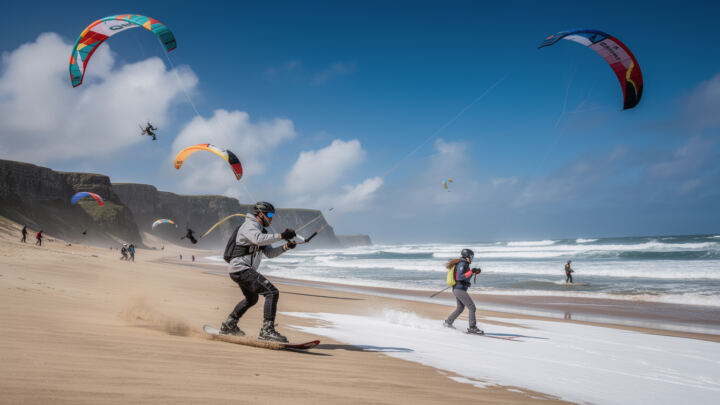
Once you’ve got the basics and a sane safety routine, combinations open up fast. People use kites with almost anything that rolls, slides, or glides: landboards, buggies, skis, snowboards, and the occasional weird DIY contraption. The reason is simple: wind is a free tow rope, and humans are curious.
Land freestyle is one of the biggest magnets. Riders use ramps and features in some dedicated parks, pulling off rotations (180s, 360s), flips, grabs, “board off” moves, and ground tricks like slides, wheelies, or riding away facing downwind. It can look similar to water comps, but the cost of mistakes is higher. That’s why progression matters: you earn tricks by stacking consistent takeoffs and controlled landings, not by trying to “be that clip.”
Speed and distance: how fast is “fast” on land?
Land speed is no joke. A famous early benchmark often referenced in the community is a GPS-verified run from 2005 at Newgale in the UK: a rider hit roughly 68.9 kph in strong winds on a 7.5 m kite. In 2026, that number isn’t shocking to serious speed riders (gear and technique have moved on), but it’s still a great reality check: these are motorcycle-ish speeds without motorcycle protection.
If you’re chasing speed, make it a discipline, not a side quest. Use wide-open terrain like a dry lakebed or massive beach, ride with a buddy, and keep your “abort plan” obvious. A speed run is not the moment to experiment with new kite sizes or unfamiliar surfaces.
Building a multi-sport “adventure day” without overloading your body
This is where our crew’s routine gets practical. Maya plans “wind-first” days: landboard session early when wind is clean, then a low-intensity bike spin later. Jon does the reverse: technical mountain biking first, then kite handling and buggy cruising as active recovery. Leila uses kiting as the nervous-system “spice” on days when she’s not doing hard intervals, because it delivers intensity without pounding her joints like extra mileage.
Here’s a simple template that avoids the classic mistake (going full send in every discipline):
- 🌤️ Block A (30–60 min): kite skills + low-power board cruising
- 🚴 Block B (60–120 min): mountain biking endurance ride or trail run zone 2
- 🧱 Block C (15–25 min): mobility + impact-prep (ankles, hips, wrists)
- 🧊 Rule: if wind ramps up and fatigue is high, downsize and simplify
The final insight: combining outdoor sports works best when each piece has a role—skill, conditioning, or joy—rather than everything trying to be “the main event.”
Can I combine traction kiting with trail running safely?
Yes, if you keep it skill-focused: do kite control drills while walking or jogging in a wide, obstacle-free field, using a small trainer kite. Avoid high power, avoid crowded areas, and treat it as coordination and balance cross-training rather than speed work.
What’s the best first combo after kiteboarding on water?
Landboarding is usually the cleanest transition. The wind window concepts and power management feel familiar, but you get simpler logistics. Start with conservative kite sizes, practice controlled starts/stops, and wear more protection than you’d typically use on water.
How does traction kiting help mountain biking performance?
It builds lateral stability, posture under load, and fast decision-making. The constant need to manage pull while steering trains “quiet arms” and strong hips—skills that translate to cornering, braking posture, and staying composed on technical trails.
Is windsurfing experience useful for traction kiting (or the other way around)?
Very. Both rely on reading wind angles, managing power smoothly, and committing to edging/stance. Windsurfers often adapt quickly to kite power concepts, while kiters benefit from the wind awareness and balance habits that windsurfing demands.
Do I need a course, or can I learn from videos?
Videos can help a lot, but a course with a certified instructor is the fastest way to learn safe launching, landing, and emergency procedures—especially if you’re adding a board. Many riders use a hybrid approach: get coached early, then practice with a trainer kite to lock in technique.