In brief
- 🪁 Start traction kiting with the right kite setup, a clean launch area, and realistic goals for your first flight.
- 🌬️ Learn to read wind conditions like a local: gusts, lulls, wind window, and how terrain messes with airflow.
- 🧤 Build reliable kite control using drills that scale from “don’t get yanked” to smooth power management.
- 🛟 Treat safety measures as skills, not rules: pre-flight checks, quick releases, and smart decisions.
- 🏄 Use traction kiting as a stepping stone into kiteboarding or landboarding, with better edge awareness and power timing.
- 🎯 Unlock advanced tricks and clean stunt maneuvers by practicing slack-line moments, pop timing, and controlled recovery.
- 📼 Mix modern slow-motion tutorials with a bit of “classic” training wisdom (yes, the 90’s stuff still works).
Traction kiting has this funny way of looking simple from far away—until you’re the one holding four lines and realizing the wind has opinions. The cool part is that the learning curve isn’t some mysterious cliff. It’s more like a ladder: solid kite setup, a calm first session, repeatable drills, then gradually spicier moves when your hands stop panicking. In 2026, you’ve got better gear, better safety systems, and a ridiculous amount of video coaching, but the fundamentals haven’t changed: you’re still negotiating with wind conditions and trying to keep the kite parked where you want it.
To keep this real, we’ll follow a fictional rider named Maya, who starts with a “first flight” in a park and ends up throwing stylish stunt maneuvers that actually make sense instead of accidental chaos. Along the way, you’ll see how traction kiting connects to kiteboarding, why “beginner tips” that sound boring are the same habits that unlock advanced tricks, and how to build kite control that feels smooth—even when the wind gets sketchy. Ready to make the kite do what you mean, not what it wants?
Traction Kiting First Flight: Kite Setup, Space Choice, and Beginner Tips That Stick
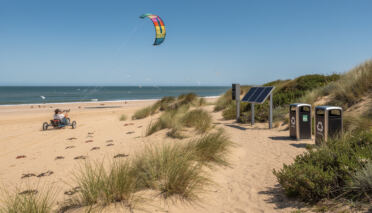
Maya’s first mistake was the classic one: she focused on the kite and ignored the field. For traction kiting, your “runway” matters as much as your canopy. Pick an open area with clean wind—no trees, buildings, fences, parked cars, or curious spectators downwind. If you can’t describe your downwind “oops zone” in one sentence, the spot isn’t ready for your first flight. This is one of those beginner tips that feels overly cautious until you see someone get dragged ten meters by a gust.
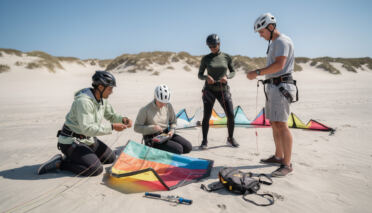
Now the kite setup itself: lay the kite leading edge into the wind and secure it with sand, a bag, or a purpose-made weight—never with random rocks that can shred fabric. Unwind lines carefully and do a “line story” check: handles to leaders to flying lines to bridle points, left and right consistent all the way. Four-line traction kites aren’t “hard,” they’re just not forgiving about crossed lines. Maya learned to do a quick visual pattern: lines parallel, no twists, bridle cascades free, no knots. Then she tug-tested each line pair to confirm equal tension.
The big mental switch from two-line kites is that you’ve got brakes. That means you can park, back up, and kill power more deliberately—if you practice. On the first day, keep the kite low-power: smaller size, moderate wind, and simple goals. Your first flight should be about controlled launches, hovering, and gentle landings, not hero pulls. Maya set a rule: if her shoulders tightened, she stepped back, reset, and did a calmer launch. That habit built confidence faster than “just send it.”
To make early sessions repeatable, use a short checklist before every launch. Do it even when you’re excited—especially when you’re excited. That’s how safety becomes automatic instead of a last-minute thought.
Pre-flight checklist for four-line traction kiting
- ✅ 🧠 Plan your downwind space and an exit route if power spikes.
- ✅ 🪢 Confirm no crossed lines; check leaders and knots for wear.
- ✅ 🧤 Put on gloves; friction burns are a quick way to ruin practice.
- ✅ 🛟 Test your quick release and leash connection before you hook in.
- ✅ 🌬️ Feel the wind at ground level and higher up (gusts can differ).
- ✅ 👀 Scan for people/animals entering the area—pause if it changes.
One more thing: old-school training series—like the kind that first hit shelves in the mid-90s—still nails the basics. The vibe might be nostalgic, but the order of operations (space, setup, launch, control) is timeless. Maya watched a classic “Way to Fly”-style breakdown, then compared it with newer slow-motion tutorials. The combo worked: clear fundamentals plus modern detail.
Next up, she had to learn the real boss of traction kiting: the wind itself, not the kite. That’s where control starts feeling intentional.
Reading Wind Conditions for Traction Kiting: Wind Window, Gust Management, and Smart Power Control
If traction kiting had a secret language, it would be wind conditions. Maya used to think wind speed was a single number from an app. Then she flew near a row of trees and discovered turbulence: the kite felt steady at the edge of the window, then suddenly surged as it climbed into cleaner airflow. Understanding that mismatch—ground wind vs. kite-height wind—is a game changer.
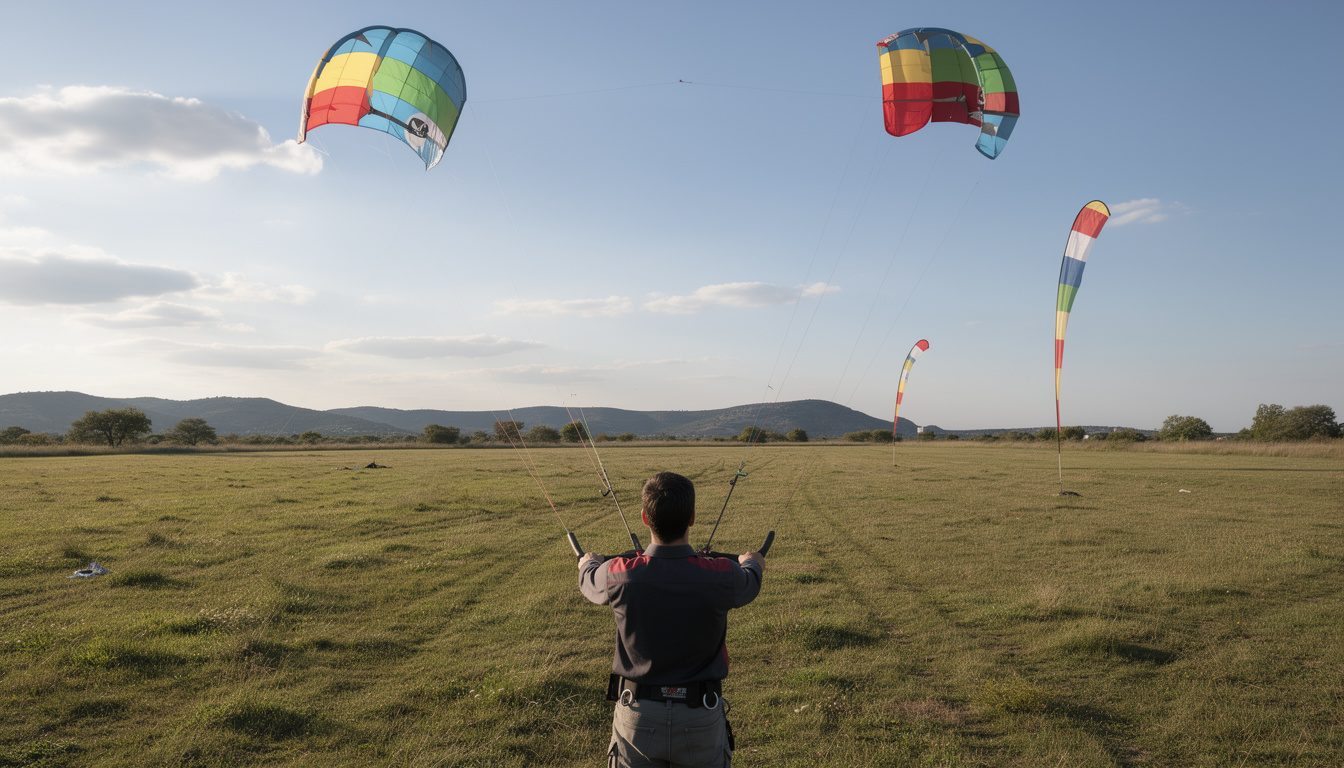
Start with the wind window: picture a dome downwind of you. The edges are lower power; the center is the engine room. Beginners should live near the edge until their hands stop overcorrecting. This is why people say “fly at the edge” so often—it’s not boring advice, it’s a power limiter. When Maya wanted to practice transitions, she traced slow figure-eights near the window edge, paying attention to tension changes. Lines humming? She slowed down. Lines slack? She was too far out or the kite was stalling.
Gusts and lulls are where traction kiting gets spicy. A gust isn’t just “more wind”; it can shift direction and temporarily reshape the window. Maya learned to watch grass, flags, and distant treetops. When she saw a gust line moving across the field, she prepped: kite higher and slightly to the edge, knees bent, arms relaxed. Relaxed is not a mood—relaxed is a technique. Tensed arms feed unwanted inputs into the handles and amplify wobbles.
Terrain matters more than most people expect. Beaches with clean wind are forgiving. Parks with buildings create wind shadows and rotor. A hill can accelerate airflow at the crest and produce weird pockets behind it. In 2026, forecasting apps are better at showing gust ranges and direction shifts, but they can’t tell you how your exact spot behaves. Maya started doing a two-minute “wind walk”: she walked the launch area and felt the wind on her cheeks, checking if it was smooth or pulsing. That tiny ritual saved her from sketchy launches.
Power control is also about body mechanics. If you fly a traction kite like a fixed post, you’ll get yanked. If you fly like an athlete—hips square, knees soft, weight shifting—you absorb surges and keep kite control. Maya practiced “micro-steps”: small steps forward to depower, small steps back to maintain tension, and side steps to align with pull direction. Suddenly the kite felt lighter without changing size.
Wind and kite choice: a practical table
| Scenario | What it feels like | Better choice ✅ | Red flag 🚩 |
|---|---|---|---|
| Light, steady breeze 🌤️ | Kite wants to hover, slower turns | Mid-size trainer / light-wind foil | Over-sheetworking leads to stalling |
| Moderate wind, clean airflow 🌬️ | Predictable pull, easy relaunch | Smaller traction kite for drills | Ignoring fatigue and doing “one more run” |
| Gusty inland wind 🌪️ | Sudden surges, direction shifts | Downsize + edge-of-window practice | Launching near obstacles or crowds |
| Strong wind 💨 | Fast acceleration, high load on arms | Only if experienced + safety plan | Beginner sessions; high risk of dragging |
Once wind starts making sense, tricks stop feeling random. The next step is building a control toolkit that transfers to landboarding and kiteboarding—the kind of control that survives mistakes.
Video can speed this up fast, especially when you can replay hand movements in slow motion.
Kite Control Skills That Translate to Kiteboarding: Drills, Power Zones, and Real-World Session Planning
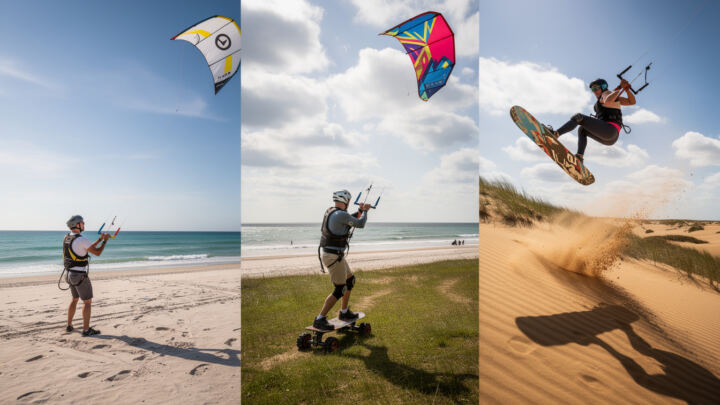
Maya didn’t begin traction kiting because she wanted to collect kites; she wanted to get into kiteboarding without being “that person” who shows up and gets humbled by the first body drag. Traction kiting is a solid training ground because it teaches you to manage pull, not just fly shapes. But to make it transferable, you need drills with a purpose, not just endless loops.
Start with parking: place the kite at 10 o’clock or 2 o’clock and hold it there while you move your feet. This is boring in the best way. If you can park the kite while walking, you’re already learning board-riding posture: eyes forward, shoulders relaxed, hands steady. Maya practiced parking with a timer: 30 seconds each side without overcorrecting. The moment she could do it while chatting, she knew it was sticking.
Next comes controlled power strokes. Instead of yanking the kite through the middle like a lawnmower, you learn to “dip” into the power zone and exit smoothly. Maya’s coach called it “touch the stove, don’t hug it.” She’d drive the kite down, feel pull build, then redirect upward before it got heavy. This is basically the same timing used for waterstarts in kiteboarding, just without the board and water. The skill is not strength; it’s rhythm.
Then there’s stopping power. Four-line kites let you brake and even back the kite up. Practicing gentle reverse launches and controlled backdowns builds a safety instinct: if the kite overflies or you lose tension, you can recover without panic. Maya did “reverse hover” drills low to the ground, learning how brake input changes angle of attack. That knowledge later made depowering on a kiteboard feel less mysterious.
Session planning is the underrated skill that keeps you progressing. Before Maya even unrolled lines, she asked: What’s my one goal today? Maybe it’s clean launches and landings. Maybe it’s ten controlled power strokes per side. This stops you from chasing everything and learning nothing. It also reduces accidents, because tired hands and ambitious ideas are a sketchy combo.
Control drills (simple, brutal, effective)
- 🎯 Edge tracing: slow figure-eights near window edge for 5 minutes, minimal pull.
- 🧭 Parking with footwork: park at 10/2 and walk a small square without drifting the kite.
- 🔥 Soft power strokes: dip into power zone and exit early; aim for consistency, not maximum pull.
- 🧱 Dead-stop landings: bring the kite down and kill power with brakes, then reset lines calmly.
- 🔁 Recovery reps: intentionally slack the lines (safely), then re-tension and regain control without yanking.
One thing Maya stole from older training content (the kind originally released in 1996 and still floating around in updated re-edits) was the idea of “mastery loops”: do basics until you can’t do them wrong. That old-school approach pairs nicely with modern cameras: she filmed her hands and saw tiny overinputs she never felt in the moment. The result was smoother flying and fewer surprise surges.
At this point, progression depends less on excitement and more on safety measures that let you practice harder without rolling the dice. That’s where we’re heading next.
Watching a freestyle-focused video can help you spot hand timing that’s easy to miss in real time.
Safety Measures in Traction Kiting: Gear Checks, Launch Protocols, and Mistakes That Bite
People talk about safety like it’s separate from skill. In traction kiting, safety is skill—especially when you start pushing speed, stronger wind conditions, or powered runs that mimic kiteboarding. Maya’s biggest upgrade wasn’t a new kite; it was learning to stop sessions early and to treat every launch like it could go wrong.
First: connect your leash correctly and test your release systems. Do it before you hook in, and do it with gloves on, because that’s how you’ll actually use it. Practice the motion until it’s automatic. Under load, fine motor skills vanish. Maya ran “release drills” at low power: she’d load the kite slightly, then trigger the system and reset it. Repetition turned it into muscle memory instead of a theoretical option.
Second: launch protocol. Traction kites generate real force, so “casual” launches are a trap. Use a clear signal if someone assists. If solo launching, choose techniques designed for your kite type and space; if anything feels off—lines snagged, bridle twisted, wind shifting—abort and reset. Maya adopted a simple phrase: “Reset is faster than regret.” It sounds cheesy, but it kept her from launching on crossed lines twice in one month.
Third: know your limits with strength and fatigue. People underestimate how quickly grip and forearms burn out when you’re learning. Fatigue leads to sloppy kite control, which leads to spikes of power and bad foot placement. Maya planned shorter sessions: 45 minutes of focused drills instead of two hours of chaotic flying. Her progress sped up because she wasn’t practicing mistakes.
Fourth: spectators and environment. Traction kiting looks inviting, so people wander into lines. Pets chase kites. Kids run downwind. Your job is to create a buffer and protect it. Maya carried a small cone and placed it as a “do not cross” marker, then politely told people what the lines can do. She also learned local rules—some beaches and parks have designated kite zones, and ignoring them can get the whole community banned.
Finally: gear maintenance. Sand and salt are brutal; grass and dirt hide tiny nicks in lines. A quick rinse and line inspection prevents random failures. Maya kept a small repair kit: spare pigtails, line connectors, a multi-tool, and tape suitable for canopy patches. Not glamorous, but it kept sessions from ending early.
Common safety mistakes (and what to do instead)
- 🚩 Flying overpowered “just to see” → ✅ Downsize and practice technique; power isn’t a substitute for control.
- 🚩 Launching with people downwind → ✅ Move, wait, or skip the session; traction kiting needs clear space.
- 🚩 Ignoring gust ranges in forecasts → ✅ Treat gust numbers as the real story, not the average.
- 🚩 Never practicing releases → ✅ Drill releases in low-power conditions until it’s automatic.
- 🚩 Fixing tangles while the kite is loaded → ✅ Fully depower, secure the kite, then untwist calmly.
Once safety becomes second nature, you can explore more expressive flying—where advanced tricks and stylish stunt maneuvers stop being a coin flip and start being repeatable.
Advanced Tricks and Stunt Maneuvers: Building a Freestyle Progression From Clean Basics to Confident Combos
Maya’s first “trick” was accidental: an ugly half-axel caused by oversteering and panic braking. It looked cool for half a second and then exploded into a tangle. That was her clue that advanced tricks aren’t about luck; they’re about controlling slack, timing, and recovery. The real freestyle mindset is simple: you create a moment where the kite is light, then you tell it exactly what to do next.
Freestyle progression starts with understanding slack-line moments. Many stunt maneuvers rely on briefly reducing line tension so the kite can rotate or flip. With traction kites, especially four-line foils, you can create slack by popping the kite upward and stepping toward it, or by changing brake input to stall and then release. Maya practiced “micro-slack”: tiny slack moments she could immediately recover from. It wasn’t dramatic, but it taught her how the kite behaves when lines aren’t fully loaded.
Next: stalls and pivots. A controlled stall is the doorway to everything else because it teaches you to balance lift and drag without losing the kite. Maya worked on holding the kite stationary at mid-window, then initiating a pivot using asymmetrical inputs. The trick was keeping her hands quiet—big motions created big mistakes. Over time, she could pivot the kite nose around like turning a key in a lock.
Then come rolls, flips, and transitions. Instead of chasing a huge catalog, Maya picked three moves and obsessed over clean entries and exits. She used the same idea she learned from modern trick-flying video lessons: slow it down, isolate the handwork, and film from behind to see symmetry. She also borrowed a page from classic training series: repeat the move until you can do it while tired, because that’s when form usually collapses.
Here’s where traction kiting connects back to kiteboarding in a sneaky way. Freestyle kite handling builds confidence with unhooked-style inputs, line awareness, and fast recovery—skills that matter on water when you’re dealing with chop, current, and adrenaline. Even if you never plan to throw board tricks, trick training makes you calmer under pressure, which is the most underrated performance boost.
A realistic trick ladder (so you don’t skip steps)
- 🧊 Controlled stalls: stop the kite without wobble, then restart smoothly.
- 🌀 Flat turns and pivots: rotate with minimal drift; keep the kite in a chosen zone.
- 🎯 Pop-and-recover: create brief slack and immediately regain tension and heading.
- 🔄 Flip entries: practice low-risk flip attempts with plenty of downwind space.
- 🧩 Combos: link two moves only after each is consistent on both sides.
Maya’s favorite milestone wasn’t landing a flashy move—it was repeating a trick three times in a row with the same kite position and the same pull. That’s when you know the skill is yours, not the wind’s. And once you’re there, you can start styling: cleaner lines, tighter windows, and intentional flow.
To keep your progression smooth, it helps to answer the practical questions people always ask right before a session—especially when you’re switching from first flight basics to trick practice.
What’s the safest way to approach my first flight in traction kiting?
Pick a wide, obstacle-free area with clear downwind space, use a smaller kite in moderate wind, and focus on controlled launches, parking, and landings. Double-check kite setup (no crossed lines) and practice your safety measures like quick release activation before you load the kite.
How do I know if wind conditions are too gusty for a beginner?
If the wind is pulsing hard, changing direction, or the gust range is much higher than the average, it’s a bad learning day. On the field, signs include sudden line tension spikes, the kite surging unexpectedly, and turbulent airflow near trees/buildings. Downsize or postpone—good sessions beat scary sessions.
Do traction kiting skills really help with kiteboarding?
Yes. Parking the kite, timing controlled power strokes, and recovering from slack line moments translate directly to waterstarts, maintaining power while riding, and staying calm during mistakes. You also build better kite control and safer habits before adding water and a board.
What’s the fastest way to start learning advanced tricks without getting overwhelmed?
Use a trick ladder: master stalls and pivots first, then practice small pop-and-recover drills to understand slack. Film your hands, keep practice sessions short, and repeat one move until it’s consistent on both sides before adding a second move into a combo.