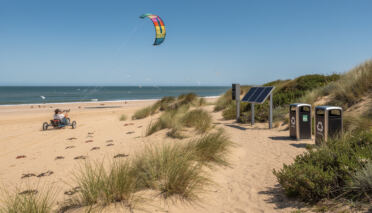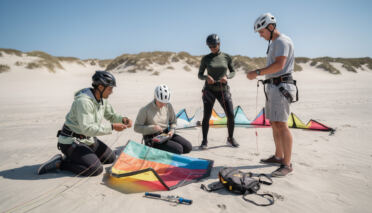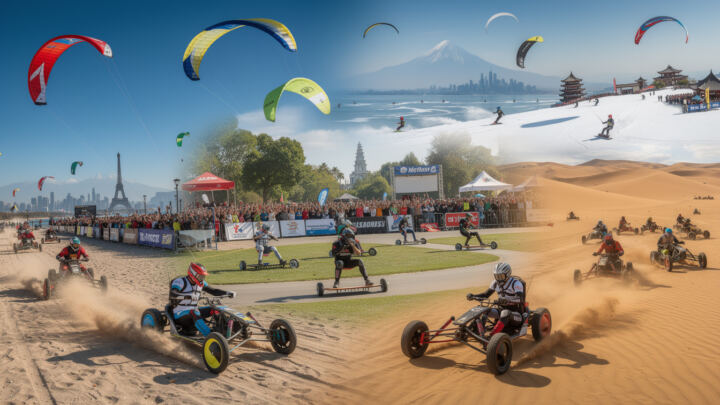
Wind has a funny way of turning random coastlines, lakes, deserts, and frozen plateaus into arenas. One week it’s a calm beach with dog walkers; the next, it’s packed with flags, loudspeakers, helmeted riders, and kites snapping like sails as judges look up and crowds look even higher. That’s the thing about traction kiting: it scales from backyard fun to stadium-level drama without losing its DIY soul. The modern scene mixes polished kiteboarding competitions on tropical reefs with gritty power kiting events on tidal flats, plus niche classics like kite buggy racing and kite landboarding that feel like motorsport—except the “engine” is a weather forecast.
Across global kiting competitions, formats have diversified fast. Big Air pushes height and risk; wave and strapless riding blends surf style with technical tricks; park events turn obstacles into skate-park puzzles; and racing keeps the sport anchored in tactics, angles, and outright speed. Underneath it all sit the organizations shaping rules, calendars, safety, and athlete pathways—so an amateur can realistically dream of lining up beside the best. If you’re trying to understand where the sport is headed in 2026, the answer is simple: follow the events, because they’re where the culture, the tech, and the bragging rights collide.
- 🌍 Kite sports events now span water, land, and snow, creating year-round circuits for athletes and fans.
- 🪁 The GKA Kite World Tour unifies multiple disciplines (wave/strapless, freestyle, Big Air, hydrofoil Big Air, and park-style formats).
- 🏁 Kite racing is increasingly structured through class systems and international oversight, tying into sailing’s competitive framework.
- ❄️ Snowkiting and lake-based races keep the scene alive outside summer, making traction kite championships truly four-season.
- 💨 Event weeks are becoming “festivalized,” mixing elite heats with demos, clinics, and community rides—good for sponsors and even better for newcomers.
Traction kiting competitions worldwide: the disciplines shaping 2026
If you only know kites through beach photos, competitive traction is going to surprise you. The scene isn’t one sport—it’s a bunch of related formats that reward totally different skills. Some are judged (style, difficulty, variety), some are raced (time, tactics), and some are basically endurance tests against gnarly wind. And because the venues vary—reef breaks, lagoons, urban beaches, frozen lakes—athletes build “season plans” like Formula 1 drivers, picking stops that suit their strengths.
A useful way to map modern global kiting competitions is to look at how tours separate disciplines. The GKA side of the world focuses heavily on expressive riding: wave and strapless freestyle (often packaged as a “kite-surf” identity), twintip freestyle (technical tricks powered by speed and pop), and Big Air, where amplitude and commitment matter as much as clean landings. There’s also hydrofoil Big Air—lighter boards, earlier lift, and a different kind of risk profile—and park-style events where riders hit obstacles like sliders and kickers, borrowing the visual language of snowboarding and skate.
Meanwhile, the racing ecosystem sits closer to sailing governance, with rules, class equipment, and regatta-style event management. That matters because racing needs standardization to stay fair. It’s one thing to judge “who sent it hardest,” it’s another to settle a mark-rounding dispute when two foilers converge at 30 knots. That’s where the International Kiteboarding Association (IKA) sits in the background, aligning kiteboarding classes under the wider sailing umbrella and keeping pathways legit for athletes who want a structured ladder.
To make this real, follow a fictional rider: Maya, a 24-year-old all-rounder who splits her year between water and snow. When she trains for Big Air, she’s chasing timing—edge, takeoff, kite position, and loop control—because the difference between a podium and a yard sale is usually half a second. When she switches to racing, she becomes a tactician: reading pressure lines, protecting her lane, and choosing whether to tack early or ride the lift. Same wind, same basic tool, totally different brain.
And then there’s the land-based world—often less televised, but deeply competitive. Kite buggy racing is about precision at speed: cornering lines, braking without locking, and managing gusts that can turn a straight into chaos. Kite landboarding adds body movement and trick potential, especially when riders use terrain to pop or carve. These communities tend to be obsessive about safety standards and gear tuning, partly because land impacts are less forgiving than water. The key insight: traction isn’t “one circuit,” it’s a whole ecosystem—so if you’re scouting events, match the discipline to what you actually want to watch (or ride) before you book flights.
Next up, let’s pin those disciplines onto real places and dates, because the calendar tells its own story. 🗓️
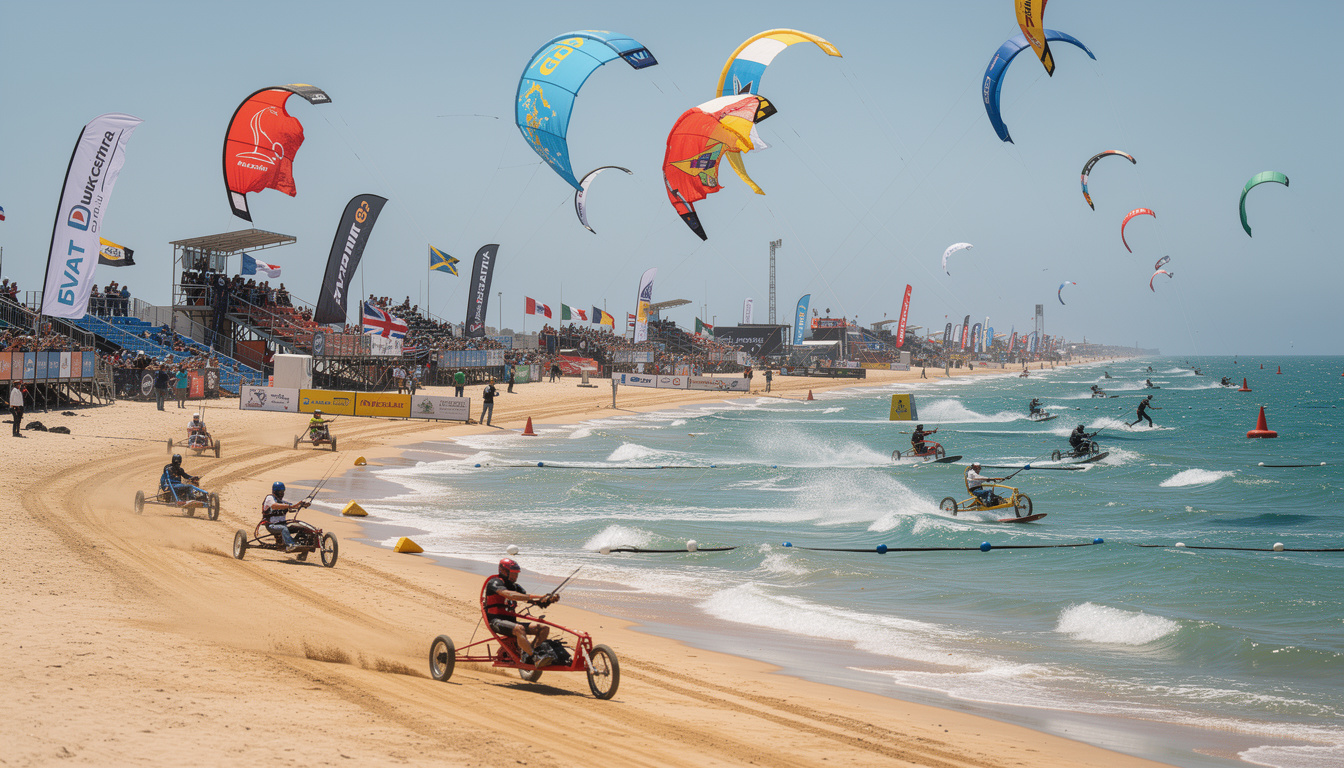
Major traction kiting events calendar: standout stops from Cape Verde to Leucate
Competition calendars are basically weather strategy documents disguised as tourism ads. Organizers pick locations for reliable wind windows, safe launch areas, and local support—and riders pick events based on where they can score points without getting punished by conditions that don’t fit their style. In early-year months, you’ll see warm-water locations hosting headline kiteboarding competitions, while spring stacks up with European multi-class weeks that feel like kiting’s version of a grand tour.
One of the cleanest signals of what’s hot is the way Big Air and wave events cluster around windy Atlantic and trade-wind venues. For example, a stop like the GKA Kite-Surf World Cup in Cape Verde (scheduled in mid-February) fits the classic formula: consistent wind, powerful ocean energy, and a backdrop that makes sense for wave and strapless performance. Riders who thrive there are usually the ones who can handle changing faces and still throw technical moves without looking rushed. Fans get drama because ocean conditions create real variability—no two heats feel identical.
Then you get late winter to early spring pivoting toward Europe’s stacked blocks. A Big Air weekend like Lord of Tram (late March) is the kind of event that turns a windy forecast into a countdown clock. Big Air scoring isn’t just “highest jump”; it’s height plus execution, plus how hard you commit to loops and board control. That’s why these extreme kiting tournaments attract riders who are part athlete, part stunt pilot. The vibe is intense but weirdly friendly in the pits—everyone knows the wind can humble you in one gust.
Spring also brings regatta-style and class-based meets that blur into the broader sailing calendar. Events like Princesa Sofia in Palma and SOF Hyères sit in that “serious racing” lane, where kite racing shares the stage with other sailing classes. If you’ve never watched racing up close, it’s more tactical than it looks on livestreams. Start lines, right-of-way calls, and split-second decisions at marks can flip the standings even when riders are equally fast.
France stacks multiple community-to-elite gatherings in the same period, which is perfect for progression. A week in April can include a first-edition foil meetup (like a Foil Frioul-style convivial event), a wingfoil tour stop in Leucate, and training blocks around them. For athletes like Maya, that’s gold: you can race one day, tune gear the next, then chase exposure at a tour stop—without changing time zones.
| 🗓️ Window | 🌬️ Event vibe | 📍 Example stop (context) | 🎯 Best for |
|---|---|---|---|
| Feb | Ocean performance + spectacle | Cape Verde world-cup style wave/strapless focus | 🔥 Wave riders, expressive judges’ formats |
| Late Mar | High-wind Big Air showdown | Lord of Tram-style extreme kiting tournaments | 🚀 Height, loops, committed tricks |
| Late Mar–Early Apr | Regatta week energy | Palma spring regatta circuit alignment | 🏁 kite racing tactics and consistency |
| Apr | European multi-event cluster | Hyères-style racing week + Leucate tour stop | 🧠 Training blocks, points chasing, networking |
| Winter (variable) | Frozen-lake grit | Snowkite Masters-style meet | ❄️ All-terrain skills, endurance, control |
Calendars also include community governance moments—general assemblies and association meetings—which sound boring until you realize they shape safety requirements, access rules, and how events get insured. That behind-the-scenes layer is exactly what keeps the sport growing instead of burning out venues.
Now that the “where and when” is on the table, the next question is who actually runs all this, and how their decisions affect riders and everyday beach access.
Want a quick visual refresher on Big Air judging and what makes a winning heat? The videos below are a decent rabbit hole.
And if you lean more toward wave and strapless formats, watching full heats helps you see how variety and commitment stack up on the score sheets.
Who organizes global kiting competitions: GKA, IKA, and the safety standards behind the scenes
Most people experience kite sports events as a beach day with extra adrenaline: banners, announcers, and a lineup of athletes doing things you’d never try on your lunch break. But the reason those events run smoothly—especially in crowded places—is because several organizations do the unglamorous work: rulebooks, equipment standards, athlete rankings, safety protocols, and negotiations with local authorities.
The Global Kitesports Association (GKA) operates like an industry-facing umbrella that also champions riders. Its big role is representation: it speaks for the kitesport industry, keeps an eye on market developments, and pushes safety standards for products and practice. That matters in a sport where innovation is constant. A small design tweak—bridle geometry, quick release ergonomics, foil efficiency—can change performance, and performance changes risk. When standards and best practices evolve alongside gear, it’s easier for event organizers to convince municipalities that kiting isn’t reckless chaos; it’s managed adventure.
GKA’s public-facing magnet is the Kite World Tour concept: multiple disciplines under one recognizable competitive umbrella. That structure helps fans follow the season and helps athletes specialize. A twintip freestyler doesn’t need to pretend they’re also a wave charger; they can chase their lane, build a ranking, and attract sponsors that want that specific audience. The disciplines commonly highlighted include: wave and strapless freestyle (to find the most complete surfboard rider), twintip freestyle (technical aerial trick precision), Big Air (height, amplitude, and difficulty), hydrofoil Big Air (foil efficiency plus aerial maneuvers), and park-style obstacle riding.
On the other side, the International Kiteboarding Association (IKA) connects kiteboarding competition formats to sailing’s governance ecosystem. That sounds bureaucratic, but it’s a huge deal for legitimacy. Standardized racing classes mean results are comparable across venues, and disputes can be handled with established procedures. It also helps when kiteboarding appears in multi-sport contexts or regional games—organizers like having recognized authorities and consistent equipment rules. For athletes, it can translate into clearer pathways: train, qualify, rank, and move up without the “wild west” feeling.
There’s also a cultural layer: associations and clubs, from local groups to national communities, often act as the glue between visiting tours and the spot’s daily users. In the U.S., for example, kite-flying communities have long histories of public education, building culture, and safe practice—traditions that spill over into traction disciplines through shared airspace etiquette and festival organization know-how. That cross-pollination helps when a venue hosts everything from artistic displays to high-powered racing in the same week.
For our rider Maya, this governance shows up in small but real ways. She checks whether an event requires specific helmet certification, whether the course uses a particular start sequence, and whether the organizer follows a safety plan that includes rescue craft, radio marshals, and wind limits. It’s easy to roll your eyes until you see a squall line hit mid-heat; then you’re grateful someone wrote rules that prioritize getting everyone back to shore.
The next layer is the competition formats themselves—because how you score a sport decides what athletes train, what gear brands build, and what the crowd remembers.
From Big Air to kite buggy racing: formats, judging, and what athletes actually train for
If you’ve ever wondered why one rider seems obsessed with height while another keeps grinding the same technical handle pass, the answer is simple: formats create incentives. In judged disciplines, riders train for “what scores,” which is usually a mix of difficulty, cleanliness, variety, and commitment. In race formats, it’s speed plus strategy plus staying out of trouble. In land-based traction, it’s often control under unpredictable gusts, because the surface won’t forgive sloppy inputs.
Big Air and hydrofoil Big Air: the anatomy of a “send it” score
Big Air is the headline act for many casual fans because it reads instantly: higher looks better, and a loop looks terrifying. But at competitive level, it’s not just sending. Athletes build a trick quiver: megaloops, board-offs, rotations, late kite catches, and combinations that judges can’t ignore. The best riders also manage risk—choosing when to cash in a safe high-score move versus when to gamble on a heat-defining trick. That game theory is part of why Big Air feels like poker with wind.
Hydrofoil Big Air adds another layer. Foils generate lift and efficiency, which changes takeoff timing and landing dynamics. Riders often train to keep control when the foil wants to “track” and when touchdowns can be sketchier. The result is a discipline that looks smoother from a distance but requires ridiculous fine motor control up close.
Wave and strapless freestyle: surfing instincts with kiting consequences
Wave-focused competition asks: can you read the ocean and still perform? Strapless tricks add risk because you’re managing board retention and kite power while the wave face accelerates everything. A rider might slash a top turn, then immediately throw a technical aerial—two different skill sets in one sequence. That’s why these heats feel like storytelling: the ocean sets the plot, the rider improvises the ending.
Twintip freestyle and park-style events: repetition, precision, and creativity
Freestyle riders train like gymnasts. They repeat takeoffs until the pop is consistent, drill handle passes until muscle memory takes over, and tune kite settings for slack and pull at the right moments. Park-style competition shifts the canvas to obstacles. Sliders and kickers reward commitment and balance, and they bring a street-style creativity that feels closer to skate culture than traditional sailing. When done well, it’s not just athletic—it’s stylish, and style is a weapon.
Kite buggy racing and kite landboarding: speed on unforgiving terrain
Kite buggy racing is where traction kiting shows its motorsport DNA. Competitors train cornering lines, acceleration control, and “gust management”—the ability to keep speed without getting yanked off the racing line. In strong wind, the physical demand spikes because steering inputs are heavy and mistakes happen fast. Kite landboarding is more body-driven: carving, foot pressure, and terrain awareness matter, and events often blend racing with trick elements depending on the local scene.
- 🧰 Training example: Maya uses two sessions per week just for land drills—quick release practice, kite control one-handed, and simulated emergency landings.
- 📈 Performance example: before a Big Air stop, she tracks jump consistency (not just max height) because judges reward repeatable quality.
- 🧭 Racing example: she runs “start-box” drills—accelerating into position without crossing early—because one bad start can ruin an entire regatta.
- 🛟 Safety example: in gusty venues, she rigs smaller than ego wants, because finishing heats beats swimming gear in.
The punchline is that formats don’t just pick winners; they shape the whole culture of practice, gear, and even how newcomers imagine the sport. That naturally leads to the fan side—because events aren’t only for athletes, they’re becoming travel magnets and community moments.
How to experience traction kite championships as a spectator (or first-time competitor)
Showing up to a big beach event for the first time can feel like walking into a festival where everyone speaks “wind.” People talk in knots, debate kite sizes like chefs arguing knives, and point at clouds like meteorologists. The good news: the learning curve as a spectator is fast, and if you’re thinking about entering smaller traction kite championships, event culture is usually welcoming—as long as you respect launch zones and safety rules.
For spectators, the best hack is to arrive early and pick a spot that lets you see both the launch area and the competition zone. In Big Air, the most exciting moments happen near the takeoff lines, but you also want to watch landings. In wave formats, you want a vantage point that shows the set waves and the “inside” where riders finish. For racing, find the upwind mark line-of-sight if possible; that’s where tactics compress and positions change quickly.
Event villages are getting more structured, especially in locations that blend competition days with festival programming. Some coastal towns host kite weeks where a world cup sits inside a broader schedule—team displays, community demos, and sponsor activations. The point is simple: organizers want a wider audience than hardcore kiters, and that’s good for the sport’s future. It also means you can bring non-kiting friends and they won’t be bored after 20 minutes.
If you’re a first-time competitor, aim for the right entry point. Not every event is a world-tour-level pressure cooker. Community meets, “convivial” foil gatherings, and regional races are perfect for learning how start sequences work, how judging feels, and how to handle nerves when your name is on a heat sheet. The smartest move is to treat your first season as logistics training: how to register, how to pass inspection, how to read the rider briefing, and how to stay calm when conditions change.
Here’s a practical, low-drama checklist that riders like Maya actually follow before traveling:
- 📍 Confirm the venue rules: launch zones, restricted areas, and local right-of-way expectations.
- 🌬️ Pack for range: one kite size down from your “ideal” is often the difference between competing and surviving squalls.
- 🛟 Learn the rescue plan: where the safety craft sits, radio channels (if any), and the cut-off wind limits.
- 🔧 Bring spares: lines, a pump hose, valve patches, and at least one backup leash option.
- 🤝 Respect the locals: ask before setting up in someone’s usual rigging lane—small courtesy prevents big conflict.
What about the vibe? Honestly, it’s half serious, half summer camp. The top riders are locked in, but everyone still shares wind gossip and helps untangle lines. And that mix—competition intensity plus community—is why power kiting events keep growing even in places where permits are hard. The next step is knowing where to track events and results so you’re not relying on random social posts to plan your season.
What’s the difference between traction kiting and kiteboarding competitions?
Traction kiting is the broad umbrella: any sport where a kite pulls you—on water, land, or snow. Kiteboarding competitions are specifically water-based formats (Big Air, freestyle, wave/strapless, and racing) where the board is part of the performance and rules are tailored to water safety and course setups.
Are kite buggy racing and kite landboarding part of the same competitive scene as world-tour kiteboarding?
They overlap culturally but are often organized through different local clubs and event calendars. You’ll still see shared safety standards, similar wind-window planning, and crossover athletes, but land disciplines usually run at dedicated beaches, tidal flats, or dry lakebeds with their own race formats and terrain-specific rules.
Which disciplines count as the most extreme kiting tournaments right now?
Big Air and hydrofoil Big Air tend to take the spotlight because height, kite loops, and risk are central to scoring. That said, stormy-wave stops can be just as intense—heavy surf plus technical strapless riding creates a different kind of danger and difficulty.
How do I find reliable schedules for kite sports events in 2026?
Follow official tour calendars (like GKA for multi-discipline tour stops) and class/racing bodies (such as IKA-aligned racing schedules), then cross-check with regional event calendars that list kitesurf, snowkite, and land-based meets. The reliable sources publish dates, venue rules, and updates when wind windows force changes.