En bref
- 🧳 Plan your transport early: airline rules, weight limits, and pre-notification can save money and drama at the counter.
- 🪁 Smart kite packing reduces damage: deflate fully, fold cleanly, isolate hard parts, and stop gear from sliding.
- 🛞 A real kite bag matters: padding, strong zippers, wheels, and reinforced corners are your “cheap insurance”.
- 🧼 Keep gear dry for storage: moisture and heat are the quiet killers—mildew and delamination don’t care how good you ride.
- 🧰 Build habits around kite handling and kite maintenance: rinse, inspect, and repair small issues before they become trip-ending problems.
- 🛡️ Think safety beyond flying: labels, documentation, photos, and insurance make secure transport realistic.
- 🌦️ Use weather protection like it’s part of the sport: UV, heat, sand, and salt are always “on”.
Traction kiting has this funny way of making you feel like a minimalist… until you look at your gear pile. A traction kite, bar, lines, harness, stakes, pump, spares, maybe a landboard or buggy—suddenly you’re running a small logistics operation. And the wild part is that most damage doesn’t happen during the session. It happens in the “boring” moments: stuffing a damp canopy into a bag because the sunset looks good, letting sand grind into valves, or trusting a flimsy zipper on a long trip. If you’ve ever opened your bag at the spot and found a line nest that looks like modern art, you know the pain.
This guide is about making your gear travel like it’s valuable (because it is) and storing it like you actually want it to last. We’ll follow a simple thread: a rider named Maya who switches between weekend field sessions and a yearly wind trip, and who learned—sometimes the hard way—that safety includes everything from baggage rules to mildew prevention. Expect practical steps, real-world examples, and the kind of small upgrades that quietly prevent big repair bills.
Airline and road transport basics for a traction kite: rules, risks, and real-world planning
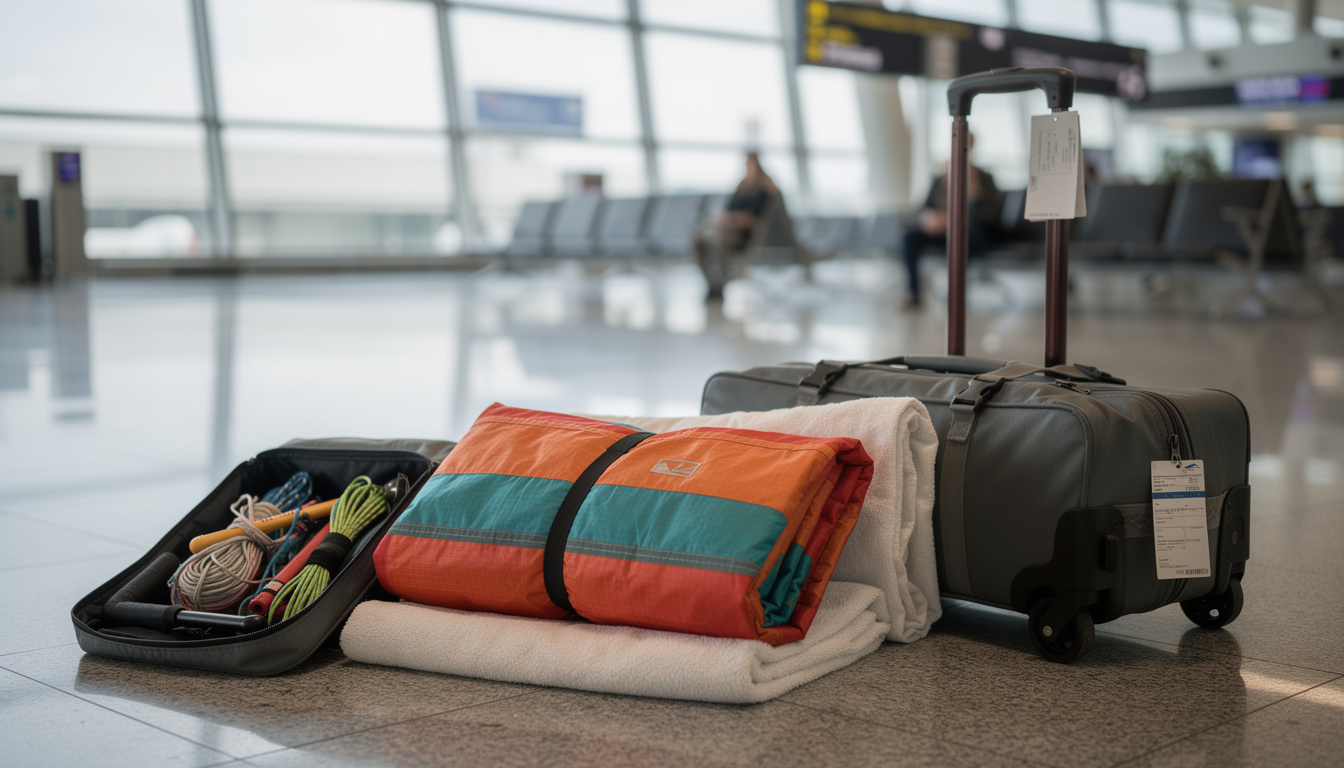
When Maya books a trip, her first move isn’t checking wind stats—it’s checking baggage policy. Airlines treat kiting gear as sports luggage, and that category comes with its own math. In 2026, most carriers still sit around a 23–32 kg weight limit per bag, and a common size cap is about 300 cm total dimensions (length + width + height). Miss either number and you’re not “a passionate rider,” you’re “a surcharge.”
Typical sports equipment fees often land between €50 and €150 per flight, depending on airline and route. Budget airlines tend to charge more and enforce rules harder, while traditional carriers sometimes offer friendlier sports baggage rates—especially on routes to outdoor destinations. The trick is not guessing. Pre-notify sports baggage at booking, keep the confirmation handy, and screenshot the policy page in case the counter agent has a different idea today than the website did yesterday.
What “secure transport” actually means at the airport
Secure transport starts before the ride to the terminal. Maya puts her contact details outside and inside the bag, because luggage tags tear off. She also keeps a small folder on her phone: purchase receipts for major items, photos of each piece of gear, and a quick inventory list. Why? If the bag arrives cracked or doesn’t arrive at all, proof matters.
There’s also a safety angle: kites must be fully deflated. Even if you’re not kitesurfing and you’re packing a traction kite for land use, airline staff don’t want inflated bladders in cargo. Deflate completely, including the tips, then fold. If you travel with a board, remove fins or face them inward to reduce puncture risk and avoid awkward inspection moments.
Road trips: the sneaky damage nobody notices until later
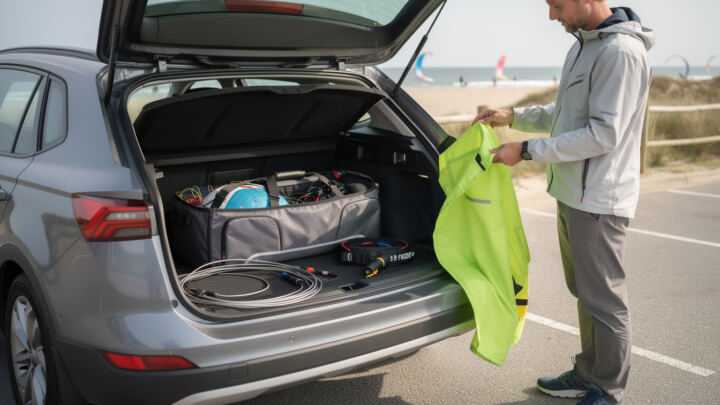
Car transport seems easy—until the gear cooks in the back seat. Heat and UV do slow damage: adhesives soften, coatings age, and lines can lose strength over time. Maya lays bags flat, avoids pressure points (no heavy toolboxes on top), and never leaves gear in direct sun behind glass. Damp kit gets ventilation; otherwise, it’s basically an incubator for smell and mold.
The final habit is simple: stop sliding. If the bag can move when you brake, the contents rub, and abrasion is real. She straps bags down and uses soft items as spacers. Next up: how to pack the kite itself so it travels like it belongs to a pro team.
Kite packing that prevents tears: step-by-step folding, line control, and smart separation of hard parts
Good kite packing isn’t about being precious—it’s about controlling where stress goes. Maya learned this after a rushed pack-down left sand in her canopy folds. A month later, tiny abrasion marks appeared exactly where the sand had been grinding. The fix wasn’t complicated; it was just consistent technique.
Clean, dry, and fully deflated: the non-negotiables
Start with kite handling that sets you up for success. Land the kite safely, secure it so it can’t relaunch, and keep the bridle/lines tidy. Then: get the air out. Not “mostly out”—fully out, including any trapped air at the tips. Residual air makes the roll bulky, increases pressure on seams, and makes it harder to fit inside a bag without forcing zippers.
Moisture is worse than people admit. Packing a damp canopy for “just overnight” turns into a science experiment fast, especially in warm climates. Maya will wait an extra 10 minutes for airflow, even if it means missing the last chat in the parking lot. It’s boring, but it’s how you avoid mildew and adhesive breakdown.
Folding patterns and why they matter
If you still have the manufacturer’s original fold lines, use them. The canopy fabric and reinforcements are designed to tolerate certain bends better than random crumples. Maya folds panel-to-panel, then rolls around softer sections rather than creasing hard points. For inflatable-style kites (common in water disciplines), she keeps valves protected; for foil-style traction kites, she makes sure bridles are not trapped in a way that creates kinks.
A simple trick: wrap the folded kite in a towel or soft cover before it goes into the kite bag. This adds abrasion resistance and helps with weather protection if the bag gets wet on the tarmac or in a rainy car park.
Lines and bar: stop the “spaghetti effect”
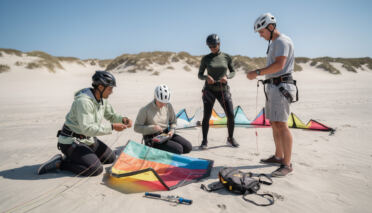
Line damage is often invisible until it’s exciting in the worst way. Maya inspects while winding: any snag, abrasion, or uneven stretch gets flagged. Then she wraps lines systematically, using a figure-eight method when possible, and secures them with a band so they can’t unwind inside the bag. The bar goes into its own sleeve, away from canopy fabric, because hard edges + vibration = wear.
Hard parts (pump, stakes, fin hardware, tools) should be isolated. Put them in corners where they won’t press into the kite, or in a separate compartment. The goal is simple: nothing rigid should be able to “punch” the canopy when the bag is dropped. Next, we’ll talk about picking a bag that’s actually built for the job.
Want to see a practical packing demo before your next trip? This kind of visual walkthrough helps lock the sequence in your muscle memory.
Choosing the right kite bag for secure transport: padding, wheels, and durability that pays for itself
A kite bag is either a protective shell or a fancy sack—there’s not much middle ground. Maya used to travel with a basic sports bag and wondered why zippers failed and corners wore through. Then she did a simple calculation: one repaired tear and one replaced set of lines cost more than upgrading the bag.
Bag types and when they make sense
There are three common categories. Basic sports bags are fine for short local trips, but they’re not designed for conveyor belts and baggage carts. Padded travel bags are the sweet spot for regular flyers: thicker padding, reinforced corners, better handles, and wheels. Hard cases are maximum protection, especially for expensive setups, but they’re heavier and can push you toward overweight fees.
For many riders, a length around 140–160 cm covers most board-and-kite combinations (if you ride with a board). For traction-only setups, you might go smaller, but leaving a bit of space for padding is smart. Compression without breathing room is where gear starts suffering.
Features that matter more than brand names
Look for durable zippers that don’t pop under strain, padding that’s meaningful (5 mm is a baseline; many travel bags go thicker in key zones), and wheels that won’t hate sidewalks. Multiple grab handles are underrated: they reduce the chances of baggage handlers dragging the bag by one strap until something rips.
A water-resistant exterior helps with weather protection. It won’t make your bag a submarine, but it buys time in rain and stops the fabric from soaking up grime. Inside, simple compartments keep hard parts from migrating.
| Option | Best for | Protection level | Typical cost | Watch-outs |
|---|---|---|---|---|
| 🧳 Standard sports bag | Weekend trips, car transport | 🟡 Basic | €80–150 | Thin fabric, weak corners |
| 🛞 Padded travel kite bag | Frequent flyers, mixed trips | 🟢 High | €200–400 | Can get bulky; check airline size rules |
| 🧱 Hard case | Long-haul, fragile/expensive quiver | 🟢🟢 Maximum | €400–800 | Weight can trigger extra fees |
A quick gear-ID system that reduces stress
Maya writes a small list inside the bag: “kite, bar, lines, pump, repair kit.” It’s low-tech but effective. She also labels components with a discreet marker or tag, especially when traveling with friends. Mix-ups happen at windy beaches because everyone’s in a rush and everything looks similar.
If you like staying organized, note your product references (for example, riders may track items like REF: 8396510, 8396502, 8647391, 8203882, 8204037) in your inventory file. It makes warranty claims and replacements faster. Next, let’s shift from gear hardware to the less exciting—but crucial—topic: insurance and documentation.
Insurance, documentation, and travel-proof routines: turning chaos into a plan
Insurance is one of those things you ignore until you really, really can’t. Maya learned this after a baggage delay turned into a near total loss. The airline offered a generic compensation path, but it didn’t match the actual value of her setup. Now she treats coverage as part of safety, not a boring admin chore.
What coverage usually looks like (and what it misses)
Basic travel insurance often covers sports gear, but with limits—commonly around €1,000–€2,500—and a deductible that can be €150–€250. If you’re traveling with multiple kites, bars, and a board, that ceiling can be too low. Comprehensive sports policies often cover a broader range: damage, theft, and loss during transport and sometimes during use, with typical costs around €10–€25 per month or €150–€400 per year, depending on insured value.
Home insurance extensions can be cost-effective, but riders should check exclusions. Some policies treat kiting like a high-risk activity, and “covered worldwide” might still come with conditions. The point isn’t to buy the fanciest plan—it’s to buy the plan that matches your real kit value and your real travel habits.
Evidence wins claims: build a tiny “proof kit”
Maya takes photos of her gear laid out before the trip and snaps a couple shots of how it’s packed. If something arrives damaged, she documents it immediately and reports it fast—many insurers expect notification within 48 hours. She keeps receipts and warranty cards in a cloud folder. It’s dull, but it’s also how you avoid arguing from memory.
A practical pre-trip checklist you’ll actually use
- ✅ 📩 Pre-notify sports baggage and keep confirmation handy
- ✅ 🏷️ Put contact info inside/outside the bag
- ✅ 📸 Take “before” photos of gear and the packed bag
- ✅ 🧰 Pack a mini repair kit (patch, valve parts, tape, line spares)
- ✅ 🧼 Ensure everything is dry to protect storage conditions in transit
- ✅ 🧾 Save receipts and note serials/refs for replacements
One more thing: if you’re traveling with intermediate traction kites designed for riders around 55 kg and up, you’re often dealing with a balanced mix of pull and speed (a classic “sweet spot” design from around 2020 that’s still common in quivers). That performance balance is great on landboards and buggies, but it also means your lines and bridles deserve extra care—snags and uneven stretch can change the kite’s feel fast.
With the travel side covered, the next question is the one people mess up most: how to store everything at home (or on-site) so it’s ready when the wind finally shows up.
If you want a broader look at traveling with kiting equipment—bag choices, airport handling, and packing habits—this kind of overview is a solid companion watch.
Storage and kite maintenance: dry, cool, organized, and ready to fly without nasty surprises
Storage is where your future sessions are either protected or quietly sabotaged. Maya’s rule is simple: if you wouldn’t store a sleeping bag wet and stuffed into a closet, don’t do it to your kite. Fabric coatings, bridles, and hardware all age faster when heat, moisture, and salt are allowed to hang around.
At-home storage that respects materials
A cool, dry place beats a garage that swings from freezing nights to scorching afternoons. Extreme heat can weaken adhesives and accelerate wear; persistent humidity invites mildew. Maya stores kites loosely folded rather than aggressively compressed, and she avoids hanging them by lines. Lines aren’t meant to bear long-term static load, and it can introduce weird stretching patterns over time.
She also keeps a “wind-day ready” bin: line holders, spare pigtails, a small towel, and a checklist card. It reduces rushing, and rushing is where mistakes sneak in—like forgetting to check for a nicked line.
On-site storage during trips: small habits, big payoff
When traveling, especially near salt water, the routine is: rinse hardware with fresh water, let it dry, and keep sand out of the bag. Corrosion doesn’t announce itself; it just slowly ruins metal parts until something jams. The kite gets a quick shake-out, then a dry-down session if possible. If the forecast is multiple days, she stores everything off the floor, away from sharp edges and away from direct sun.
Preventing the most common failures
Most damage fits into a few boring categories: canopy abrasion, line cuts, board dings, and rusty hardware. Prevention looks like this: wrap and separate, pad vulnerable points, and stop wet storage. Maya also checks lines for uneven stretch—if one side is longer, your kite can start flying “wrong,” and you’ll blame the wind until it becomes obvious.
Finally, she keeps an eye on “invisible stress.” After a long trip, she doesn’t just unpack and forget. She inspects seams, attachment points, and bridle knots. That’s kite maintenance in real life: not a once-a-year ritual, but a quick pattern that keeps your gear predictable.
Once you treat weather protection, packing discipline, and storage habits as part of the sport, you stop losing sessions to avoidable issues—and that’s the real win.
Do I really need to fully deflate my traction kite for flights?
Yes. For airline safety and packing reliability, make sure the kite is completely deflated, including any trapped air in the tips. A fully deflated kite folds flatter, reduces stress on seams, and avoids issues with baggage inspection.
What’s the simplest way to prevent line tangles during transport?
Wrap lines systematically (figure-eight if possible), secure them with a strap or band, and store the bar in a sleeve. Keep the wrapped lines away from hard parts so nothing can press and deform them inside the bag.
How do I store my kite if I had to pack it slightly damp at the spot?
Unpack as soon as you can, fully open the kite in a ventilated shaded area, and let it dry completely before re-packing for storage. Damp storage is a fast track to mildew and fabric/coating damage.
What should I look for in a kite bag for secure transport?
Prioritize durable zippers, reinforced corners, meaningful padding (at least a basic level, more in high-impact zones), reliable wheels, multiple grab handles, and a water-resistant exterior for weather protection. The goal is to prevent crushing, abrasion, and internal shifting.
Is basic travel insurance enough for kiting gear?
Often not. Basic policies may cap sports equipment coverage around €1,000–€2,500 with a deductible. If your setup is worth more, consider dedicated sports equipment coverage or an extension, and document your gear with photos and receipts for smoother claims.