En bref
- 🪁 Match your protective gear to your terrain (land, snow, water) and the way you ride (cruising vs. jumps) to avoid “almost-right” setups.
- 🪖 A well-fitted helmet is non-negotiable; prioritize certified protection, clean retention, and no pressure points.
- 🦺 An impact vest isn’t just padding—think rib protection, mobility, and practical buoyancy where it matters.
- 🧤 Kiting gloves and kiting boots protect you from line burn, cold, and repetitive strain; comfort equals control.
- 🔗 Your harness is the “connection point,” so fit, spreader bar stability, and anti-ride-up features matter more than hype.
- 🌬️ Let wind conditions dictate how much protection you wear (gusty days demand more margin for error).
- 🧱 Don’t ignore durability: seams, zippers, and abrasion zones are where gear fails first—especially on sand and snow.
- 📦 Plan purchases like a grown-up: check return windows, restocking fees, and shipping signature requirements before ordering.
Traction kiting has this funny way of feeling calm right up until it doesn’t. One minute you’re cruising with a steady pull, the next a gust rolls through and your body becomes the “shock absorber” you never asked to be. That’s why choosing the right safety equipment isn’t about looking armored-up or being paranoid—it’s about buying yourself time and options when something goes sideways. The best riders I know don’t just “own gear”; they curate a setup that matches their local spots, their typical wind conditions, and the kind of mistakes humans actually make when they’re cold, tired, or a little too confident.
To make this practical, we’ll follow a fictional rider, Jules, who kites year-round: grassy fields in spring, hard-packed sand in summer, and frozen lake snowkiting sessions in winter. Same person, same skill level, totally different risk profile. The thread running through all of it is simple: the right protective gear should reduce injury severity without stealing the movement you need to stay in control. And yes, the boring stuff—returns, shipping, and lesson policies—matters too, because it changes how you test and commit to gear.
How to choose protective gear for traction kiting based on terrain and riding style
Start with a brutally honest question: where do you crash? On water, you’ll usually smack the surface and tumble; on land, you hit dirt, rocks, posts, or that one random patch of gravel that’s always exactly where you land. Snow adds its own twist—hard ice under soft powder can turn a gentle fall into a shoulder-check. Jules learned this the hard way when a “soft” snow drift hid a frozen rut underneath. Same fall, very different outcome.
So the first step is mapping your environment to your protective gear. If your typical session is a grassy park with clean run-off, you can prioritize mobility and heat management. If you ride beaches with shells or landboards on crusty terrain, abrasion resistance becomes a top-tier requirement. On snow, warmth and dexterity jump up the list because numb hands make you slow on the bar.
Risk zones: what you actually need to protect
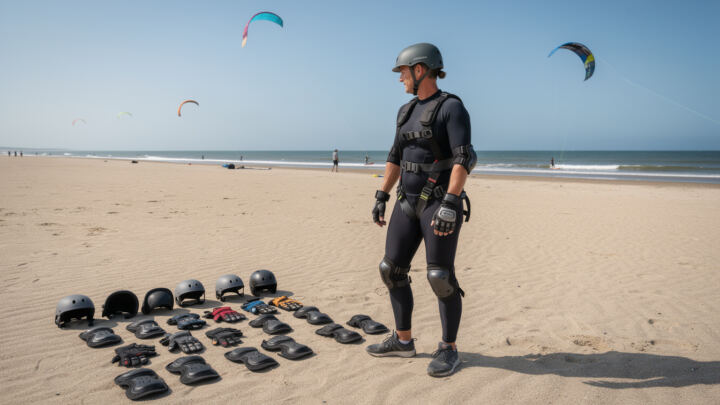
Most traction kiting injuries cluster around a few areas: head, ribs, spine, hands, knees/ankles, and hips. The gear choices should follow that anatomy, not trends. A helmet and impact vest cover the “big consequences” category; gloves, boots, and harness support cover the “control and repetition” category. If you can’t hold the bar comfortably or your feet are sliding around, your risk goes up even on mellow days.
Another factor people ignore is how you ride. If you’re doing small tacks and practicing launches, you need gear that doesn’t restrict shoulder rotation or peripheral vision. If you’re boosting jumps on a buggy or board, you’ll want more impact management because the falls are faster and less predictable. The point isn’t to dress like a tank—it’s to choose smart layers that don’t fight your movement.
A quick reality check on wind conditions
Traction kiting punishes “close enough” decisions in gusty wind. When the wind conditions are steady, you can get away with lighter protection because the kite’s pull feels predictable. When it’s gusty, you want extra margin: better head protection, better rib coverage, and gloves that keep your grip solid when you’re getting yanked. If your local forecast often swings, build your kit around the worst 20% of days you’ll still choose to ride.
Insight to keep: pick protective gear by imagining the crash you’re most likely to have at your spot, not the crash you hope you won’t.
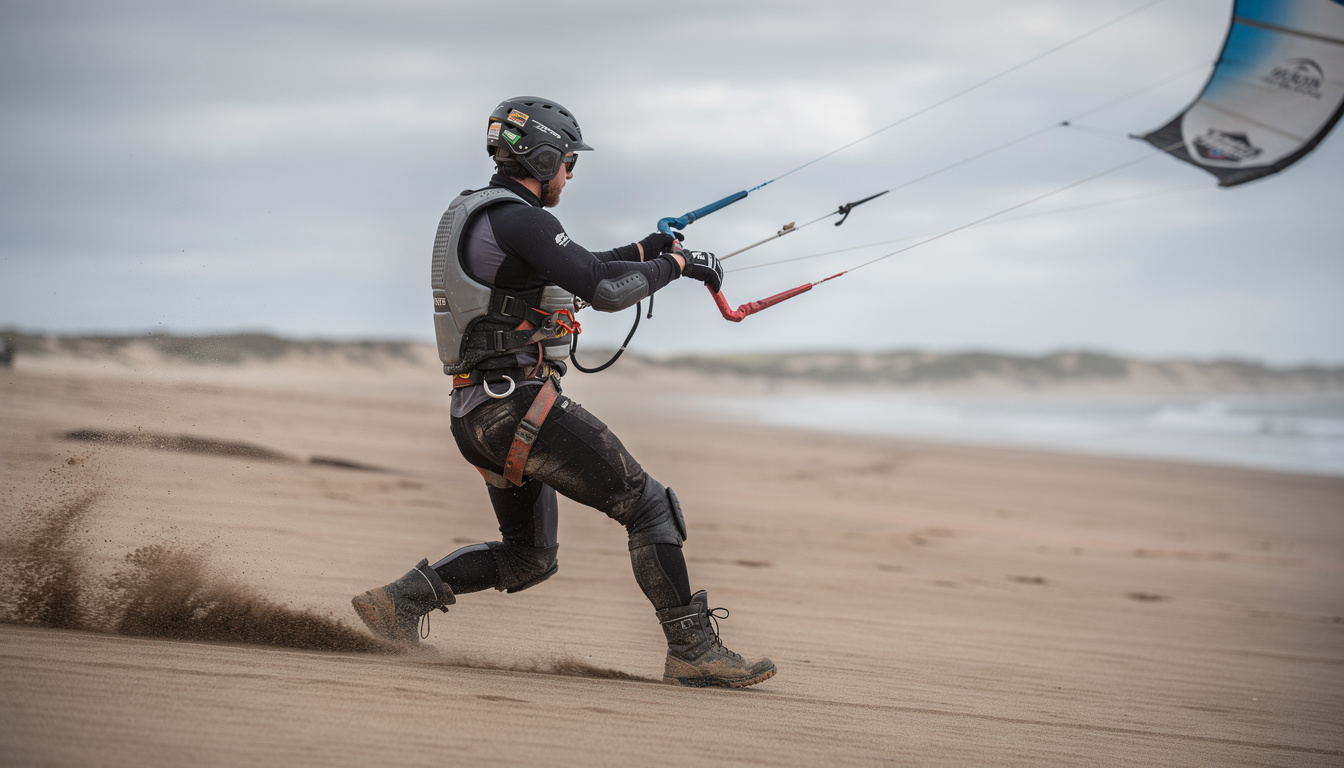
Choosing a traction kiting helmet: fit, certification, and comfort that keeps you wearing it
A helmet only works if you actually keep it on—and you only keep it on if it fits and feels right after an hour. Jules once bought a “great deal” lid that pinched near the temples. It didn’t hurt at first, but by the second session it was coming off mid-break because it felt unbearable. That’s the classic trap: if comfort is bad, compliance becomes optional.
For traction kiting, look for a helmet designed for board sports or water sports depending on your environment. The main criteria: real certification (not just marketing), strong retention (chin strap that stays put), and coverage that makes sense for backward falls. Plenty of impacts happen when you get pulled off balance and your feet go out—your head can whip down fast.
Fit checklist that takes two minutes and saves your session
Here’s a simple way to test fit in a shop or at home. Put the helmet on, tighten it, and try to rotate it without moving your head. If it shifts easily, it’s too big or the internal fit system isn’t doing its job. Then open your mouth wide—if the helmet doesn’t pull down slightly, your strap tension is probably too loose.
Ventilation matters more than people admit, especially in warmer months. Overheating makes you sloppy with decisions, and sloppy decisions are where incidents begin. For winter snowkiting, vents are still useful because you sweat on climbs and freeze on stops; being able to manage heat helps keep you sharp.
Practical compatibility: eyewear, balaclavas, and communication
If you ride with sunglasses or goggles, bring them when you try helmets. Pressure points around the temples can turn into headaches fast. If you use a balaclava in winter, check that the helmet doesn’t create a “hot spot” on your forehead where fabric bunches up.
One more real-world note: helmets take hits you might not notice—like a hard knock against a rail, a buggy frame, or compact snow. Treat it like a critical component, not a forever purchase. When the shell or liner is compromised, protection drops even if it “looks fine.”
Insight to keep: the best helmet is the one you forget you’re wearing—until the day you’re grateful you had it.
If your head is sorted, the next big comfort-versus-protection balancing act is the torso, where you’ll decide how much padding and buoyancy you want.
Impact vest selection for traction kiting: protection, buoyancy, and mobility
An impact vest is one of those pieces of safety equipment that feels “optional” until you take a rib shot. On land, a hard slam can bruise or crack ribs; on water, you can still get hammered, plus the vest can help with float and posture during recovery. Jules started wearing one consistently after a windy beach session ended with a chest-first slide that felt like getting tackled.
The trick is choosing the right kind of vest for your use. Some vests focus on pure impact padding; others add buoyancy. For traction kiting that crosses over between water and land, a balanced vest is usually the sweet spot: enough padding to absorb shocks, enough float to keep you comfortable in the water, and enough flexibility to twist, edge, and reach without fighting the garment.
Harness compatibility: the detail that makes or breaks comfort
Your harness sits where many vests are thickest, so you need to think about stacking. Some vests are designed to be worn under a harness; others ride over. Under-harness can feel cleaner, but you need a vest that doesn’t bunch up and create pressure on your ribs. Over-harness can be more breathable, but it can snag or shift if the fit isn’t dialed.
Try the vest with your actual harness if you can. Clip in, simulate a riding stance, and rotate your torso. If the vest rides up into your armpits, that’s a no. If you feel the harness squeezing unevenly because the vest is too thick around the waist, you’ll hate it on longer sessions.
Durability: seams, zippers, and abrasion zones
Vests take abuse. Sand acts like sandpaper, snow can tear stitching at stress points, and repeated harness friction can eat fabric. Look at seam reinforcement and zipper quality. A busted zipper on a cold day is annoying; a seam blowout mid-session is a safety problem because the vest won’t sit where it should.
| Feature | Why it matters for traction kiting | What to check in-store |
|---|---|---|
| 🦺 Impact padding layout | Ribs and sternum take surprise hits in tumbles and hard landings | Press padding with your thumb; check rib coverage when you twist |
| 🌊 Buoyancy | Adds comfort and safety when body-dragging or recovering in chop | Look for balanced float, not “life jacket” bulk |
| 🔗 Harness integration | Bad stacking creates hot spots and restricts breathing | Wear it with your harness; simulate edging and reach |
| 🧵 Durability | Abrasion and harness rub can kill a vest early | Inspect stitching, zipper path, and waist fabric reinforcement |
Insight to keep: if your vest and harness fight each other, you’ll ride tense—and tension is where injuries start.
Next up: the gear you touch and stand on every second—hands, feet, and the harness connection point.
Kiting gloves, kiting boots, and harness choice: control, comfort, and safer sessions
People love to obsess over big-ticket items, but the “small” stuff often decides whether a session feels smooth or sketchy. Kiting gloves can prevent line burn and protect against cold, but they also reduce feel. Kiting boots can keep ankles supported and feet warm, but they can also make you clumsy if they’re too stiff. And the harness is the anchor point for everything—get it wrong and you’ll compensate with your back, shoulders, and grip.
Choosing kiting gloves: grip, protection, and dexterity
Gloves should let you keep a relaxed grip. If they’re too thick, you’ll death-grip the bar and tire out faster. If they’re too thin, you’ll still get friction issues on powered days. Jules uses a thin pair for warm weather and a thicker, windproof pair for winter snowkiting—because numb fingers are basically a slow-motion emergency.
- 🧤 Palm reinforcement helps prevent hot spots during long tacks and gusty pulls.
- 🔥 Line-burn resistance matters if you handle lines during setup or self-rescue drills.
- ❄️ Thermal management keeps decision-making sharp when the temperature drops.
- 🧠 Dexterity is safety: you need to adjust depower, quick release, and straps without fumbling.
Choosing kiting boots: traction, ankle support, and warmth
On land and snow, footwear is your suspension system. On snow, insulated boots with good sole grip reduce slip-outs when walking the kite upwind. On beaches, boots can protect from shells and hot sand, but they also need to drain and dry quickly. If you’re landboarding, ankle support becomes more important because board speed turns small mistakes into bigger falls.
Fit matters: heel lift leads to blisters, and blisters turn into “I’m done for the day” decisions. Check the sole stiffness too—too soft and you’ll feel every pebble; too stiff and you’ll lose board feel.
Harness selection: waist vs seat, and how it changes your posture
Harness choice is personal, but there are patterns. Waist harnesses feel freer for torso rotation and are popular for dynamic riding. Seat harnesses can feel more stable and reduce ride-up, which some beginners love. Jules started with a seat harness for control during early sessions, then moved to a waist harness once edging and kite control felt automatic.
Whatever you choose, the harness should distribute load evenly. If it pinches one side, you’ll twist your body to compensate. That can show up as back fatigue, sore hips, or shoulder tension. Also check that the spreader bar stays put; a wandering bar makes power feel unpredictable, especially in punchy wind conditions.
Buying and testing gear smartly: returns, shipping, and lessons
This part isn’t glamorous, but it affects what you can realistically try. Many shops and schools run structured policies: lessons are often scheduled first-come-first-served and require payment up front, cancellations can trigger fees if you bail late, and weather reschedules typically convert into credit rather than refunds. That’s not “mean”; it’s how instructors protect their calendar and gear inventory.
For purchases, pay attention to return windows and restocking fees. New, unused gear might be returnable within a few weeks with a percentage fee, while used/demo items are commonly sold as-is or only eligible for store credit. If you’re ordering online, remember that signature delivery is often required, and standard ground shipping can take about a week or a bit more depending on location and delays. If you need something for a trip, plan ahead—upgrading shipping after it’s handed off to the carrier is usually not possible.
Insight to keep: the best setup is the one you can test, adjust, and actually afford to keep—policies decide how painless that process is.
Do I really need a helmet for traction kiting on flat land?
Yes. Flat land is often where head impacts are most brutal because you’re hitting a firm surface, not water. A certified helmet with solid retention gives you a critical layer of protection when a gust, a trip, or a bad landing snaps you down faster than you can react.
How should an impact vest fit with a harness?
It should feel snug without compressing your breathing, and it shouldn’t bunch up under the harness. Clip in and simulate a riding stance: if the vest rides into your armpits, creates rib pressure points, or causes the spreader bar to shift around, try a different cut or thickness.
What’s the biggest mistake people make with kiting gloves?
Buying gloves that are so thick they kill bar feel. When dexterity drops, people grip harder and tire faster, which increases risk. Aim for a glove that protects against friction and cold while still letting you operate depower and safety systems smoothly.
Are kiting boots worth it if I’m not snowkiting?
Often, yes—especially on beaches with shells, cold water, or long walk-ups. Boots can improve traction and foot protection, and on landboarding they can add ankle support. The key is fit (no heel lift) and a sole that matches your terrain.
How do wind conditions change what protective gear I should wear?
Gusty or overpowered days reduce your margin for error, so prioritize higher protection: helmet you trust, impact vest with good rib coverage, gloves that keep grip stable, and a harness that doesn’t shift under load. In steadier wind, you can sometimes go lighter—but never skip the essentials.