On a windy beach, traction kiting looks simple: kite up, board on, go fast. But anyone who’s been yanked off their edge, stalled the kite at the worst moment, or watched a friend glide past like they’ve got cheat codes knows the truth. Speed and control don’t come from brute force; they come from timing, clean lines, and reading the sky like it’s giving you hints. The good riders aren’t “stronger” riders—they’re smoother. They understand how wind dynamics changes minute to minute, how the wind window shapes power, and how tiny tweaks in body positioning can turn chaos into traction.
To make that real, we’ll follow Lina, a fictional rider who’s competent but stuck: she can ride both directions, she jumps a bit, yet she gets pulled off line when it gusts and can’t hold speed through chop. Over the next sections, she’ll learn how better kite control starts with smarter kite handling, why edge control is basically your gas pedal and brake at once, and which speed techniques keep you fast without feeling out of control. If you’ve ever asked, “Why does it feel like my kite is either dead or trying to end me?”, you’re in the right place.
En bref: traction kiting techniques for better control and speed
- 🧭 Use the wind window like a map: power changes by zone, not by luck.
- ⚡ Dial in power strokes for acceleration, then park the kite to preserve speed.
- 🧍♂️ Fix body positioning first: hips, shoulders, and head alignment solve half of “kite problems”.
- 🦶 Strong edge control means you choose your speed instead of the gust choosing for you.
- 🎯 Clean kite steering (small inputs, planned corrections) beats constant oversteering.
- 🧰 Build a repeatable routine: trim, stance, line tension, then send it.
Wind window basics for traction kiting: controlling power without getting yanked
Before Lina changes anything about her board or her jump timing, she learns to treat the wind window like a speedometer. If you’re doing traction kiting and you feel like the kite randomly surges, nine times out of ten you’re unknowingly flying through a high-power lane. The wind window isn’t just “left to right”; it’s a 3D dome where the kite’s angle to the wind determines pull, lift, and how quickly the kite accelerates.
At the edge of the window, the kite creates less pull and more sideways stability. This is where Lina starts practicing quiet riding: she keeps the kite a bit higher and closer to the edge so she can feel what “neutral” actually is. In the center, the kite generates peak traction. That’s useful, but it’s also where riders get ripped off their edge control if they don’t manage the board angle and line tension.
Reading wind dynamics in real time (gusts, lulls, and texture)
Wind dynamics isn’t just the forecast. It’s the difference between smooth airflow over water and messy turbulence near dunes, buildings, or even a line of parked kites. Lina notices a pattern: every time a gust hits, her kite drifts deeper into the window because she unconsciously sheets in and steers too much. The fix isn’t “be tougher”; it’s to anticipate the gust by flattening the kite’s path and moving it slightly toward the window edge.
A practical cue: if whitecaps start appearing in patches, expect uneven power. Lina picks a landmark upwind, then watches how the water darkens and lightens. Darker patches often mean stronger wind. When she sees one approaching, she chooses to either edge harder (if she wants to maintain line) or send one clean acceleration stroke (if she wants speed) rather than letting the gust decide.
Case moment: Lina’s “center-window panic” and the easy correction
On day one, Lina keeps the kite low and central because it feels powerful. She goes fast for five seconds, then loses control. Her shoulders twist downwind, her hips follow, and suddenly she’s skidding sideways. She learns a simple rule: “If you feel late, don’t steer more—steer earlier and less.” That means smaller, earlier inputs, keeping the kite slightly higher during messy gusts, and using the board to manage pull.
The insight that sticks: kite control starts with where you fly, not how hard you pull. Next, she’ll use that knowledge to accelerate on purpose with clean power strokes.
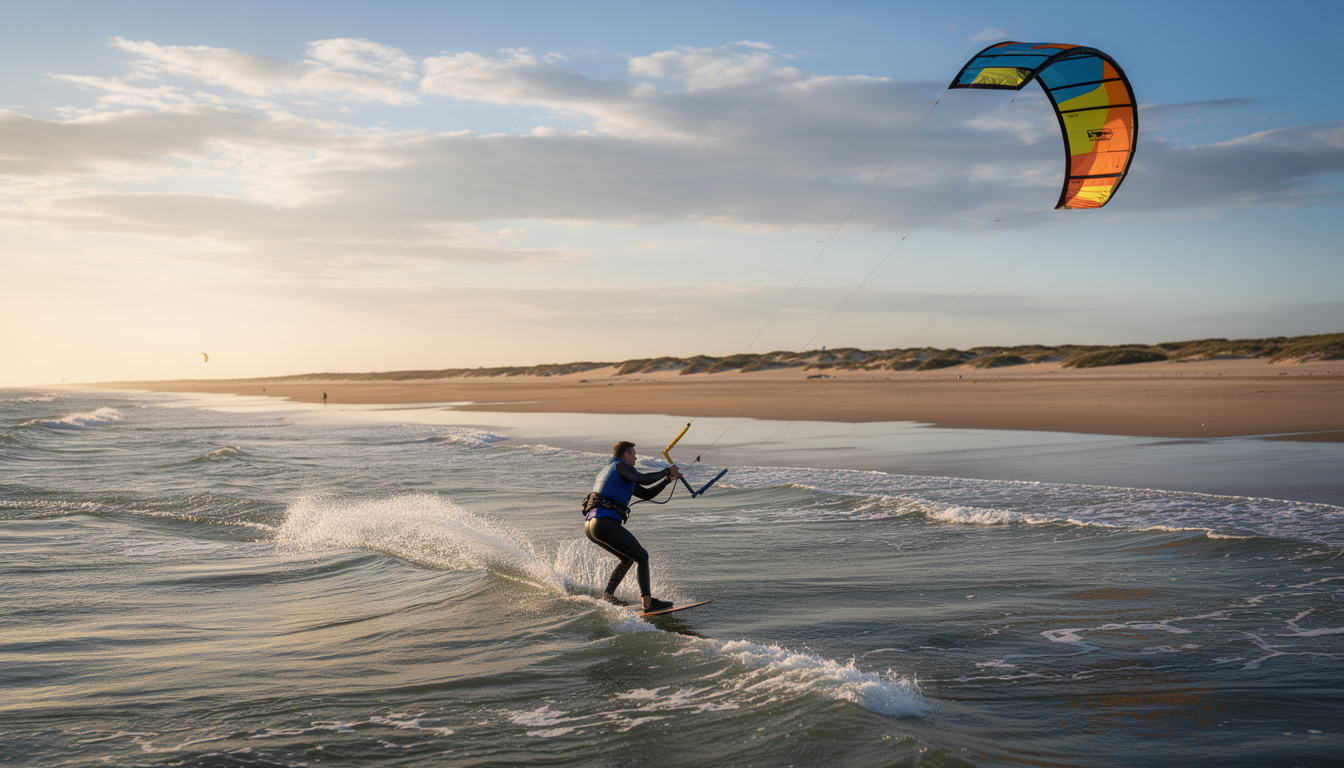
Power strokes and kite steering: speed techniques that don’t wreck your line
Speed in traction kiting isn’t about constantly looping the kite like you’re trying to start a lawnmower. The fastest riders are usually the quietest in the sky. Lina’s goal here is to learn speed techniques that create controlled acceleration, then settle into an efficient “cruise mode.” That means using power strokes deliberately, with a plan for what happens after the burst of pull.
Think of power like a match: strike it to get heat, then manage it so you don’t burn the whole house. Lina practices doing one clean dive of the kite (from around 11 o’clock down toward 10 or 9, depending on tack), then she resists the urge to keep steering. Instead, she parks the kite slightly higher and closer to the edge, letting the board’s edging convert pull into forward speed.
Clean kite handling: small inputs, fast feedback
Good kite handling feels almost boring—until you look at the speed. Lina had a habit of “stirring the pot” with the bar: micro-corrections every second. That creates constant changes in pull and makes it harder to load the edge. She switches to a pattern: steer, wait, feel, then adjust. This is how you build reliable kite steering under pressure.
Here’s a simple drill: pick a fixed point downwind and ride toward it while keeping the kite as still as possible for 10 seconds. Then do one single steering command, hold it, and let the kite finish the arc before touching the bar again. The goal isn’t perfection; it’s teaching your brain that the kite has momentum and doesn’t need to be micromanaged.
Acceleration without losing ground: the “stroke-then-edge” sequence
Lina’s breakthrough is sequencing: first the kite, then the board. She initiates a power stroke to build apparent wind, then immediately increases edge angle and drops her weight through the harness. If she edges first, she stalls; if she strokes and stays flat, she gets pulled downwind. The “stroke-then-edge” timing keeps her line tight, her board loaded, and her speed climbing.
She also learns to manage sheeting. During the dive, she avoids yanking the bar in. Instead, she keeps moderate tension so the kite flies forward, not backward. Once she’s planing fast, she sheets slightly to stabilize. The key point: the bar is a fine-tune tool, not a throttle you slam.
Once Lina can accelerate cleanly, the next challenge is keeping that speed in rough water and variable wind—where body positioning becomes the real secret weapon.
Body positioning and edge control: the “locked-in” feeling that makes you faster
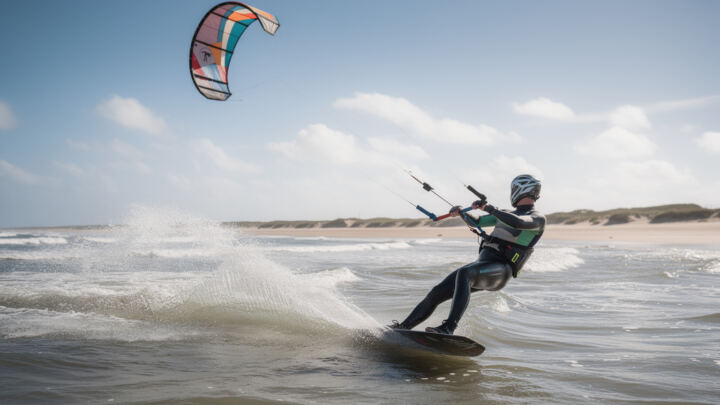
If you’ve ever watched someone look relaxed while going very fast, you’re basically watching great body positioning. Lina used to ride tall with bent arms, which felt “safe” until it didn’t. Now she builds a stacked stance: hips forward into the harness, chest open, shoulders aligned with the board’s direction, and head looking where she wants to go—not at the kite like it owes her money.
This matters because speed is mostly about efficiency. When your body leaks energy—twisting, collapsing at the waist, or pulling with your arms—you turn wind power into chaos. When you’re stacked, the harness takes the load, your legs manage the board angle, and your arms stay quiet so the kite can fly clean. That’s the difference between surviving traction kiting and controlling it.
Edge control as a real tool (not just “dig the rail”)
Edge control is the blend of board angle, pressure through your heels, and how you manage chop. Lina learns a counterintuitive idea: edging isn’t only about resisting pull; it’s about choosing how much of the kite’s force becomes forward motion. Too much edge and you stall or spray out. Too little and you get dragged downwind with lots of speed but no command.
In choppy water, Lina stops fighting every bump. She softens her knees and treats chop like a set of speed bumps: absorb, keep the board planing, maintain a consistent edge pressure. When she stiffens, the board skips and the edge breaks free, which forces panicked steering. When she stays springy, she keeps line tension stable and her kite control suddenly feels easier.
Micro-adjustments that change everything
Three small cues make Lina’s riding look instantly more advanced. First: “hips to the bar, not shoulders to the bar.” It prevents the upper body twist that sends you downwind. Second: “front leg guides, back leg drives.” The front leg helps trim and point; the back leg sets the edge and controls spray. Third: “quiet hands.” If her hands are busy, it’s usually because her stance is unstable.
She tests this with a personal benchmark: hold a steady line for 100 meters while keeping the kite parked, then repeat while gradually increasing speed. If she can’t hold it, she fixes stance before she touches steering. That’s a rider’s mentality shift—solve cause, not symptom.
The insight here: speed comes from stability, and stability comes from how you stand. Next up, we’ll make that stability more repeatable with trimming, practice structure, and a quick reference table.
To make these changes stick, Lina needs a system she can run every session—even when conditions are messy and her nerves aren’t calm.
Session framework for traction kiting: repeatable kite control and speed techniques
Progress in traction kiting can feel random because every day is different. Lina’s fix is a session framework: a short checklist that keeps her from chasing shiny tricks before her fundamentals are stable. It’s not about being rigid; it’s about making kite handling and kite steering consistent enough that her brain can focus on one improvement at a time.
She starts every session with a two-minute “calibration run.” She rides with the kite slightly higher than usual, does gentle transitions, and pays attention to how the kite sits in the wind window. If it wants to surge, she adjusts trim. If it feels back-stalled, she reduces sheeting and checks that she’s not oversheeting out of habit.
A simple progression routine (that doesn’t waste your whole day)
- 🪁 Window check: fly to edge, then center, and feel the pull difference without moving the board much.
- 🧵 Line tension drill: ride 10 seconds with minimal steering; aim for steady pull, not maximum pull.
- ⚡ Power strokes: do 5 clean dives per tack, each followed by “stroke-then-edge” and a parked kite.
- 🦶 Edge control: choose a slightly upwind track and hold it for 50–100 meters without extra bar input.
- 🎯 Speed pass: pick a marker and do one faster run focusing on relaxed stance, quiet hands, and smooth breathing.
This structure also helps with safety. When Lina gets tired, she tends to oversteer and ride too powered. The routine gives her a clear moment to back off, re-trim, and reset rather than “just one more fast run” into a mistake.
Quick reference table: what to change when control or speed falls apart
| Situation ⚠️ | Likely cause 🔎 | Fast fix 🛠️ | Better long-term habit ✅ |
|---|---|---|---|
| Getting pulled downwind when accelerating 🌪️ | Kite dives too deep in the wind window; weak edge timing | Do one smaller power stroke, then increase edge angle earlier | Practice “stroke-then-edge” until it’s automatic |
| Kite feels jerky and unpredictable 🎢 | Oversteering; constant micro-inputs | Make one steering input, wait for the kite to finish the arc | 10-second “park the kite” drill each tack |
| Stalling or sinking in lulls 🧊 | Too much edging; oversheeting | Flatten board slightly, ease bar out, build speed first | Learn to ride neutral and rebuild apparent wind smoothly |
| Can’t hold speed in chop 🌊 | Stiff legs; edge breaks repeatedly | Soften knees, keep hips stacked into harness | “Springy legs, quiet hands” focus runs |
| Arms burning fast 💪 | Pulling with arms instead of harness loading | Push hips forward, straighten front arm slightly | Stance-first mindset: harness carries load, arms guide |
Lina’s big takeaway is that reliable speed is a byproduct of repeatable decisions: where she flies the kite, how she edges, and when she stops fiddling. Next, we’ll handle the “advanced messy stuff”: gust management, apparent wind tricks, and keeping control when things get spicy.
Advanced traction kiting control in gusts: wind dynamics, apparent wind, and staying fast
Once Lina is consistent in steady wind, she faces the real test: gusty days where everyone on the beach is either overpowered or underpowered depending on the minute. This is where understanding wind dynamics stops being theory and becomes the difference between a fun session and a sketchy one. Gusts change not only strength, but also your kite’s speed through the air, your apparent wind, and how quickly your board wants to accelerate.
On gusty days, Lina’s main rule is: don’t let the kite “chase” the gust into the center of the wind window. Instead, she aims for a flatter, more forward-flying kite path. That often means slightly higher kite position, less aggressive steering, and a stance ready to edge harder for two seconds without locking her knees.
Apparent wind tricks that feel like magic (but aren’t)
As Lina goes faster, she creates more apparent wind. That means the kite can generate power even when the true wind drops a bit—if she keeps it flying efficiently. The mistake is to react to a lull by yanking the bar and looping hard. That can backfire: the kite slows down, drifts back, and the lines go slack right when she needs tension.
Her better move is to ride a touch flatter for a moment, let speed build, then re-engage edge control. It’s basically “keep the engine spinning.” She uses gentle sine patterns—small, smooth movements—rather than big loops. With solid kite steering, those small motions keep airflow attached and predictable.
When to use power strokes vs. when to park the kite
Lina learns to separate two modes. Mode A: accelerate. She uses one or two power strokes to reach a target speed. Mode B: maintain. She parks the kite and manages speed with board trim and stance. Riders who stay in Mode A all the time feel fast but lose control and waste energy. Riders who learn Mode B look calm and still go fast—because drag is lower and the kite is stable.
She also starts choosing smarter lines across the water. If she’s bearing off slightly to build speed, she plans the return to her upwind line before she gets overpowered. That’s strategic riding, not reactive riding.
Anecdote-style scenario: the “gust hallway” near shore
There’s a spot at Lina’s beach where the wind funnels between two dune sections, creating a gust hallway. Before, she’d hit it and get ripped, then compensate by cranking the kite up and losing all speed. Now she approaches with the kite a little higher, shoulders square, and knees ready to absorb. As the gust hits, she increases edge pressure for a moment, keeps the bar steady, and exits still in control—then uses a tiny steering input to regain her preferred window position.
The insight that sticks: advanced control is mostly about doing less, earlier. And with that, you’ve got the toolkit to go faster without feeling like you’re rolling dice every run.
How do I know if my kite is too deep in the wind window?
You’ll feel a sudden surge of pull that drags you downwind, and it becomes hard to maintain edge control without skidding. A quick test is to steer the kite slightly toward the edge of the wind window and see if the pull becomes smoother and more manageable while your board tracks better.
What’s the most common mistake with power strokes for speed?
Overdoing them. Repeated big dives or loops can create chaotic pull and force constant corrections. Use one clean power stroke to accelerate, then park the kite and preserve speed with body positioning and board trim. The fastest runs usually have the quietest kite.
Why do my arms get tired even when the wind isn’t that strong?
Usually because you’re holding load with your arms instead of your harness and stance. Push hips forward into the harness, keep your shoulders relaxed, and avoid oversheeting. Quiet hands plus a stacked stance reduces arm fatigue dramatically.
How can I keep speed through chop without losing control?
Soften your knees and treat chop like something to absorb rather than fight. Keep consistent edge pressure, avoid stiff legs that make the board skip, and minimize unnecessary kite steering. Stable line tension and springy legs are the combo that keeps you fast.