In brief
- 🌬️ Match your wind conditions to your kite size and your skill level before you even clip in.
- 🧭 Use the wind window like a map: most “mystery” yanks happen at the edges or when you park the kite too high.
- 🧵 Fix kite line tangles on the spot with a simple tension-and-walkback routine instead of “shaking it out.”
- 🧰 A quick equipment maintenance scan (bridles, pulleys, chicken loop, bar ends) prevents 80% of recurring issues.
- 🛟 Treat safety precautions as part of your troubleshooting: the safest fix is often to land, reset, and relaunch.
- 🎯 Better kite control comes from small inputs, consistent body position, and practicing “boring” drills on purpose.
- ⚠️ Learn the big kiting hazards—gust fronts, rotor, obstacles, and overpowered launches—so problems don’t escalate.
Traction kiting has this funny way of making simple problems feel dramatic. One minute you’re cruising, the next your kite is jellyfishing, your lines look like spaghetti, and you’re wondering if the wind suddenly “turned on you.” Most of the time, though, it’s not bad luck—it’s a chain of small signals you can learn to read. The trick is approaching troubleshooting like a calm checklist: what changed in the wind conditions, where is the kite sitting in the wind window, how’s your body position, and what’s your gear trying to tell you?
To keep things grounded, we’ll follow a fictional rider, Maya, who does landboarding and snowkiting on weekends. She’s not a beginner, but she’s also not immune to the classic issues: stalling the kite overhead, botched launch techniques, sudden luffs in gusty air, and those sneaky micro-tangles that only show up once you’re powered. Each section below tackles one cluster of common traction kiting problems, with practical fixes and “why it happens” explanations—so you can get back to riding with fewer surprises and way more control.
Traction kiting troubleshooting: reading wind conditions and the wind window
If traction kiting feels inconsistent, start with the two things that quietly run the whole show: wind conditions and how you use the wind window. Maya learned this the hard way on a beach with buildings behind it. Onshore wind looked steady from the waterline, but every time she walked closer to the promenade her kite fluttered and surged. That wasn’t her technique “randomly failing”—it was rotor and turbulence.
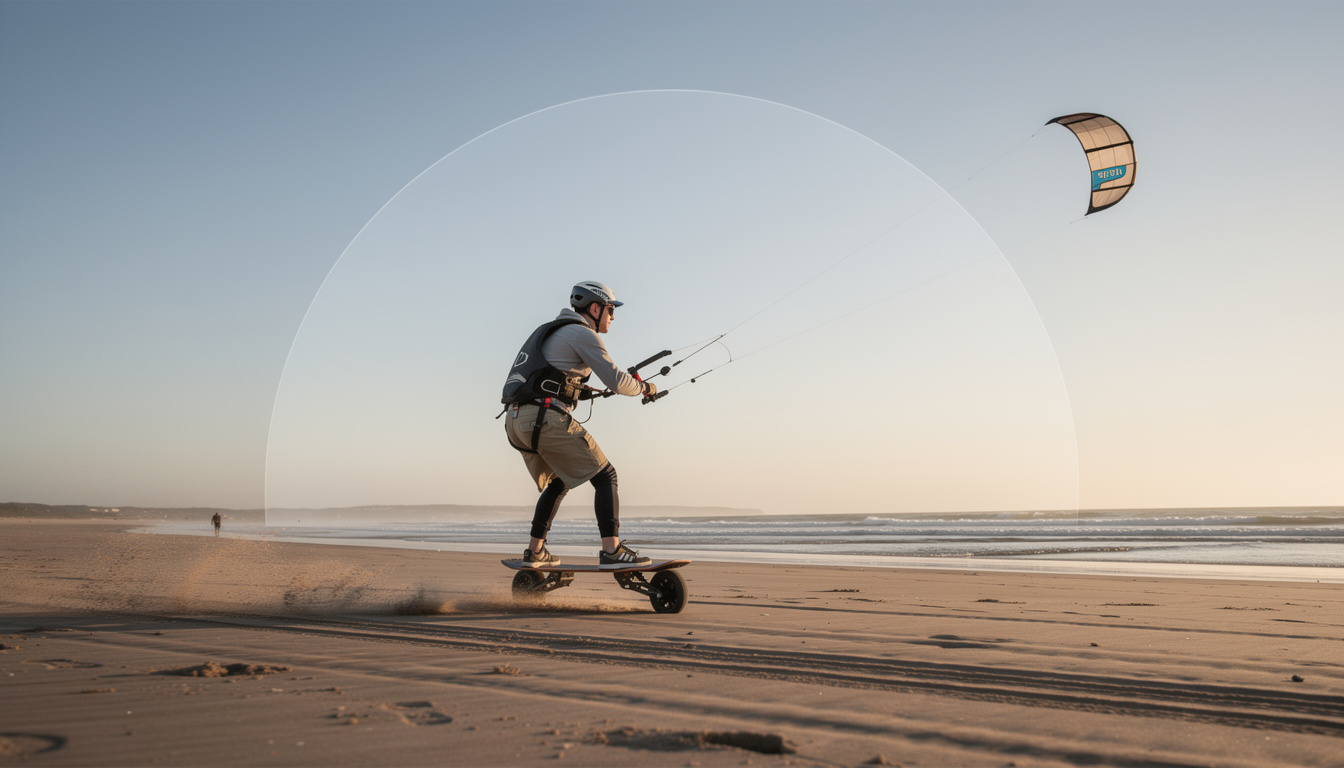
A clean mental model helps. Think of the wind window as a dome in front of you. The center is the power zone; edges are lower pull but can be twitchy if the wind is uneven. Parking the kite at 12 o’clock (straight overhead) feels safe, but in gusty air it can be the worst place: the kite may backstall, then dive as the gust hits. A lot of “why did it suddenly yank?” moments come from hovering too long at 12 while the breeze pulses.
Spotting the wind you actually have (not the wind you wish you had)
Look for surface clues: whitecaps on water, sand skittering, flags snapping, tree movement, and the way other riders’ kites behave. If everyone’s canopy is breathing and collapsing at the edges, you’re in lulls and shear. If riders are getting dragged during launch, you’re likely overpowered or launching inside a gust line.
Practical rule Maya uses: if the wind feels “on/off,” she rides with a plan to keep the kite moving gently rather than parked. Movement creates apparent wind and stabilizes the canopy, while parking invites stalls in lulls.
Quick diagnostics: symptoms and likely causes
| Symptom | Likely cause | Fast fix |
|---|---|---|
| 🎈 Kite flutters and loses shape near the edge | Turbulence/rotor, lull pockets | Move upwind to cleaner air; fly slightly lower and keep gentle motion |
| ⚡ Sudden yank when kite crosses center | Too deep into power zone, oversheeting then releasing | Steer smaller arcs; reduce bar input; keep board/ski edge engaged |
| 🪁 Kite keeps falling backward at 12 | Backstall from oversheeting or insufficient wind | Sheet out; bring kite to 10/2; consider bigger kite only if safe |
| 🌪️ Kite surges forward and collapses | Front stall in gusts or mis-trimmed depower | Add a touch of trim; avoid extreme high angle of attack |
That table is your “first pass” for troubleshooting. The deeper move is accepting that you can’t negotiate with messy air. If your spot is gusty because of dunes, cliffs, or buildings, the right fix is often boring: relocate 50–200 meters, change your line length, or ride a smaller kite. The real flex is choosing the safer setup, not forcing it.
Next up: when your hands and body are the problem—even with perfect wind.
Kite control troubleshooting: body position, bar input, and common handling mistakes
Great kite control looks calm from the outside. Inside, it’s a constant stream of tiny corrections. Maya used to “drive” her kite like a video game—big steering pulls, fast corrections, lots of bar movement. The result was oscillation: kite swings, she over-corrects, it swings harder, and suddenly she’s blaming the gear.
Here’s a simple truth: most handling problems come from doing too much. In traction kiting, the kite amplifies inputs. If you steer aggressively while also changing your stance, edging, and trim, you can’t tell what caused the outcome. Troubleshooting starts by isolating one variable at a time.
Bar and steering inputs: small is powerful
If the kite is diving unexpectedly, check whether you’re pulling the bar in while steering. That increases angle of attack and can accelerate the kite into the power zone. A cleaner pattern is “steer with the hands, manage power with trim and sheeting.” When Maya wants the kite to climb, she eases the bar out slightly and guides the wing up with minimal steering—less drag, smoother climb.
Another classic is death-gripping the bar. When your forearms tense up, you stop feeling subtle changes in line tension. Try a quick reset: open your fingers for one second (without letting go), breathe, then re-grip lightly. It sounds silly, but it breaks the spiral when you’re getting worked.
Stance and edging: your lower body is part of the control system
On a landboard or skis, your “brake” is edge pressure and hips, not yanking the kite. If you’re being pulled off balance, it’s often because you’re upright and letting the kite tow your shoulders forward. Maya’s cue: “hips back, chest tall.” That keeps the pull going through your harness and core, not your arms.
When you feel overpowered, don’t immediately send the kite to 12 and pray. Instead, steer it slightly higher toward the edge of the window while increasing edge pressure. That reduces pull more predictably and avoids the overhead stall-dive cycle in gusts.
Drills that actually fix recurring problems
Skill doesn’t magically appear during a sketchy session. It’s built when things are easy enough to repeat. These drills are simple and surprisingly effective:
- 🎯 Figure-eights at the edge: keep the kite between 10 and 11 (or 1 and 2) with tiny loops to feel tension changes.
- 🧭 Window tracing: fly from edge to edge without entering the deep power zone; notice where pull ramps up.
- 🛑 Stop-and-hold: park the kite at 10/2 for 10 seconds without drifting up to 12; use micro-corrections.
- 🧠 One-variable rule: change only one thing (trim, stance, steering rate) every 20 seconds so you learn cause/effect.
Maya runs these for five minutes at the start of a session. The payoff is huge: when something goes wrong later, she can identify whether it’s her input, the wind, or the gear. That clarity is the difference between calm troubleshooting and panic improvisation.
Now, let’s talk about the issue everyone hates because it feels “small” until it becomes a mess: lines.
Before you blame the kite, it’s worth checking whether your next problem is literally tied up in knots.
Kite line tangles troubleshooting: diagnosing twists, bridles, and setup errors
Kite line tangles are the ultimate silent saboteur. You can launch fine, ride for thirty seconds, and then suddenly the kite starts turning one way, stalling, or feeling “mushy.” Maya once spent half an hour trying to tune her trim strap, only to realize a single half-twist in a front line was changing the tension balance under load.
The big mistake is trying to “shake tangles out” while the kite is powered. That can turn a minor twist into a full spaghetti situation. Solid troubleshooting here is methodical: depower, secure the kite, and follow the lines like you’re solving a puzzle.
The tension-and-walkback method (fast and sane)
When something feels off, Maya lands the kite (or has a friend catch it) and does this:
- 🛟 Engage safety precautions: activate the safety if needed and ensure the kite is stable and not re-launching.
- 🧵 Lay the bar down cleanly with lines under light tension.
- 👣 Walk from bar to kite, keeping the four (or five) lines separated in your fingers.
- 🔁 Untwist at the first point where lines cross; don’t “pull through” a knot if you can unwind it.
- ✅ Check attachment points: pigtails, larksheads, and leader lines should match left/right.
This approach feels slow the first time, but it’s faster than relaunching into the same problem again and again.
Bridle and pulley issues that mimic tangles
Not every “tangle feel” is in the flying lines. Bridles can snag on wingtips during launch, pulleys can stick from sand or salt, and a worn bridle segment can stretch unevenly. The symptom is usually asymmetric turning: the kite wants to carve left even when your bar is centered.
A quick test: with the kite secured, apply equal tension to both steering lines. If one side feels shorter or tighter, trace it to the bridle. If pulleys don’t roll smoothly, rinse them and consider replacement—sticky pulleys create delayed responses that feel like bad technique.
Preventing line chaos during setup
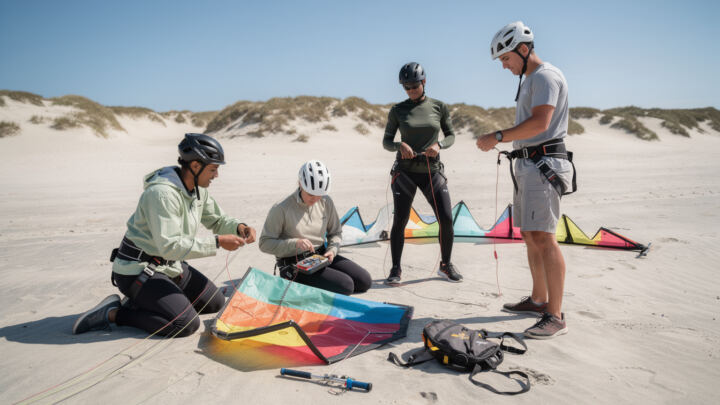
Most line problems begin on the ground. Maya’s setup habit is simple: she always unwinds lines downwind, checks for a clean “ladder” layout, then connects at the kite last. If the wind is shifty, she puts something light on the lines (like a bit of sand) so they don’t flick over each other.
And here’s a tiny hack: before launching, she lifts the bar and gives a gentle pre-tension check—front lines equal, steering lines equal. If the bar sits crooked under equal pull, she stops. That one moment prevents a whole session of confusion.
Next, we’ll move from lines to the bigger picture: launch and landing, where small mistakes turn into big kiting hazards fast.
Clean lines are nice, but clean launches are where sessions are made—or ruined.
Launch techniques troubleshooting: safer starts, failed launches, and avoiding kiting hazards
Bad launch techniques are a top reason traction kiting problems escalate. Launch is when the kite transitions from “an object on the ground” to “a wing with opinions.” Maya’s most memorable mistake was launching slightly downwind of her anchor point on a gusty day. The kite loaded instantly, surged into the power zone, and she had to dump it on safety. No injuries, but it was a loud reminder: launch is a skill, not a formality.
The goal is boring: a predictable rise, controlled direction, and room to abort. If you can’t abort comfortably, you’re not ready to launch.
Common launch failures and what they’re telling you
If the kite won’t inflate, you might be underpowered—or you’re trying to launch in dirty air. If it over-inflates and rips upward, you might be overpowered or standing too far into the power zone. If it “hesitates” then suddenly jumps, that’s often gust structure: a lull followed by a gust front.
Maya’s check is the “three-second rule”: if the kite behaves unpredictably for three seconds during launch, she stops the attempt. She’d rather reset than gamble.
Safer launch checklist you can actually remember
- 🧭 Stand near the wind window edge, not the middle, so pull ramps gradually.
- 🛟 Confirm safety precautions: quick release clear, leash attached correctly, safety line not wrapped.
- 👀 Scan for kiting hazards: people, dogs, fences, rocks, icy patches, waterline drop-offs.
- 🌬️ Re-evaluate wind conditions: are gusts increasing? Is there a dark band on water or a dust line on land?
- 🧰 Do a last-second gear glance: bridles free, lines clear, no snag points on the kite.
Notice what’s missing: “send it and hope.” A clean launch should feel almost uneventful.
Abort and reset: the underrated skill
People treat aborting like failure, but it’s advanced judgment. If the kite starts to hot-launch (pulling hard while low), sheet out, steer back toward the edge, and if needed, activate the safety early. The earlier you dump power, the less dramatic it gets.
Maya also practices landing on purpose—because landing is where you build confidence in your “off switch.” Whether you self-land with a technique appropriate to your kite type or use an assistant, the priority is the same: keep the canopy stable, secure it, then walk your lines down so nothing re-launches unexpectedly.
Next, we’ll talk about keeping your gear reliable—because “it worked last time” isn’t a maintenance plan.
Once launching is calm, the next win is making sure your equipment doesn’t add surprises mid-session.
Equipment maintenance troubleshooting: keeping traction kiting gear reliable session after session
When traction kiting problems repeat, it’s often not your skills—it’s your kit slowly drifting out of spec. Equipment maintenance doesn’t have to be a garage project. Maya does “micro-maintenance”: short checks that prevent the big failures.
The reason this matters is simple: kites and control systems rely on symmetry. If one line shrinks, one bridle stretches, or a connection wears unevenly, the kite starts flying “crooked.” Then you compensate with technique, build bad habits, and the whole thing snowballs. Good troubleshooting asks: “Is this me, or is my setup lying to me?”
The high-impact maintenance routine (10 minutes, big payoff)
After a session, Maya rinses salt/sand off the bar, quick release, and pulleys. She doesn’t obsess over perfection—she focuses on parts that fail when dirty. Then she dries everything properly, because mildew and corrosion don’t care that you were tired.
Every few sessions, she checks line lengths. You don’t need a lab: stake the lines, tension them evenly, and compare. If one steering line is shorter, your kite will backstall on that side and turn unevenly. Equalizing lines brings back the “factory feel” instantly.
Wear points that cause weird in-flight behavior
Some issues show up only under load, which is why they’re so annoying to diagnose. Watch these:
- 🧷 Chicken loop and quick release: sticky action or sand inside makes emergency release unreliable.
- 🧵 Bridle knots and pigtails: creeping knots change geometry; replace fuzzy pigtails before they snap.
- 🪢 Bar ends and leader lines: hidden abrasion here can break when you least want it to.
- ⚙️ Pulleys: gritty pulleys delay response and can create sudden surges when they “catch up.”
If you’re doing repeated troubleshooting for “kite won’t depower” or “turning feels delayed,” maintenance is often the missing piece.
A quick case: fixing recurring overpull
Maya had a stretch where every session felt overpowered, even on moderate days. She downsized kites and still felt yanked. The actual culprit: her front lines had stretched unevenly after a season of sandy launches. The kite sat deeper in the window, generating more pull and less forward drive.
She equalized the lines, cleaned the release, and suddenly her normal kite size felt normal again. The takeaway is not “always blame your lines.” It’s that reliable gear gives you a clean baseline—so when the wind changes, you can respond with confidence instead of guesswork.
From here, the most useful finishing move is combining technique, wind reading, and maintenance into a safety-first decision tree—because the smartest fix is sometimes to stop and reset.
Why does my kite keep stalling when it’s overhead?
Most often it’s a backstall caused by oversheeting (bar pulled in too far) or marginal wind. Sheet out a bit, steer the kite to 10 or 2 instead of parking at 12, and re-check trim. If the air is gusty, hovering overhead can amplify lulls and gusts, so keep the kite slightly to the side for steadier tension.
What’s the fastest way to fix kite line tangles without making it worse?
Depower first, secure the kite, then use a walkback method: keep light tension, walk from the bar to the kite while separating lines, and unwind crossings at the first point you see them. Avoid “shaking” powered lines; that usually tightens twists and hides the real crossing point.
How do I know if it’s bad kite control or bad wind conditions?
If multiple riders are struggling or you notice clear signs of turbulence (fluttering canopies, sudden surges, inconsistent pull near obstacles), it’s likely wind-related. If the kite responds smoothly when you make tiny inputs and gets messy only when you steer aggressively, it’s likely technique. When in doubt, simplify: reduce bar movement, fly at the window edge, and see if stability improves.
Which safety precautions matter most during troubleshooting?
Prioritize an easy abort: clear area downwind, quick release functional and reachable, leash correctly attached, and a plan to land/reset if behavior is unpredictable. If a problem repeats twice in a row (failed launch, unexpected surges, persistent turning), the safest move is usually to land, inspect, and relaunch rather than ‘testing it’ while powered.